Nylon vs Steel Shackle Safety Padlocks: Specify the Whole Application
Choosing a nylon vs steel shackle safety padlock requires more than comparing the shackle material. Start with the approved application, the actual lockout-device opening, the exposure conditions and the employer’s key-control system. A nylon shackle can address a material requirement without establishing an electrical protection rating. A steel shackle can suit a particular device without making the lock suitable for every environment. Request evidence for the exact model and assess a representative sample with the intended hardware. This guide focuses on specifying the purchase; it does not authorize work on energized equipment or replace an energy-control procedure.
Define the application before choosing a material
Write down where the padlock will be used and what role it will perform. A personal lock on a group lockbox, a lock on a valve restraint and a lock on a compact electrical accessory may have different clearance requirements. The same nominal shackle length can be insufficient in one application and unnecessarily large in another. Ask for the dimensions and configuration of the complete assembly rather than selecting a material from a photograph.
For U.S. work within its scope, 29 CFR 1910.147 addresses devices as part of the employer’s hazardous-energy program. Material selection is one purchasing decision within that program. It does not determine the machine’s energy sources, the required isolation points or the verification method. Keep those decisions with the people responsible for the site’s procedures.
Separate mandatory application requirements from preferences. A site may require a particular shackle material for a defined use, while a purchasing team may prefer one color for stock management. Record the source of each requirement so that a later substitution receives the correct review. A cheaper lock with the same body color is not necessarily an equivalent replacement.
Distinguish body material from shackle material
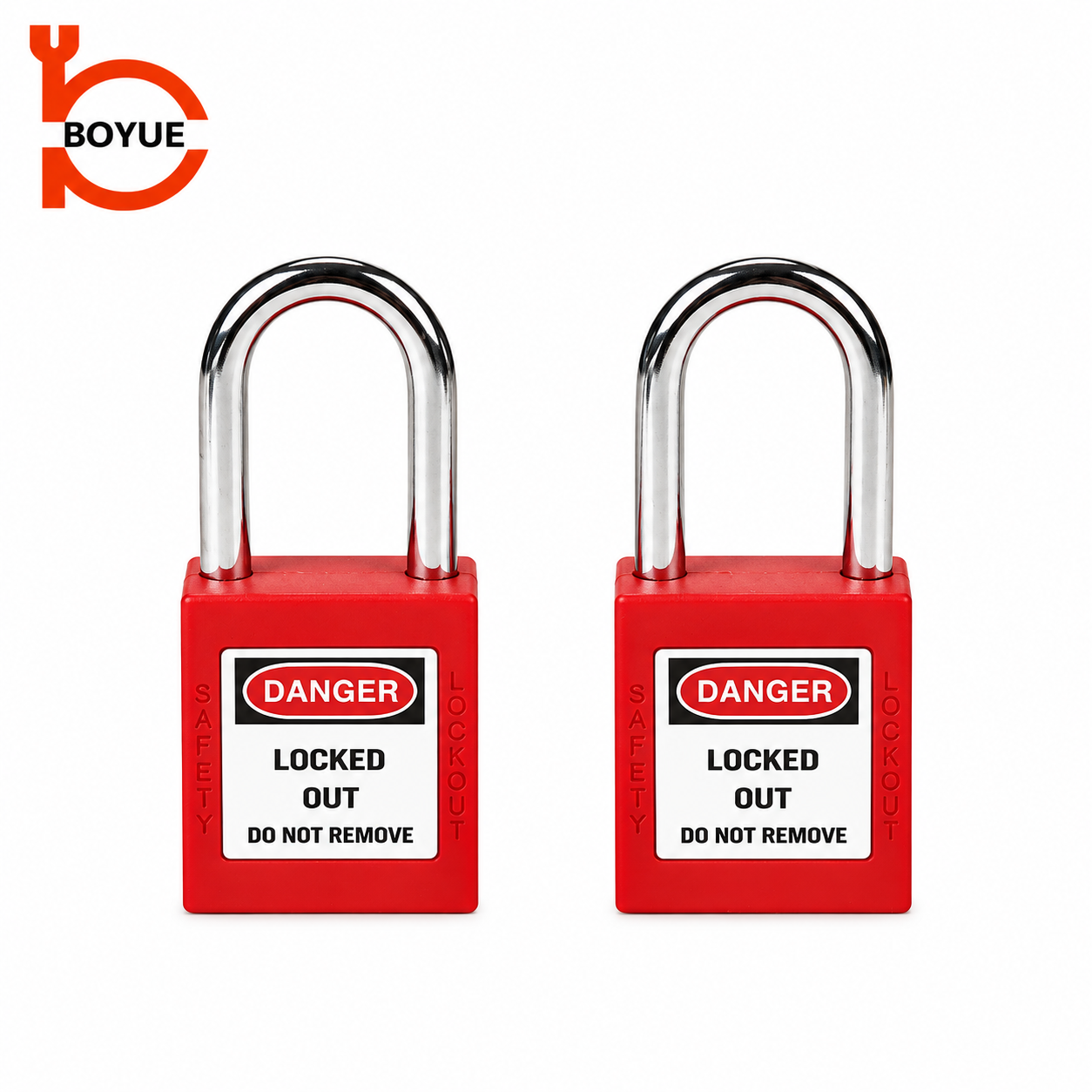
A lock described as nylon may have a nylon body and a metal shackle. Read the actual model description and request a drawing or specification when the terminology is unclear. The body, shackle, cylinder and key are separate parts. Do not infer the construction of an unseen part from the appearance of the body or from a range title that covers several configurations.
The BOYUE PL25 product page illustrates the nylon-shackle product category. Confirm the exact ordered variant, its dimensions and the supplier’s applicable documentation. Avoid transferring a claim from another size or configuration to the sample in hand. Where the application requires electrical performance evidence, ask for evidence that actually applies to the supplied product rather than assuming that the word insulation establishes a rating.
The alternative steel-shackle category may suit the geometry and conditions specified by the employer. That decision still needs a complete fit and exposure assessment. A metal shackle does not automatically imply a particular corrosion resistance or service life, and the appearance of plating does not identify its performance. Specify any required environmental evidence explicitly.
Compare the questions that affect acceptance
| Question | Nylon-shackle option | Steel-shackle option |
|---|---|---|
| What is the exact construction? | Confirm shackle polymer and model-specific documentation | Confirm shackle material and any stated finish |
| Does it fit the approved accessory? | Check actual diameter, usable opening and body clearance | Check the same dimensions on the actual supplied variant |
| What exposure is expected? | Request evidence for relevant chemicals and conditions | Request evidence for relevant chemicals and conditions |
| What electrical claims are required? | Do not infer a rating from the material name | Do not treat the lock as electrical protective equipment |
| How is personal control maintained? | Verify keying, identification and approved issue process | Verify the same program requirements independently |
| How will replacements be controlled? | Record exact variant and approved application | Record exact variant and approved application |
The table is a procurement comparison, not a performance ranking. There is no universal winner without an application and acceptance criteria. Ask the reviewer to identify which unanswered question would prevent approval. That is more useful than deciding that one material is “industrial grade” while leaving the exact configuration unresolved.
Test fit with the complete intended hardware
Review a representative sample together with the actual approved accessory in a controlled setting. Confirm that the shackle can pass through the intended opening and close without interference from the body or adjacent components. Check the installed clearances using the supplier’s instructions and site approval process. Do not modify a lockout device or shave a shackle to make an unsuitable combination fit.
Where the accessory has several holes, do not assume that every visible position accepts every padlock configuration. A lock that fits alone may interfere with neighboring locks or prevent identification from being read. Review the intended arrangement and the approved number of users. Keep the result tied to the tested models so that a future body-shape change is noticed.
Use the safety padlock inspection checklist for condition checks after selection. An inspection routine cannot compensate for a product that was never approved for the application. Conversely, a model that passed the initial sample review still needs to remain in serviceable condition.
Keep material selection separate from electrical safety decisions
A padlock is one component of an energy-control arrangement. It does not replace electrical isolation, verification or the other protective measures required for the task. Qualified personnel must determine the applicable electrical procedure and the safe work conditions. Never interpret a nonmetallic-looking shackle as permission to approach exposed energized parts.
The CCOHS hazardous-energy overview explains lockout in the context of controlling energy before servicing. Use its principles alongside the applicable local requirements and equipment-specific procedure. The lock’s material does not identify every possible source of hazardous energy or establish that stored energy has been addressed.
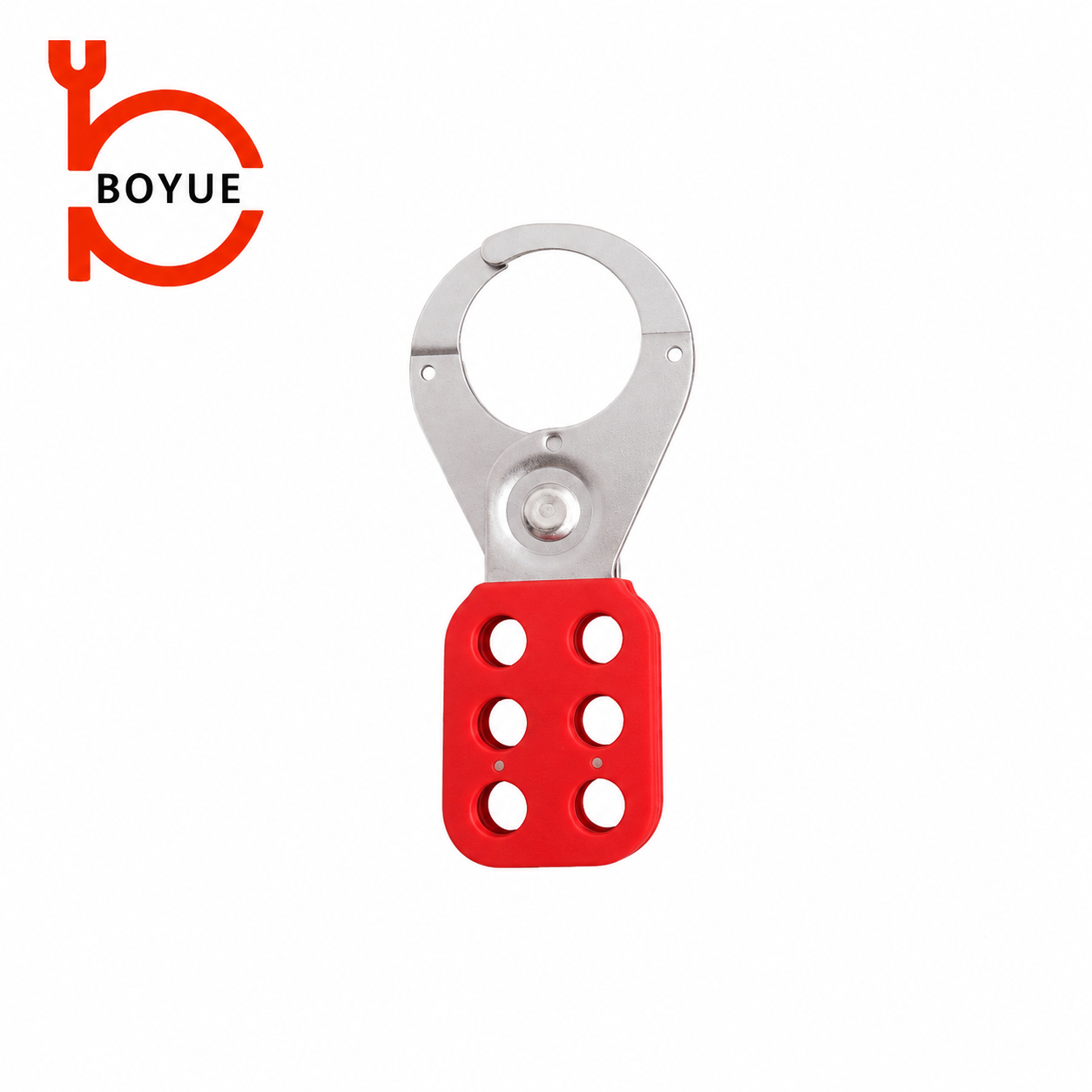
If the approved system uses a metal hasp, a nylon padlock does not change the material of the hasp or the rest of the installation. Assess the whole arrangement. The hasp selection guide addresses the interface and group-use questions that a padlock-only comparison leaves unresolved.
Specify keying and identification independently
Body and shackle selection do not decide who can open the lock. Include the required keying arrangement in the order and reconcile it with the employer’s personal-control policy. Terms such as keyed differently or keyed alike need a defined scope: a batch, a department or an established register can change what the supplier must deliver. Confirm how repeat orders will avoid unintended duplication.
The padlock keying systems guide explains those purchasing distinctions. Identification should remain readable and relate the lock to the assigned worker or role specified by the program. Color can support the system, but it should not be the only information used to establish ownership when several workers have identical locks.
Review spare keys, replacement keys and retained records through the employer’s approved process. Do not build an informal stores practice that lets anyone obtain a key to an active personal lock. A well-organized purchase record supports control only when access to the corresponding keys follows the same policy.
Make repeat orders traceable
Record the approved model, variant, shackle dimensions, body configuration, keying requirements and label artwork. Include the intended accessory and exposure conditions in the approval file. Ask the supplier to identify proposed substitutions before dispatch. A familiar product family name is insufficient when the delivered lock has a different shackle or cylinder arrangement.
At receipt, compare samples from the delivery with the approved reference and the order documentation. Quarantine unexplained differences for review rather than placing them in the same available-stock bin. Keep rejected items distinct from devices awaiting routine inspection so that a visual count does not accidentally classify them as ready for issue.
SAFEWorkManitoba’s Lock Out Procedures video below provides background on the wider safety process. It is educational context rather than a material comparison, a product test or evidence of an electrical rating.

Resolve mixed-model deliveries before issue
Consider a shipment in which two visually similar red locks have different shackle materials. If the order identifies only the body color, receiving staff have little basis for separating an intended variant from an accidental substitute. Add the exact configuration to the order and approval record, then reconcile the delivery before issue. Do not sort by appearance alone when a material requirement matters. A supplier explanation can clarify what was shipped, but the employer must still decide whether that variant is approved for the intended application. Preserve that decision for the next repeat order.
Frequently asked questions
Does a nylon lock body mean the shackle is nylon?
No. Confirm body and shackle construction separately for the exact ordered model and variant.
Is a nylon shackle an electrical protection rating?
No. A material description does not establish a rating or authorize energized work. Request applicable evidence and follow the electrical safety procedure.
Can a steel-shackle lock replace a nylon-shackle lock if it fits?
Physical fit alone is insufficient. The employer must review the application, exposure and program requirements before approving a substitution.
What makes a repeat order easier to verify?
Record the exact variant, dimensions, keying arrangement, identification and approved application, then compare the delivery with that reference.