
Safety Padlock Keying Systems: KA, KD and Master Keys
Safety padlock keying systems determine which keys open which locks. With keyed different locks, separate locks have different operating keys within the specified keying arrangement. With keyed alike locks, one operating key opens a defined set. A master-keyed system adds an overriding key for a defined group. For lockout/tagout procurement, choose the arrangement around individual ownership and controlled access—not convenience alone. Specify who receives each set, how codes are registered, and how later orders avoid unintended overlap. A master key, where the applicable rules and site program permit one, requires tightly controlled exceptional use.
This guide is for industrial buyers and safety managers planning lock assignments. It explains the order information and acceptance checks that prevent a technically correct shipment from creating the wrong access rights on site.
Start with the access rule, then select the cylinder arrangement
Write the desired access rule in plain language before requesting a quotation. For example: each maintenance employee has a personal set of several locks; the employee’s operating key opens their set; it must not open another employee’s assigned set. That statement is more useful than an order line saying “red padlocks, keyed alike.”
A second example is a defined set of equipment-isolation locks whose operating keys are captured in an approved group lockout box arrangement. Those locks have a different operational role from the personal locks attached to the box. Mixing the two roles makes key-control mistakes harder to detect.
The OSHA hazardous energy control standard describes personal identification and removal responsibilities in its US general-industry scope. It does not turn a particular commercial keying label into approval of an entire lockout program. Apply the rules relevant to your jurisdiction, industry, and task.
Compare keyed different, keyed alike, and master-keyed locks
The comparison below describes access relationships, not strength ratings or a universal legal approval. Supplier abbreviations vary, so include the full arrangement in the purchase specification.
| Arrangement | Which key opens the locks? | Procurement use to evaluate | Critical control question |
|---|---|---|---|
| Keyed different, often KD | A distinct operating key for each lock in the specified arrangement | Individually assigned locks with separate access | Is uniqueness controlled only within this order, or across the registered site system? |
| Keyed alike, often KA | One operating-key pattern opens a defined set | Several locks assigned to one person under the approved program | Can another person’s issued key open this personal set? |
| Master keyed, often MK | Normal operating keys plus a master key for a defined group | A controlled exception arrangement, only if permitted | Who can access the master key, and when may it be used? |
| Grand master keyed, often GMK | An overriding key spans multiple defined master-key groups | A reviewed large-site hierarchy where permitted | Does the larger override scope create access the site does not need? |
NIOSH’s Using Lockout and Tagout Procedures to Prevent Injury and Death during Machine Maintenance discusses assigned keys and supervisory control of master keys in unusual circumstances. This supports treating override access as an exception to manage, rather than an everyday time-saving feature.
Keyed different: define the boundary of “different”
Buyers often assume that KD means a key will never operate any other lock they have ever purchased. That promise should not be inferred from the abbreviation. Ask whether the supplier checks differences within a pack, within one order, or against a registered history of the customer’s previous purchases. Those are materially different purchasing commitments.
A key-code register connects the issued lock to its owner and order history. Protect the register because it contains access information. A visible serial identifier can help inventory management without publishing the key cutting information. Agree with the supplier which identifier is suitable for external marking and which information should remain restricted.
For repeat orders, identify the existing registered system and request written confirmation of the intended non-overlap boundary. If the supplier cannot provide that assurance, the buyer needs a different acceptance plan or system design. Do not invent a guarantee from a claim about the theoretical number of cylinder combinations.
Keyed alike: define the set and its owner
Keyed alike can reduce the number of operating keys one assigned worker needs when several locks are required. The risk appears when that same set is divided among people who should not be able to release each other’s personal protection. Packaging convenience should not determine assignment.
Describe each set explicitly. A fictional example is “six separately registered employee sets, three locks per set, with different operating-key patterns between sets.” The numbers illustrate order structure only. The site must determine actual quantities and whether the arrangement fits its approved program.
Also specify how many physical copies of the operating key accompany each set and how any spare is controlled. “One key system” can mean one key pattern, even when several duplicate keys physically exist. Key count and keying pattern therefore need separate order fields.
Master keys: convenience does not establish removal authority
A master key expands who can physically operate a lock. It does not automatically authorize that person to remove an absent employee’s lock. The employer’s documented exception process and applicable rules still govern the situation. Avoid writing purchase instructions that imply a supervisor may routinely clear personal locks at the end of a shift.
Jurisdictions and organizations differ. For example, CCOHS lockout guidance recommends one key for each lock and does not allow master keys in its described approach. Some programs impose similarly strict restrictions. Where that is the applicable requirement, choose a system without override access instead of assuming a US-oriented example transfers unchanged.
If override keys are permitted, define storage, named access authority, issue records, and the approved circumstances before placing the order. Grand master systems extend that access across more groups, which increases the consequences of loss. Order the smallest hierarchy that meets the reviewed operational need.
A practical order specification for a maintenance team
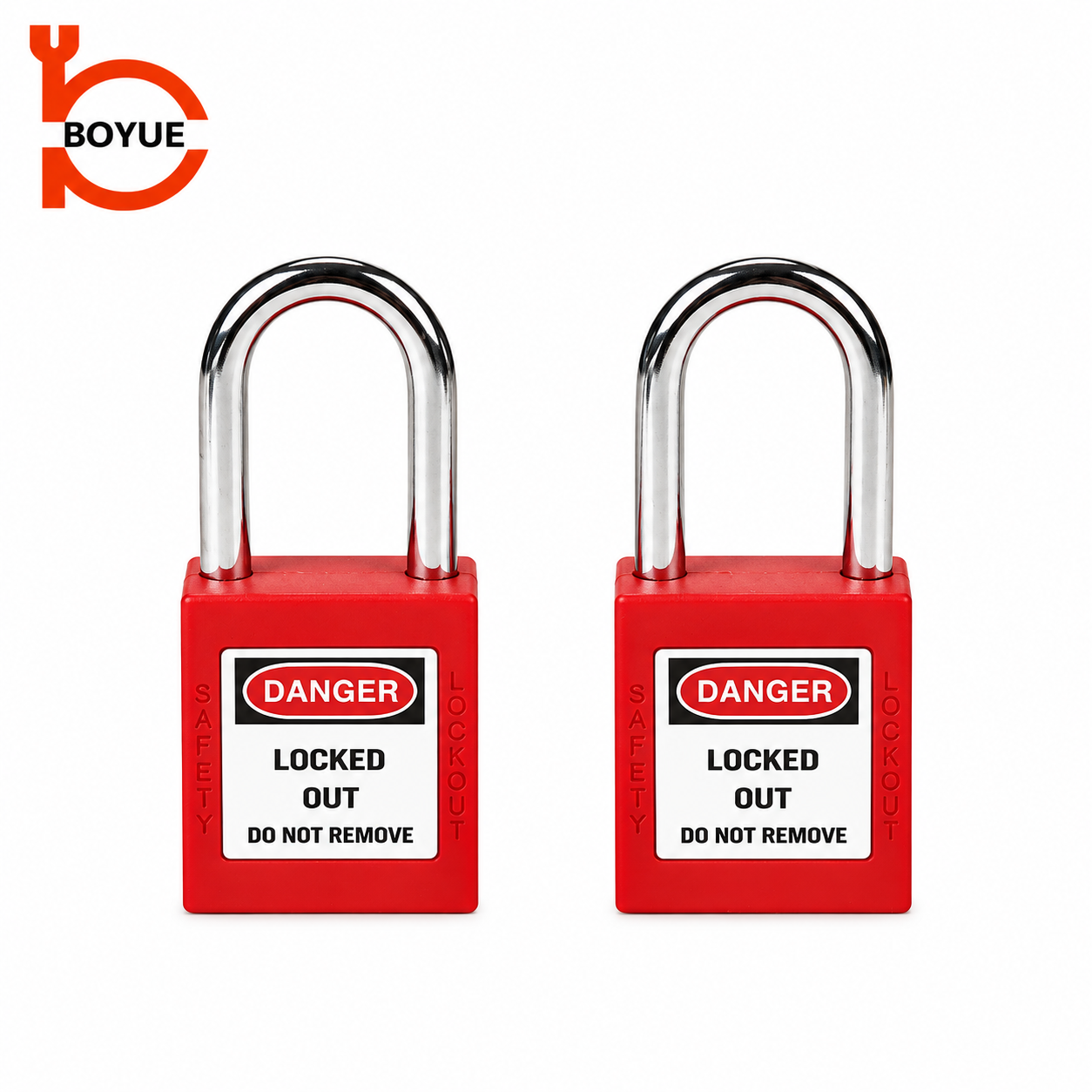
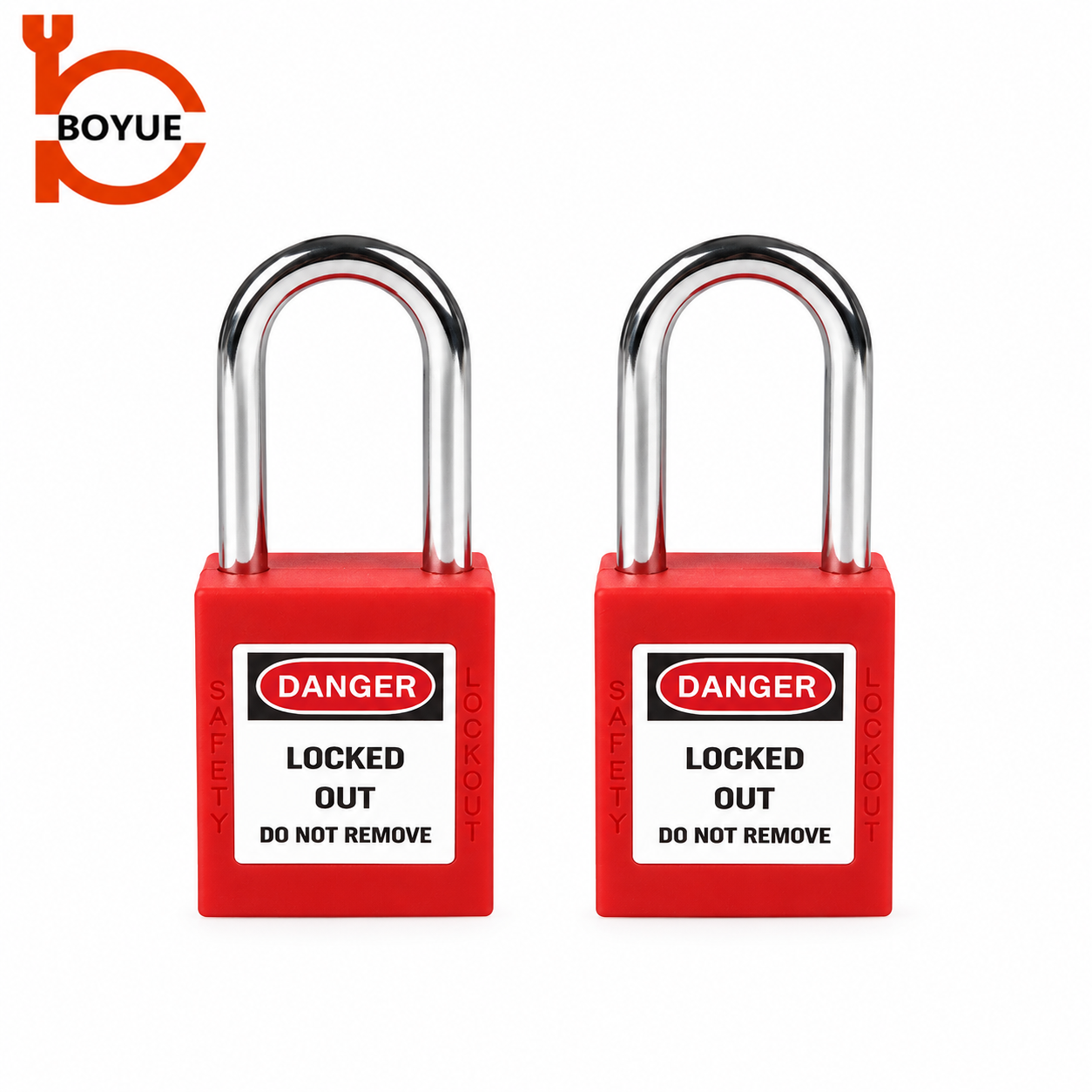
Separate physical product selection from access mapping. A red nylon body and steel shackle do not reveal whether the lock is KA, KD, or master keyed. Conversely, a correct keying arrangement does not prove that the shackle fits the intended device or that the material suits the environment.
Boyue’s 38 mm steel-shackle safety padlock product page lists multiple keying options. Confirm the exact body, shackle, keying arrangement, identification, and documentation for the quotation. The product photograph cannot establish the supplied cylinder configuration, and a steel shackle should not be treated as electrically insulating.
Prepare the following information for the supplier. These fields are a purchasing aid, not a regulatory checklist:
- Application and role: personal protection locks or equipment-isolation locks, kept distinct.
- Assignment plan: number of people, locks per person, and any separate equipment sets.
- Access map: which operating key opens each set and which cross-access must be excluded.
- Existing system reference: registered order or customer identifier for repeat purchases.
- Key quantities: issued operating keys, controlled spares, and whether override keys are prohibited or specifically permitted.
- Physical requirements: shackle clearance, device compatibility, material, and environmental conditions to confirm.
- Identification: owner label, visible lock serial, department marking, and language.
- Acceptance evidence: packing by assignment set, register format, instructions, and agreed compatibility checks.
Ask the supplier to return the proposed access map with the quotation. Resolve ambiguous abbreviations before approving production. A simple written statement of permitted and prohibited key relationships is usually easier to review than several pages of marketing descriptions.
Check the shipment on a bench before issuing locks
Keep the delivery separate from active lockout equipment until acceptance is complete. Reconcile quantities, model variants, labels, set packaging, and the register against the purchase order. Conduct key checks in a controlled bench setting, with no live isolation depending on those locks.
First confirm that each intended operating key opens its assigned lock or set and that the lock functions correctly. Then carry out the agreed cross-opening checks against other delivered sets and relevant existing sets. A small sample provides limited evidence; it does not prove that every possible pair in a large system is unique. Agree the scope of checks and supplier records before ordering rather than presenting a convenient sample as complete assurance.
If a key opens an unintended personal set, quarantine the affected items and investigate the access boundary before issue. Relabeling the body alone does not change the cylinder relationship. Correct the supplied arrangement and the register together.
Maintain control when people, keys, and orders change
Record issue, return, replacement, and retirement events. When an employee leaves, reconcile their locks and keys under the site’s process instead of dropping them into a general shared bin. When a key is lost, determine which locks and sets it can operate and follow the approved replacement response. Ordering another copy without reviewing the lost key leaves the original access risk unresolved.
For expansion, preserve the established set identifiers and non-overlap requirements in the repeat order. Do not ask a different supplier to reproduce a system based on body color or a photograph. If the existing manufacturer, registration, or code history is uncertain, make that uncertainty explicit and obtain a reviewed plan.
Use padlock station organization to support storage and issue discipline. The switch lockout overview concerns a different part of the equipment arrangement; the site procedure must establish which devices actually isolate energy. For a broader application starting point, see Boyue’s lockout applications.
Training context: keys belong inside an energy-control program
SAFE Work Manitoba’s Lock Out Procedures video explains the wider lockout context. It is a regional educational resource, not a demonstration of a specific Boyue cylinder or an approval of any key hierarchy. Use it alongside the site’s own training and applicable local requirements.
Watch Lock Out Procedures by SAFE Work Manitoba on YouTube.
Frequently asked questions
Does keyed different guarantee no duplicate key anywhere?
No such guarantee should be inferred from the label alone. Confirm whether the supplier manages differences within a pack, within an order, or across the customer’s registered system and previous orders.
Can several workers share one keyed alike personal-lock set?
Do not divide a set in a way that lets workers release each other’s personal protection. Define assignment and operating-key access around the approved site program and applicable requirements.
Does a master key allow routine removal of another worker’s lock?
No. Physical opening capability does not establish removal authority. Applicable rules and the employer’s documented exception process govern removal, and some programs prohibit master keys entirely.
Can I identify the keying system from the padlock color?
No. Body color can support a site’s identification system, but it does not establish the cylinder relationship. Verify the order records, set identifiers, supplied keys, and agreed acceptance checks.