
Portable Padlock Rack: Fit, Allocation and Return Checks
A portable padlock rack organizes and carries compatible safety padlocks between storage and work locations. Select it by the actual lock dimensions, usable positions, loaded carrying arrangement and issue-and-return process. A rack’s stated lock count is a capacity claim for compatible items, not proof that it fits every shackle or that a crew has every device needed for a job. The rack is also not a group lockout box or an energy-isolating device. Its role is equipment organization within the site’s approved programme.
This guide focuses on mobile padlock carriers. For fixed departmental storage, see the padlock station overview. For carrying a broader assortment of devices and consumables, the separate lockout bag selection guide covers different access and storage questions.
Define what the rack will carry
List the padlock models, shackle configurations and quantities that will actually be carried. Include any approved mix of short and long shackles. Record whether locks belong to individuals or are controlled through a defined equipment issue system. A carrier should support that arrangement rather than create an informal pool with uncertain ownership.
Distinguish padlocks from hasps, tags and device bodies. A rack designed to accept padlock shackles does not automatically provide secure storage for every accessory with a hole. Avoid hanging loose items in positions that obscure identification or prevent locks from closing. Use the manufacturer’s intended loading arrangement and the site’s assessment of the assembled carrier.
Consider the route and use pattern. A technician moving between several nearby machines has different carrying needs from a crew transporting a full set of devices across a large facility. The rack may supplement a kit or station. It should not be chosen as the sole container simply because its visible padlock count matches a purchasing target.
Match the hole and shackle geometry
Check the diameter and thickness of the rack’s locking positions against the actual padlock shackle. The shackle must pass through and close as intended. A nominal hole diameter is only part of the fit: a thick carrier section can consume usable shackle space, and the lock body can contact surrounding molded features.
Assess neighboring positions with real locks installed. Two locks may fit separately but interfere when adjacent positions are occupied. Long shackles can swing or overlap; larger bodies can obscure labels or make the handle awkward to grasp. Do not assume that a full twelve-position sample behaves like a rack holding only two display locks.
Use a documented sample review rather than modifying the carrier. Enlarging holes, cutting ribs or changing the handle can alter its behavior and invalidate the intended application. If a lock will not fit, resolve the model combination with the supplier. Do not select a different personal lock without also reviewing identification and key-control requirements.
Interpret the BOYUE PF-01 capacity correctly
The BOYUE PF-01 product page describes a reinforced-nylon portable rack and states that it can carry up to twelve padlocks. Treat twelve as a stated maximum for a compatible arrangement, not a promise that any twelve locks will fit without interference. Confirm the current drawing and intended use for the delivered variant.
The isolated rack image shows its molded handle and locking positions. It does not prove a particular loaded weight or compatibility with every BOYUE padlock. Ask the supplier for available instructions, dimensional information and any loading restrictions. Do not infer a working load rating from the rack’s shape or from another brand’s similar product.
Check the actual warning label supplied. It should remain readable and should not obscure the identification on the carried locks. Customized wording needs to match the site’s intended purpose. A carrier label should not suggest that equipment is isolated merely because the rack is empty or because all of its positions are occupied.
| Selection check | Practical review | What it does not prove |
|---|---|---|
| Hole and section fit | Fit the approved padlock and close it normally | Universal fit for different shackle sizes |
| Adjacent positions | Load the intended combination and check interference | A larger lock will fit because a smaller one did |
| Handle access | Check safe grip with the normal complete load | A certified lifting or suspension rating |
| Identification | Read each required lock reference and owner | That a colour alone establishes assignment |
| Retrieval | Remove the intended lock without rearranging unrelated stock | That every required isolation device is present |
| Return process | Reconcile serviceable, missing and withdrawn items | That isolation on equipment has been released |
This is an organization and purchasing checklist. The broader responsibilities for hazardous energy control are explained in CCOHS’s lockout guidance. The table is not a procedure for applying or removing personal locks.
Test the loaded carrying arrangement
Review the rack with the intended locks, not just empty. Confirm that the handle remains accessible and that lock bodies do not pinch the user’s normal grip or prevent retrieval. Consider how the rack will be placed down and carried through the actual work route. Keep the assessment within documented use and ordinary handling; do not improvise a strength test.
A hand carrier is not automatically suitable for suspension from a harness, hoist or vehicle mounting. Do not add hooks or straps without a documented approved arrangement. If the work requires both hands for climbing or access, the transport method needs its own assessment rather than an assumption that a molded handle solves the problem.
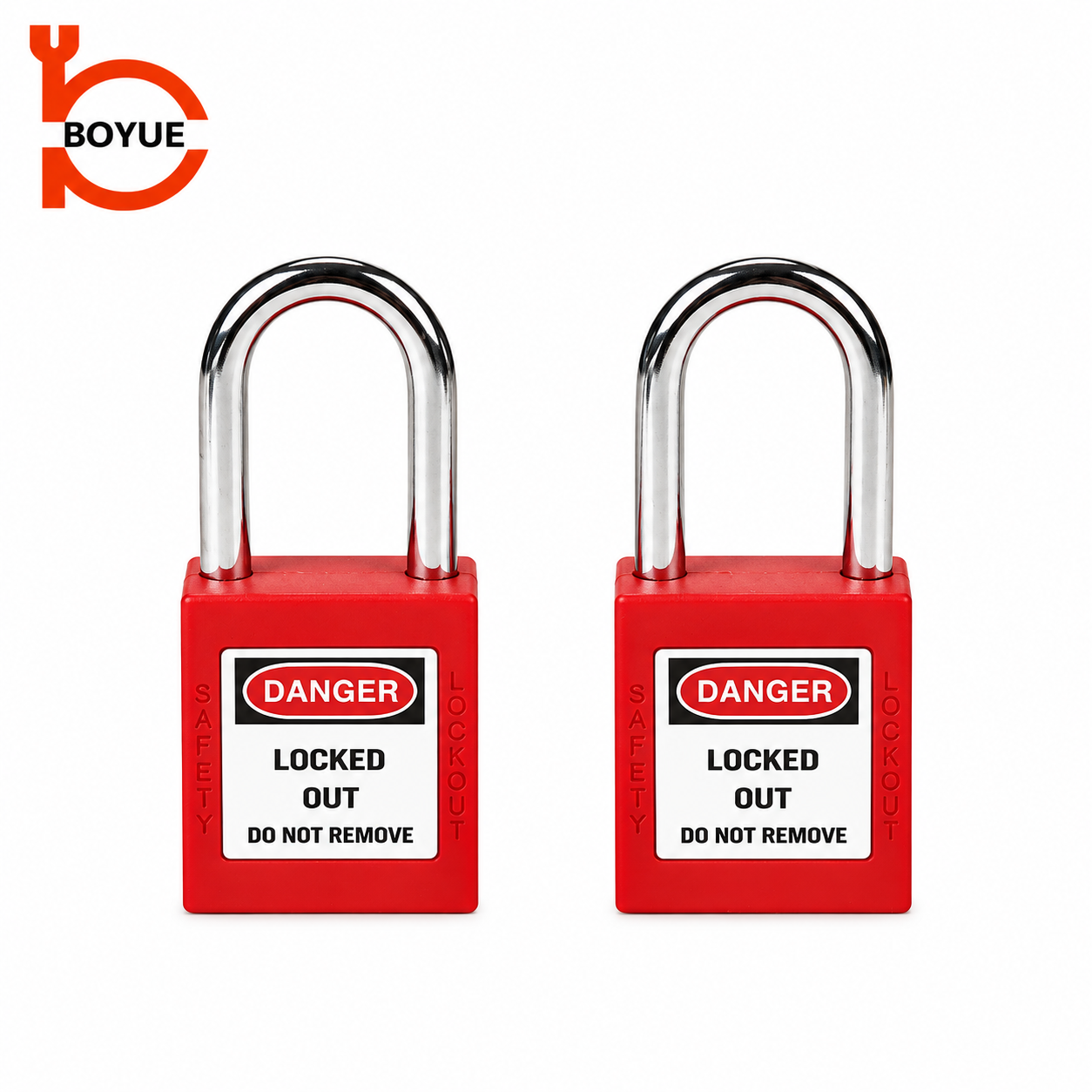
Separate transport concerns from device fitness. A carrier may move locks conveniently while some locks still require inspection or replacement. See the safety padlock inspection checklist for condition and withdrawal decisions. The product image above illustrates the kind of separate component whose fit and status need checking.
Keep ownership and key control visible
A portable rack can make several similar locks easy to gather together. That convenience creates a need to preserve clear assignment. Define whether each position is associated with a particular individual, equipment set or approved issue record. Use the site’s existing identification system, avoiding markings that conflict with personal ownership.
Keys require a separate controlled arrangement. Do not assume that a rack should carry keys with the locks simply because that looks tidy in a display photograph. Follow the approved keying and custody procedure. The padlock keying systems guide explains why physical similarity does not establish interchangeable ownership or access.
For shared stock, record who receives the items and when their status is reconciled. A rack position is a useful visual aid, but it should not be the only record. Locks may be legitimately in use on equipment, withdrawn for inspection or missing. An empty position cannot distinguish those states without supporting information.
Reconcile issue and return without changing isolation
Before issue, check the planned quantity and condition of the locks against the work requirements. Confirm that other needed lockout devices are available separately. A full rack does not establish coverage of breakers, valves or connectors. The work plan determines the required hardware and the authorized procedure determines how it is applied.
At return, reconcile the items expected back and record exceptions. A lock still protecting work is not an ordinary missing-stock problem. Do not remove it from equipment simply to complete the carrier’s count. Maintain the required protection and follow the site’s handover, release or missing-item process as appropriate.
Withdrawn items should stay physically separate from available stock. If a damaged lock is placed back on the carrier, another person may interpret it as ready to use. Use a clear controlled status and designated storage location. Resolve missing identification before reissue rather than relying on memory of which lock belongs in which position.
Connect the carrier with fixed storage sensibly
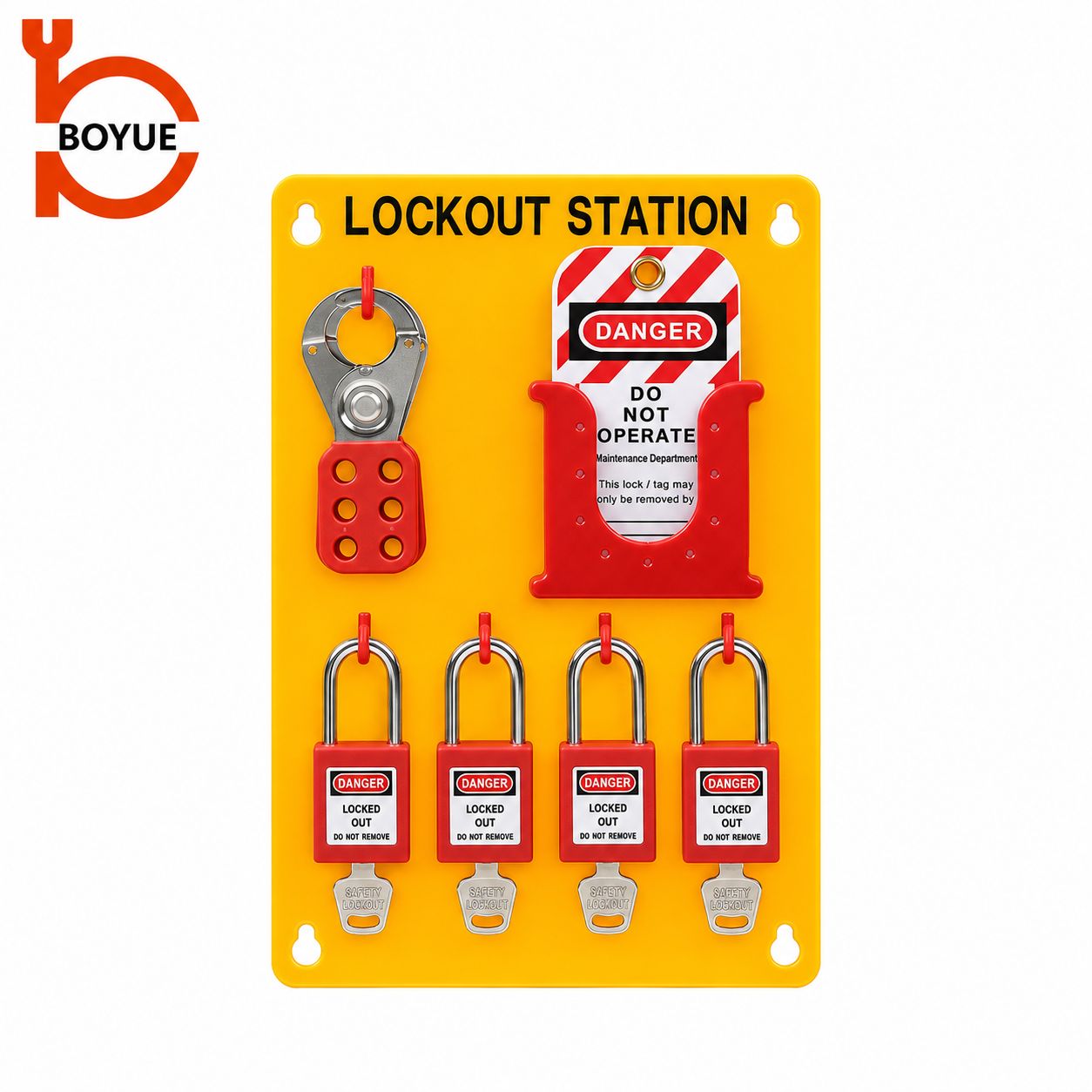
A fixed wall station can serve as a controlled storage and issue point, while a rack carries an approved set to the work area. The wall-station illustration shows a separate product category and a possible storage context; it is not a claim that the PF-01 mounts to that board or that their components are supplied together.
Choose the arrangement according to access, environment and inventory control. Protect serviceable locks from avoidable contamination and damage, and keep their identification readable. A tidy display should make status easier to understand. It should not encourage workers to return everything to a visually complete board before the actual isolation work is finished.
If a site already has adequate fixed storage and suitable mobile containers, a new rack may add little value. Evaluate retrieval, ownership clarity and loaded handling with a sample. Purchasing the carrier should solve an observed organization problem, such as confusion between personal sets, rather than become another accessory without a defined role.
Order and inspect the exact configuration
Include the proposed padlock references, shackle dimensions, intended quantities and carrying use in the enquiry. Request the rack drawing, instructions and any limitations. Clarify whether padlocks, labels or accessories are included. A photograph showing a populated rack does not necessarily mean the order includes its contents.
At receipt, compare the molded structure, locking holes, handle and label with the approved sample. Inspect for cracks, deformation, rough damage and unexplained changes. Recheck the fit of the actual lock combination if a rack variant or padlock model changes. Keep the acceptance record with the purchase reference for future replenishment.
The SAFE Work Manitoba video below supplies general lockout education. Its purpose here is to connect organized equipment with trained procedures, rather than demonstrate PF-01 handling. NIOSH’s hazardous energy overview likewise emphasizes the importance of a complete planned programme.
Watch Lock Out Procedures by SAFE Work Manitoba.
Frequently asked questions
Is a portable rack a group lockout box?
No. A rack organizes padlocks. A group box serves a different purpose within a defined group-isolation and key-control procedure.
Does twelve-position capacity mean every twelve locks fit?
No. Check the actual shackle dimensions, body sizes, adjacent interference and loaded handling of the intended combination against the rack’s instructions.
Does an empty rack prove all isolation points are locked?
No. Locks may be elsewhere, withdrawn or missing. Equipment isolation requires the procedure’s own application and verification record.
What should trigger a new carrier review?
Recheck a change in rack variant, padlock model, shackle configuration, quantity, carrying route or intended mounting arrangement. Preserve ownership and key-control boundaries when making substitutions.