
Cable Lockout Inspection: Damage, Retention and Withdrawal Checks
A cable lockout inspection should establish that the identified device remains undamaged, operates as its instructions require, and still suits its approved isolation point. Examine the cable, ends, body, locking positions and identification before use. Withdraw a device with suspected structural damage, unreliable retention or unknown service history until a responsible reviewer resolves the concern. A satisfactory hardware check does not prove that equipment is isolated: the authorized worker must still follow the equipment-specific energy-control procedure and verify its effectiveness.
This guide addresses condition and withdrawal decisions for existing cable devices. For initial purchasing and dimensional compatibility, use the separate cable lockout selection guide. The checks below are a practical inspection framework to adapt to the exact manufacturer’s instructions, rather than a universal test specification or certification.
Start with identity and the approved application
Match the device to its model, cable specification and approved application record. Similar red bodies may contain different mechanisms, accept different cables or have different environmental limits. A replacement cable that passes through the opening is not automatically an approved replacement. If the model is uncertain, stop the issue process and obtain identifying information before interpreting its condition.
The BOYUE AC-02 cable lockout illustrates a squeeze-handle design. Its visible spring, handle and cable entry are useful inspection locations, but the photograph does not establish allowable wear, pull resistance or chemical compatibility. Obtain the current instructions for the exact supplied version and record any limits relevant to the work area.
Keep energy-control devices in their assigned role. OSHA’s hardware guidance describes dedicated, identifiable devices suited to their exposure. Do not borrow a lockout cable for lifting, securing deliveries or temporary mechanical repairs, then return it to a station without review. An unexplained load or exposure history is a reason to withhold it from issue.
Inspect the accessible cable length and both ends
Place the unused device in a safe inspection area with adequate lighting. Follow its instructions for releasing and examining the cable. Look along the accessible length rather than checking only the first section next to the body. Pay particular attention to locations previously routed around corners, through apertures or against equipment surfaces.
Look for cuts, crushed sections, sharp kinks, visible strand damage, unusual discoloration and changes in the covering. Do not run an unprotected hand along a cable that may have projecting wire. A coating can conceal the underlying condition, so an apparently continuous outer surface should not override evidence of crushing or a known damaging event. Do not peel or cut the covering to investigate unless the manufacturer has an approved inspection method.
Examine the visible end fittings and the transition between each fitting and the cable. A loose end, displaced sleeve or altered termination requires assessment. Do not crimp, tape or glue a questionable termination as a field remedy. Record the observation and quarantine the device; the appropriate disposition depends on the model and approved service arrangements.
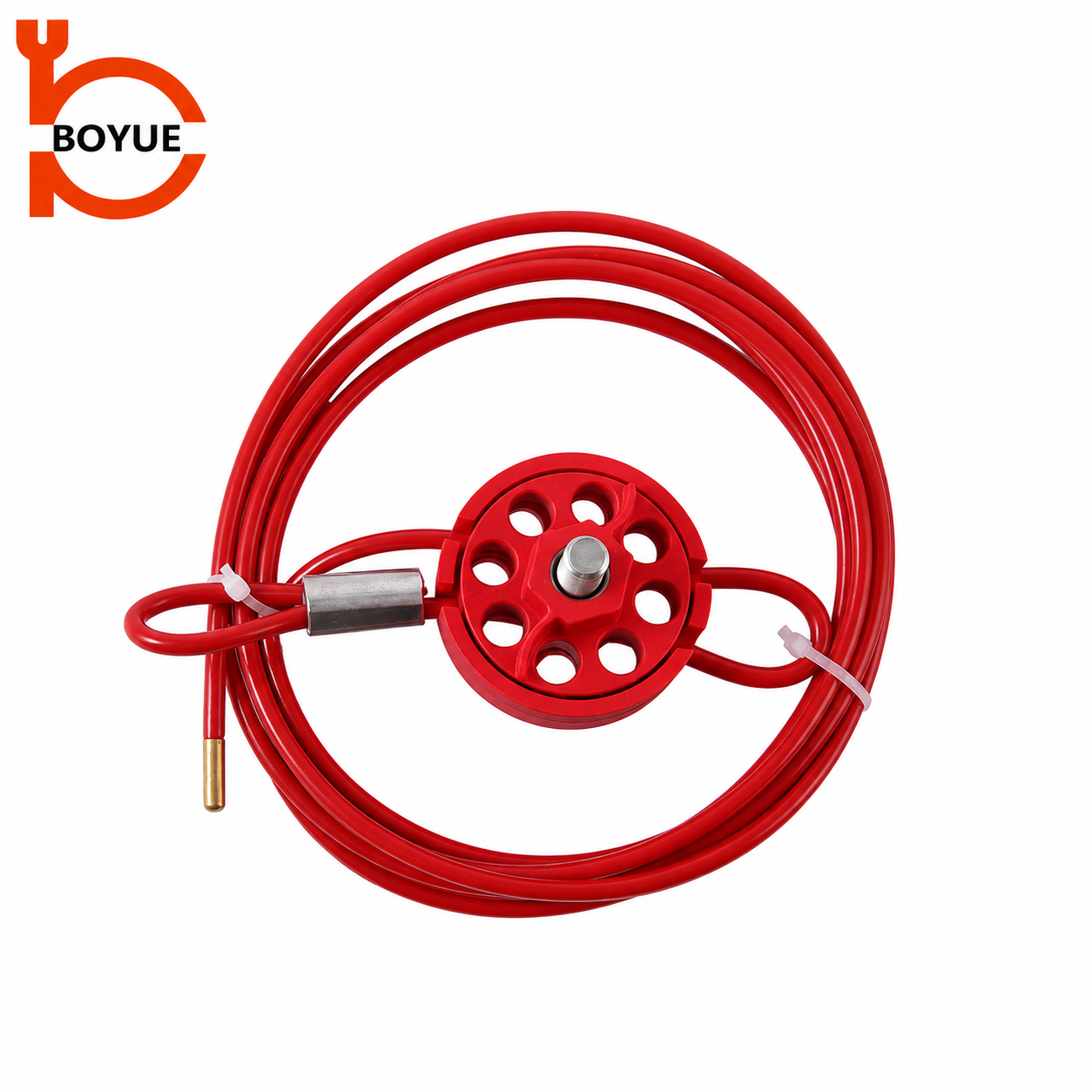
A round-body AC-03 example has a different cable entry and retention arrangement from the squeeze-handle design. Use its own instructions when assessing engagement. The image identifies components to discuss with the supplier; it does not demonstrate that the pictured device has passed a physical inspection or that its cable can be substituted into another model.
Check the body, moving parts and locking positions
Look at the body from all accessible sides. Cracks around an entry point, damaged hinges, separated parts or deformation near a locking hole can affect how the assembly closes. Distinguish removable surface contamination from damage to the underlying material. If contamination prevents a reliable examination, withhold the device until an approved cleaning method makes assessment possible.
Operate the release and adjustment mechanism only as described for the exact device. Watch for sticking, inconsistent movement or a closure that needs unusual force. A mechanism that sometimes catches is not cleared by one successful cycle. Do not dismantle it, add lubricant or tighten an unidentified fastener simply to make it feel smoother. Seek model-specific service advice.
Check the intended padlock with the device in the approved configuration. The shackle should occupy its designated position and close completely without forcing adjacent parts. Inspect the personal lock separately using the safety padlock inspection checklist. A sound cable body cannot compensate for a damaged or incorrectly assigned padlock.
Use a clear inspection decision table
The following table is an editorial checklist for documenting observations. It supplies no numerical wear limits or prescribed test loads. Model-specific instructions and the site’s approved withdrawal criteria determine the final decision. OSHA’s cited hardware guidance supplies the general durability and restraint context; it does not approve these individual devices.
| Inspection area | Observation to record | Action before issue |
|---|---|---|
| Model and cable identity | Missing model, unexplained cable replacement or uncertain history | Hold until the exact assembly and application are confirmed |
| Cable covering and visible wire | Cut, kink, crushing, exposed damage or suspected corrosion | Quarantine for documented disposition |
| Ends and fittings | Loose, displaced or modified termination | Do not improvise a repair; seek supplier guidance |
| Body and moving parts | Crack, distortion, binding or inconsistent engagement | Withhold from use and assess the cause |
| Locking positions | Distorted hole or incomplete padlock closure | Reject the combination until corrected and rechecked |
| Identification and records | Unreadable owner or missing application reference | Restore traceability before issue under the site system |
Avoid a single checkbox labelled “looks good.” Record what was examined and any reason an area could not be assessed. An explicit hold decision is more useful than a vague pass accompanied by an unresolved note about a damaged cable.
Separate device condition from cable-route approval
A serviceable device can still be installed on an unsuitable route. After the equipment has been made safe for the planned verification activity, the authorized worker must use the approved route and confirm that the isolating device remains secured as required. Follow the equipment-specific procedure; do not experiment with an unfamiliar route on energized equipment.
Review contact with edges, available movement, access to the release mechanism and interaction with neighboring hardware. A cable drawn tightly around an inappropriate component does not establish isolation. The CCOHS lockout overview distinguishes an energy-isolating device from a control-circuit switch. This distinction matters when a convenient handle or nearby bracket seems easier to loop around than the specified isolation point.
A route change can invalidate an earlier compatibility assessment even when the cable itself is unchanged. Record changed equipment geometry, revised guarding or a new padlock model and refer the combination for review. Do not treat an approved device list as blanket approval for every possible use of each listed item.
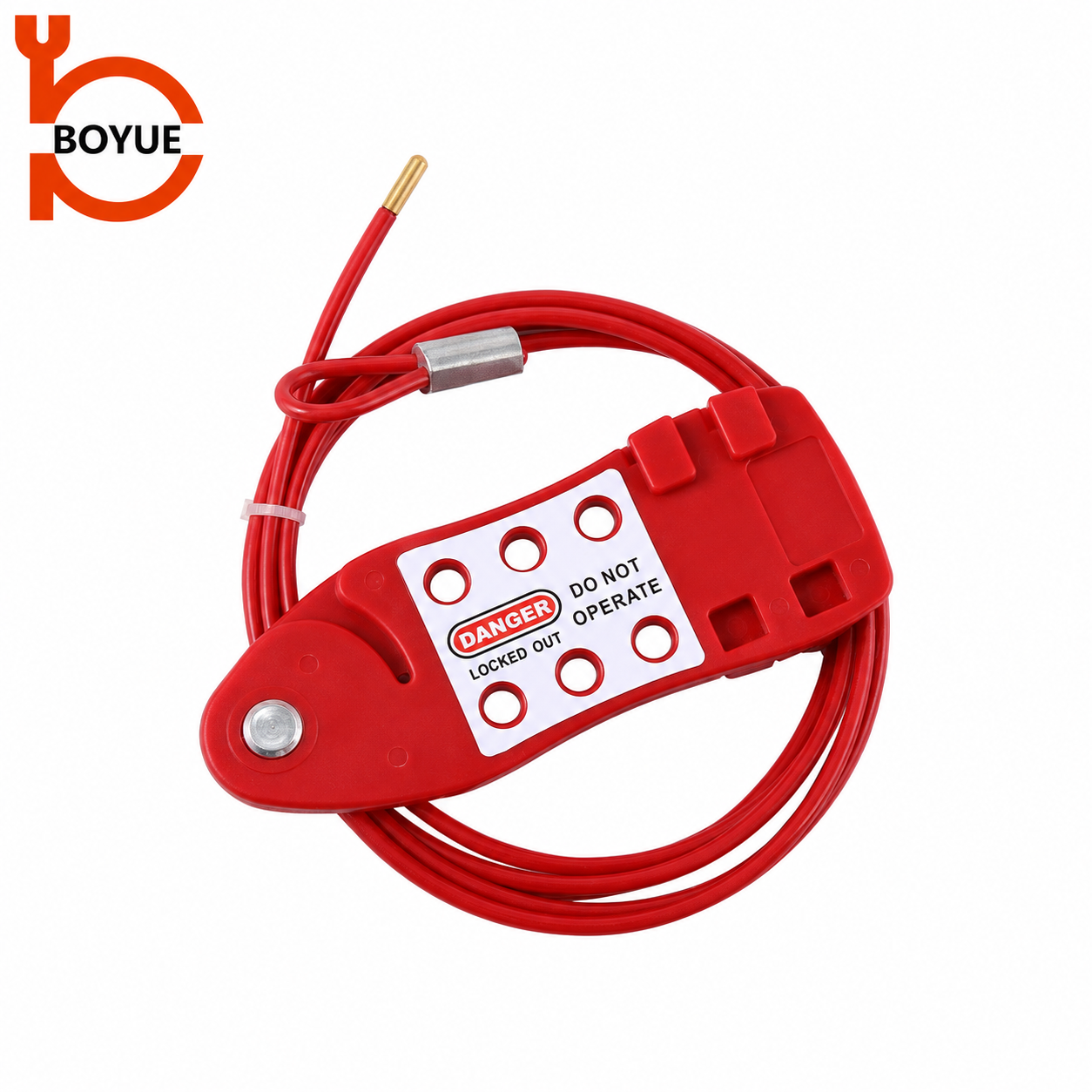
The fish-type AC-04 illustration shows another closure layout with multiple locking positions. Assess the exact occupied positions and closure method for that model. The presence of several holes does not establish a group procedure, usable capacity with every padlock or approval to control several unrelated energy sources with one cable.
Quarantine defects without disrupting active protection
If a defect is discovered before use, separate the item from serviceable stock and label the reason for the hold. A storekeeper should not need to infer the problem from a photograph alone. Include the model, asset reference, observed location and name of the person reporting it. Prevent a replacement picker from returning the same item to a ready-to-use bin.
A defect found during an active isolation needs the site’s controlled response. Do not remove or loosen the installed device merely to examine it more closely. Notify the responsible authorized person and maintain protection while the procedure determines how the condition will be addressed. This article does not authorize removing someone else’s lock or bypassing an isolation point.
For shared work, coordinate the response with the documented group lockout and key-control arrangement. Replacing one component must not silently interrupt another person’s protection. Record both the defective item’s disposition and the approved replacement so the equipment record reflects the assembly actually in service.
Decide maintenance and replacement from evidence
Use only the cleaning, storage and service methods accepted for the exact device. Avoid publishing a universal lubricant, solvent, maintenance interval or expiry age for all cable lockouts. Different coverings, body materials and mechanisms can require different treatment. Ask the supplier when the available instructions do not resolve an exposure or service question.
Distinguish routine hardware checks from inspection of the energy-control procedure. A dated checklist for one cable does not demonstrate that workers followed the machine procedure correctly. Conversely, an earlier procedural audit does not establish that a device damaged yesterday remains serviceable today. Keep the records connected while preserving their separate purposes.
For replacement enquiries, send the model, approved application, safe photographs, defect location, exposure history and compatible padlock details. Include the equipment reference and any required cable specification. Require confirmation of the supplied assembly rather than accepting a visually similar cable. Keep the withdrawn item controlled until the reviewer authorizes its final disposition.
Training resource: inspection within the complete procedure
The following SAFE Work Manitoba video explains the wider lockout process. Use it to reinforce why hardware condition is only one part of hazardous-energy control. It is not a demonstration or approval of the BOYUE cable models shown here, and it does not replace hands-on training for the site’s equipment.
Watch Lock Out Procedures by SAFE Work Manitoba.
Frequently asked questions
Can damaged cable covering be repaired with tape?
Do not use tape as an improvised return-to-service repair. Quarantine the device and obtain the exact manufacturer’s disposition for the observed damage and application.
Does a successful pull check prove the whole device is safe?
No. Follow only the specified functional checks. Identity, visible condition, approved configuration and equipment isolation require their own assessment; no universal pull load is established here.
Is a cable inspection the same as a procedure inspection?
No. One concerns an item’s condition and suitability. The other examines the energy-control procedure and its implementation. Maintain both under the applicable program.
What information helps BOYUE identify a replacement?
Provide the model, cable and end details, application reference, compatible padlock dimensions, safe photographs and damage history. Confirm the exact replacement assembly before returning it to stock.