
Electrical Plug Lockout Inspection: Shell, Closure and Cord Exit
An electrical plug lockout inspection should confirm that the enclosure, hinge, closure, locking positions and cord exit can still prevent the intended disconnected plug from being reconnected. Reject cracks, distorted mating surfaces, damaged locking holes and any configuration that allows the plug to escape. Check the exact enclosure with the intended plug and personal lock under the site’s safe pre-use process. This is a condition check, not proof that the machine has no hazardous energy. Follow the approved isolation procedure and product instructions before servicing, and quarantine devices whose protective function cannot be confirmed.
Establish what is being inspected
Identify the enclosure model or family, the intended plug and the supplied padlock arrangement. A box returned from another department may resemble the expected device while having a different hinge, opening or closure. Start with a controlled equipment record so that the inspection applies to a known configuration rather than a red or yellow plastic shape.
Inspect unused equipment in a safe location before issue. If a suspected defect is discovered on an active lockout, do not open the enclosure simply to complete a checklist. Keep personnel protected and involve the authorized person responsible for the isolation. Replacing active protection requires the employer’s controlled process; an inspection article cannot authorize its removal.
The CCOHS lockout overview explains that a lockout program includes responsibilities, equipment-specific procedures and appropriate hardware. The enclosure check supports that program. It does not replace the separate decisions about the task boundary, stored energy or the qualifications of the person doing the work.
Examine the shell and mating surfaces
Inspect the outside and accessible inside surfaces for cracks, missing sections, deformation and signs of unsuitable exposure. Pay attention to corners, closure edges and areas surrounding the cord openings. A fine crack near a locking hole can matter more than a broad superficial scuff elsewhere because the hole forms part of the retained closure.
Use the manufacturer’s rejection criteria where available. Do not make up a permissible crack length, wall-thickness reduction or impact rating. If damage raises doubt about the enclosure’s function, remove it from service pending a competent decision. A visual check cannot establish the remaining strength of a material that has been chemically attacked, overheated or damaged internally.
Mating edges should meet as designed without forcing, bending or holding the halves together by hand. Debris can prevent proper closure, but cleaning must follow the product guidance. Do not use an aggressive solvent to restore appearance or trim an edge to make the enclosure close. Altering the shell changes the configuration that was originally selected.
Check the hinge through its permitted movement
With the empty device outside an active isolation, move the hinge through its normal permitted range. Look for broken hinge features, displaced pins, unusual looseness and binding. Some products use a separate pin; others use moulded connections. The expected behaviour depends on the exact design, so compare with its instructions or an accepted reference sample.
Observe whether hinge movement changes how the closure edges align. A device may close when carefully supported on a bench yet gap when handled normally. Record that behaviour instead of treating successful closure once as a pass. Do not repeatedly flex a suspect component to estimate how long it might last.
Check for missing original parts. A replacement screw, tie, improvised pin or adhesive repair should not be accepted merely because the box can still be assembled. Use only a manufacturer-approved repair process and parts, if one exists. Otherwise quarantine the device and provide the inspector’s findings to the responsible person.
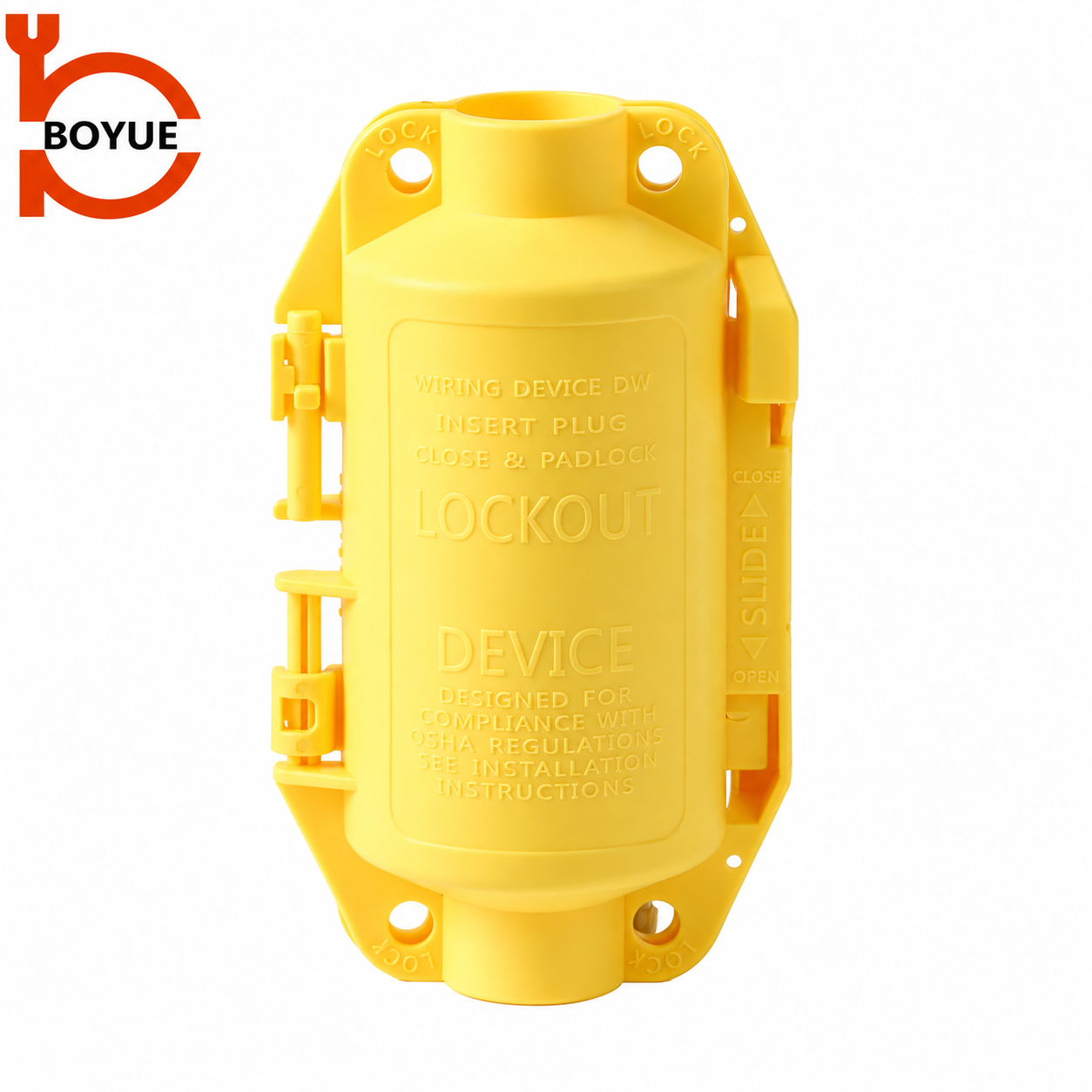
The elongated enclosure shown here has a different opening and locking-hole layout from the rectangular cover image. Inspection must follow its own supplied configuration; a pass for one design does not establish a pass for another.
Inspect the locking positions with the intended lock
Examine the holes, ears or tabs used to secure the closure. Look for elongation, splits, missing material and distortion that permits the closure to separate. Make sure the intended personal-lock shackle passes through the specified features and can fully close without forcing. The lock body also needs space to hang or sit without prying against the enclosure.
A shackle that passes through one hole is not necessarily securing both halves. Confirm the complete closure arrangement from the exact product instructions. Do not infer that every visible hole can be used independently or that an extra hole increases capacity for group protection.
Inspect the personal padlock separately. A sound enclosure does not compensate for a lock that fails to latch, has an uncertain key identity or cannot be operated reliably. The existing safety padlock inspection checklist addresses that component. Keep the lock and enclosure decisions traceable so that a defective part is not returned to another kit unnoticed.
Review the cord exit and plug retention
A previously accepted fit should be rechecked when the plug, cord or enclosure changes. With the equipment safely disconnected and under the approved process, confirm that the plug is fully enclosed as intended and that the cord exits through the correct feature. Closing the box should not pinch, crush or sharply bend the cord.
Inspect the exit edge for damage that could harm the cable jacket. Also check whether a broken or distorted opening could allow the plug to be withdrawn while the enclosure remains locked. A larger opening created by damage is a condition failure, not a convenient adjustment for a different cord.
Do not energize equipment to demonstrate retention or pull hard enough to damage the plug, lead or lockout device. Follow a documented safe method. If the enclosure cannot retain the intended plug without harmful pressure on the cord, the assembly needs review. The earlier electrical plug lockout sizing guide explains initial clearance and plug-envelope decisions; this inspection checks whether the accepted configuration remains serviceable.
Record observations and disposition
The table below organizes practical pre-use observations. It does not prescribe a statutory inspection interval or a universal repair tolerance. The NIOSH hazardous energy control guidance places hardware within a wider written program covering multiple forms of hazardous energy.
| Area | Useful inspection observation | Appropriate disposition when uncertain |
|---|---|---|
| Shell | Location of a crack, missing corner or distorted wall | Quarantine for a documented suitability decision |
| Hinge | Missing part, displaced pin, binding or poor alignment | Keep out of issue stock; do not improvise a repair |
| Locking features | Elongated hole, split tab or incomplete engagement | Reject the uncertain closure arrangement |
| Cord exit | Sharp damage, pinching or an unintended escape path | Review both device condition and actual plug fit |
| Identification | Model and accepted application cannot be established | Resolve identity before approving reuse |
| Personal lock | Shackle does not close or key ownership is unclear | Remove the lock from available stock separately |
An effective record includes the device identifier, date, inspector, intended configuration, observations and final disposition. Photographs should show the defect and enough context to identify the component. “Bad box” is less useful than identifying a cracked hinge feature and explaining that closure alignment could no longer be confirmed.
Distinguish damage from an unsuitable application
A clean, undamaged enclosure can still be wrong for a particular plug. Conversely, a correctly sized model can become unserviceable through damage. Keep those conclusions separate. “Wrong variant for this plug” calls for an application review; “broken locking tab” calls for withdrawal of that item. Mixing the two can result in damaged hardware being sent elsewhere as a supposedly usable alternative.
BOYUE’s ABS electrical plug lockout enclosure family provides a product reference for enclosure-based protection. Confirm the supplied variant, current material information, usable internal geometry and permitted lock arrangement with the supplier. Do not infer water resistance, dielectric performance or chemical suitability from colour, a generic family name or the white-background product image.
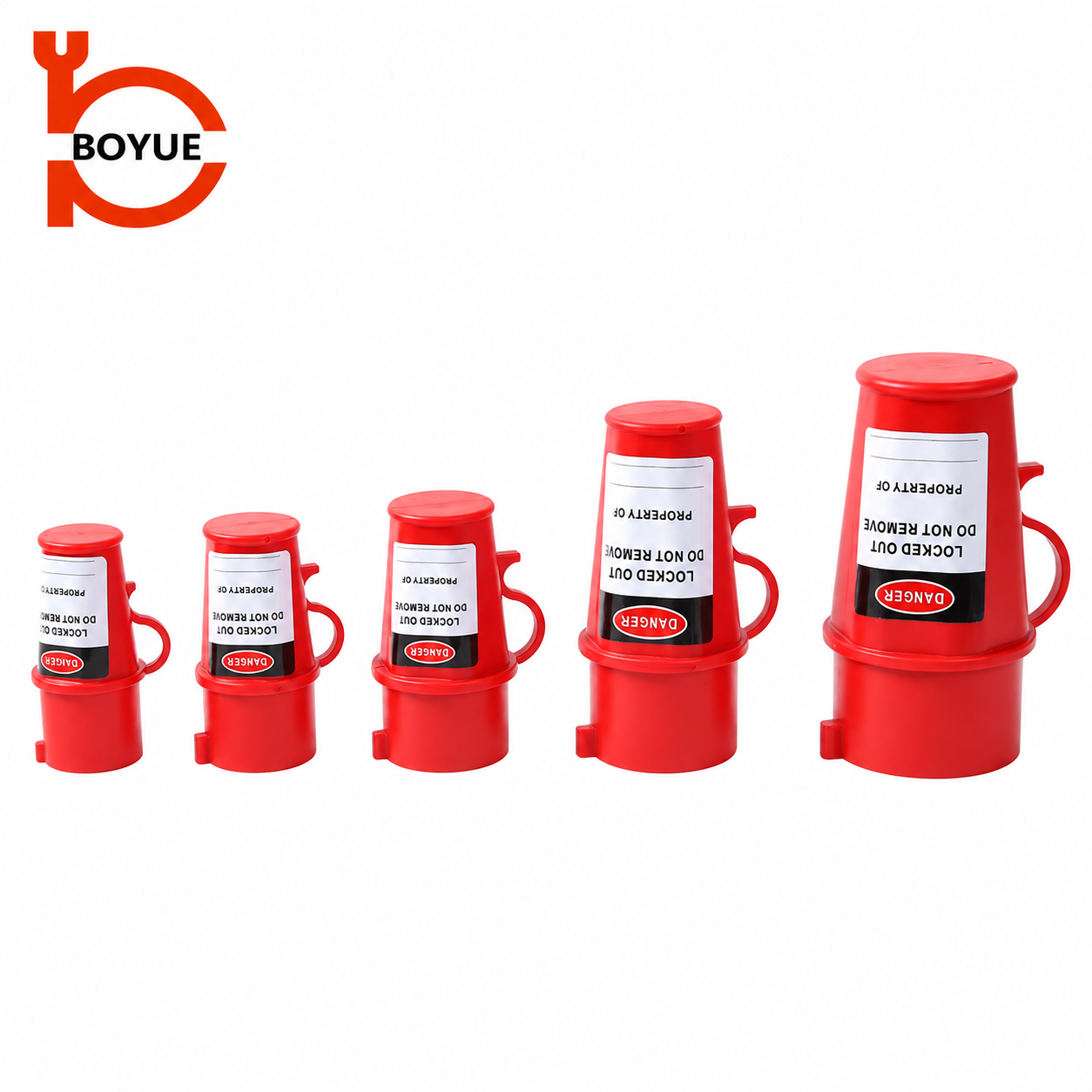
The cylindrical family illustrates why visual similarity is an inadequate inventory identifier. The illustrated size progression is not a measurement scale, and no environmental rating can be read from the photograph.
Keep the energy-control decision separate
A closed plug enclosure does not address every hazard on every machine. A second electrical feed, battery, stored pressure, spring, raised part or rotating assembly may require separate controls. Determine these through the machine-specific assessment. Inspection acceptance should never be written as “machine safe” when only the enclosure condition was reviewed.
For U.S. general-industry work, OSHA 1910.147 describes the cord-and-plug exception in terms of unplugging that controls the relevant unexpected energization or startup hazard and exclusive control of the plug by the employee performing the work. It is not a general exemption for every portable machine. Electrical work may also involve separate applicable requirements.
The existing cord-and-plug exclusive-control guide discusses that eligibility question in more detail. Use it when deciding the protection method; use this article for inspection and quarantine of the selected enclosure. Neither decision should be inferred from the other.
Handle defects without weakening active protection
For unused stock, identify and segregate suspect devices so that another employee cannot accidentally issue them. Use the site’s withdrawal process and record who can approve repair or replacement. Do not place a rejected box back in the same unmarked compartment while waiting for a purchasing decision.
For an active isolation, notify the responsible authorized person and keep exposed workers protected. Any transfer to replacement hardware must preserve protection under the approved procedure. Never remove a person’s lock, cut a device or reconnect the plug because a routine inspection has discovered a problem. A defect changes the planning decision; it does not grant removal authority.
After authorized maintenance is complete and the device has been returned through the correct release process, inspect it before putting it back into available stock. Record a replacement against the retired identifier when applicable. For recurring damage, review storage, transport and application instead of repeatedly replacing the same part without finding the cause.
Educational context: lockout beyond the enclosure
SAFE Work Manitoba’s general lockout video provides context for the sequence of protection. It is not a model-specific plug enclosure inspection demonstration, and it does not replace the employer’s training or verification requirements.
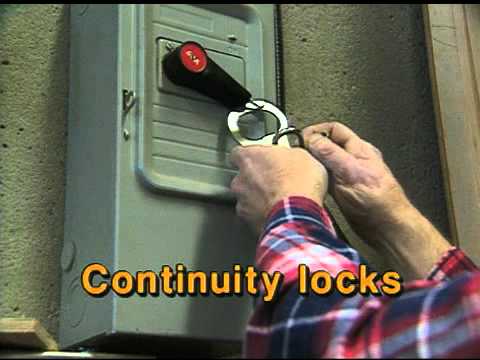
Watch Lock Out Procedures by SAFE Work Manitoba.
Frequently asked questions
Can a cracked enclosure remain in service if the lock still closes?
Do not accept that as proof of protection. A crack may affect retention or closure strength. Quarantine the enclosure and apply the manufacturer’s rejection criteria or obtain a documented competent decision.
Should inspection include the personal padlock?
Yes, as a separate component check. Verify the intended shackle fits and closes correctly, then apply the site’s padlock inspection and key-control requirements. Neither component compensates for a defect in the other.
Does a plug lockout need a universal annual replacement date?
This guide establishes no universal retirement interval. Follow the manufacturer’s instructions and the employer’s inspection system, and withdraw damaged or unsuitable equipment whenever the problem is identified.
Can I open an active enclosure to inspect its inside?
Not as a routine pre-use check. Keep personnel protected and refer the issue to the responsible authorized person. Opening or replacing active protection must follow the employer’s controlled procedure.