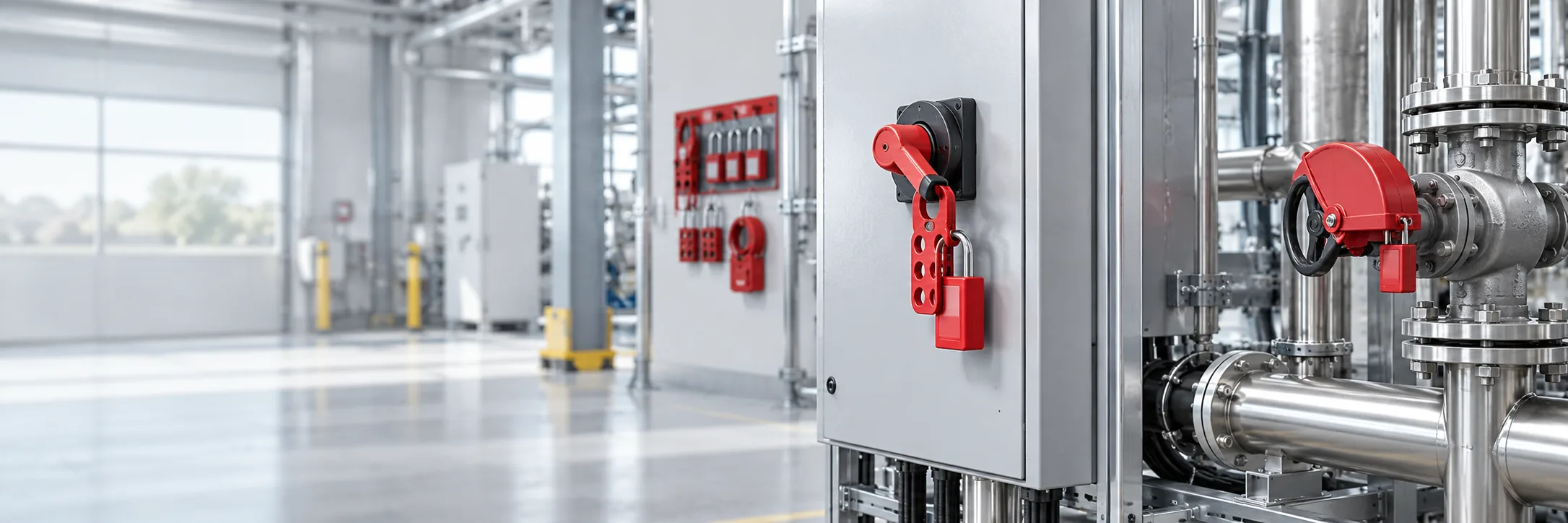
Lockout Station Placement: Plan Safe Access Before Service
Lockout station placement should let authorized employees obtain the correct devices before servicing begins, using a safe, dependable route on every relevant shift. Choose the location from actual work areas, access restrictions and environmental conditions, then validate it with the people who retrieve the equipment. A visible board is not enough if a locked doorway, moving vehicle route or blocked aisle makes it difficult to reach. This guide explains how to compare central and area stations, check retrieval routes and document placement decisions without confusing a storage station with an active group lock box.
Start with the work map, not an empty wall
List the machines and servicing areas the proposed station will support. Include remote equipment, utility spaces and tasks handled by contractors or an out-of-hours team. Mark where employees normally receive work instructions, collect equipment and enter the work area. Those routes provide a better starting point than the nearest unused wall in a manager’s office.
The NIOSH hazardous energy control resource emphasizes a planned program rather than hardware alone. Placement is an organizational decision within that program. It should help employees obtain approved equipment; it does not determine the machine’s isolation boundary or authorize a servicing task.
Record which areas the station is intended to cover and who owns that decision. A simple floor plan can show station identifiers, access routes and the boundaries between supply areas. Avoid implying that the nearest station necessarily contains the approved device for every machine nearby. Coverage should be stated and checked, not assumed from distance.
Compare a central station with area stations
A central location can simplify replenishment and oversight, particularly when several areas use the same approved hardware. Its weakness may be travel or restricted access. Area stations can shorten retrieval routes and make specialized devices easier to identify, but they create more locations to maintain. Neither arrangement is automatically better for all facilities.
Compare the actual retrieval tasks. A shared workshop station may work well for planned maintenance but become inaccessible when the workshop is closed. An area station near a production line may serve routine work effectively while offering too little space for the approved specialist equipment required elsewhere. A combined arrangement can be appropriate when its coverage and responsibilities are clear.
Use hypothetical demand scenarios to test the plan. For example, consider one authorized employee collecting a standard padlock and another needing a machine-specific accessory at the same time. Identify whether both can reach the correct stock without entering a restricted area or confusing one machine’s equipment with another’s. These scenarios are planning exercises, not claims about a BOYUE installation.
Review the approach route during normal operations
Walk the route as it is actually used. Check doors, access-control points, traffic crossings, stairs and temporary storage areas. A station may be visible from a workstation but reachable only by passing through a different department. A door that is open during the day may be locked on the night shift. Document those conditions before accepting the location.
Do not place a station where retrieval requires reaching over operating equipment, entering an unprotected danger area or standing in a vehicle path. Keep the approach and the station’s usable space compatible with the facility’s access and emergency arrangements. Applicable aisle, egress, accessibility and electrical-clearance requirements must be resolved for the specific site; this article does not supply universal dimensions.
Evaluate the station with its door or cover open, where applicable. The open position may obstruct an adjacent route even though the closed cabinet fits neatly on the wall. Consider the employee carrying the retrieved items and reading the stock labels, not just the footprint of the empty station.
Check visibility without sacrificing protection from exposure
Good identification helps people find the correct station, but high visibility is only one criterion. Examine dust, washdown, heat, sunlight, chemical splash, vibration and impact exposure at the proposed location. Confirm the exact station’s documented environmental suitability instead of treating a bright colour or a cover as an environmental rating.
BOYUE’s BY-4 acrylic safety lockout station is a wall-storage product reference. Confirm the supplied station, ordered contents, mounting instructions and environmental limits before selecting its location. Product imagery does not establish that an open board is suitable for outdoor weather, aggressive cleaning or a particular industrial atmosphere.
Check mounting suitability separately from placement convenience. The responsible installer needs the actual loaded configuration, wall construction and manufacturer’s mounting instructions. Do not choose fasteners or drill near concealed services solely from a photograph. The installation should remain secure and accessible under the site’s approved facilities process.
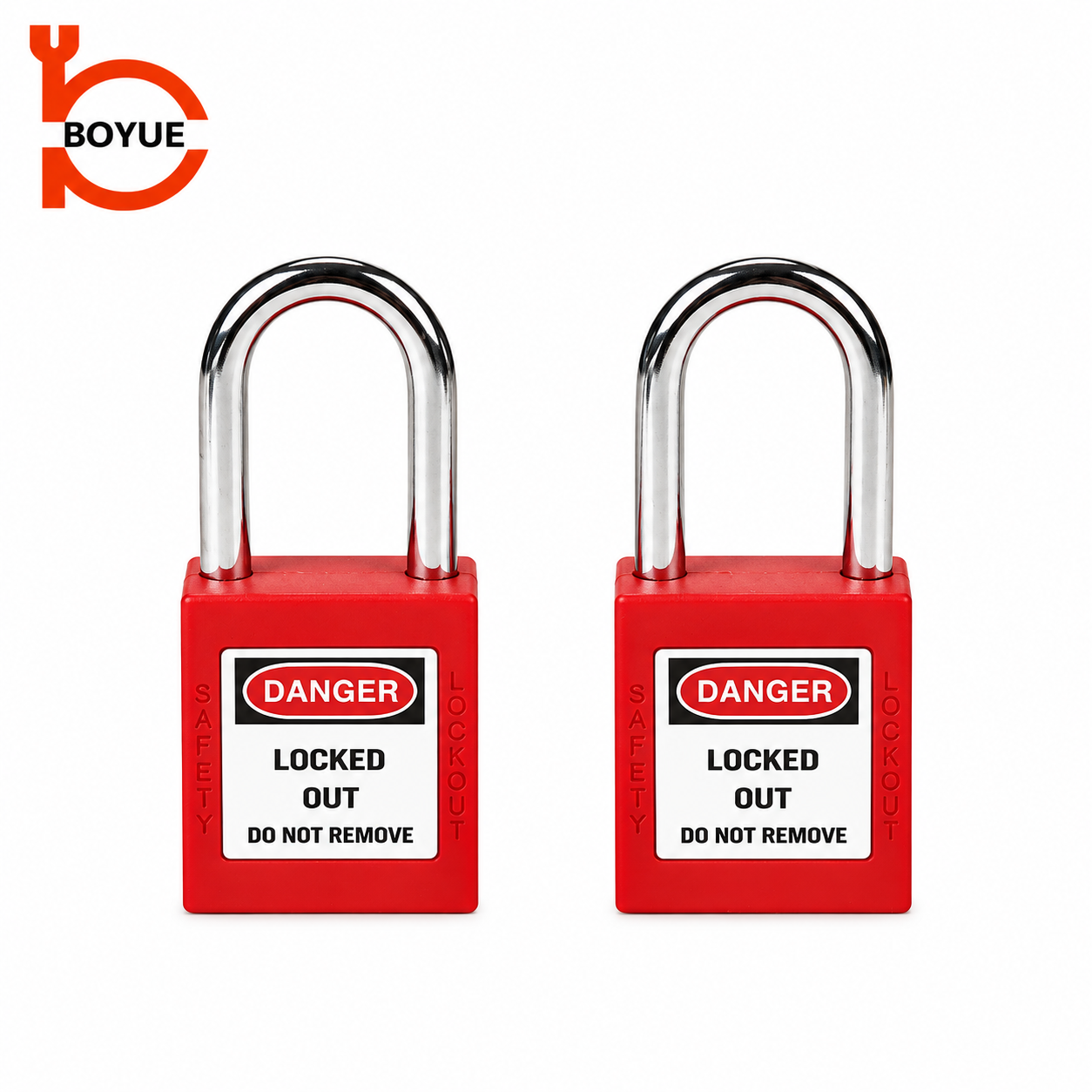
Personal padlocks need a controlled issue and key-ownership arrangement wherever the station is located. Moving storage closer to a machine should not blur the distinction between available equipment and locks already assigned to an employee.
Use a location comparison table
The following table provides a practical comparison method rather than a mandatory layout. The CCOHS lockout program guidance identifies management and supervisory responsibilities for providing and distributing appropriate hardware. The location record should make those responsibilities workable at the chosen site.
| Placement factor | Evidence to collect | Decision or action |
|---|---|---|
| Supported work areas | Machine list and intended servicing coverage | Identify what the station supplies and where specialist items are held |
| Retrieval route | Walk-through of the route during ordinary operations | Resolve unsafe reach, obstructions and traffic conflicts |
| Shift access | Door and cabinet access on each relevant shift | Provide an approved access arrangement before relying on the station |
| Environmental exposure | Conditions at the actual mounting position | Confirm suitability or choose a protected location and suitable enclosure |
| Identification | Employee can locate and recognize the correct station | Use a stable station identifier and clear coverage information |
| Ownership | Named role for stock and location changes | Assign responsibility and a method for reporting missing items |
Compare candidate locations using the same questions. Do not convert the table into an arbitrary numerical score that hides a critical failure. An unsafe access route should be resolved even if the location performs well on convenience and visibility.
Confirm access on every shift
Test the access arrangement with day, night and weekend users where those shifts exist. If a cabinet is secured, the site must decide how authorized people obtain access reliably without weakening the control of personal keys. A supervisor holding the only cabinet key may be workable in one setting and unavailable in another. Record the approved arrangement rather than leaving it to informal telephone calls.
Provide relevant contractors with the information required by the site’s coordination process. They should know where approved equipment is issued and whom to contact for specialist items. Station access does not make a visitor an authorized employee or remove the need for task-specific coordination and training.
Keep emergency arrangements distinct. The ability to obtain unused devices is not authority to remove another employee’s active lock. A prominently located spare key should never become an informal shortcut around personal protection. Key ownership and exceptional removal remain governed by the employer’s procedures.
Distinguish storage from active group protection
A wall station organizes equipment that may be available, assigned, returned or awaiting review. A group lock box can form part of an active personal-protection arrangement by controlling access to isolation keys. Treating every lockable cabinet as a group box can create serious confusion. Use clear names and do not mix active isolation keys with ordinary supply storage.
The TRU-hosted lockout training chapter presents storage stations and key-box systems as different arrangements. Its examples are Canadian training context, not a universal prescription for every jurisdiction. The useful planning distinction is to identify what a location stores and whether it participates in an active isolation.
The existing group lockout box procedure explains the separate personal-control arrangement. Use that guidance when planning group protection; do not assume that fitting a cabinet door lock converts the storage station into an approved group system.
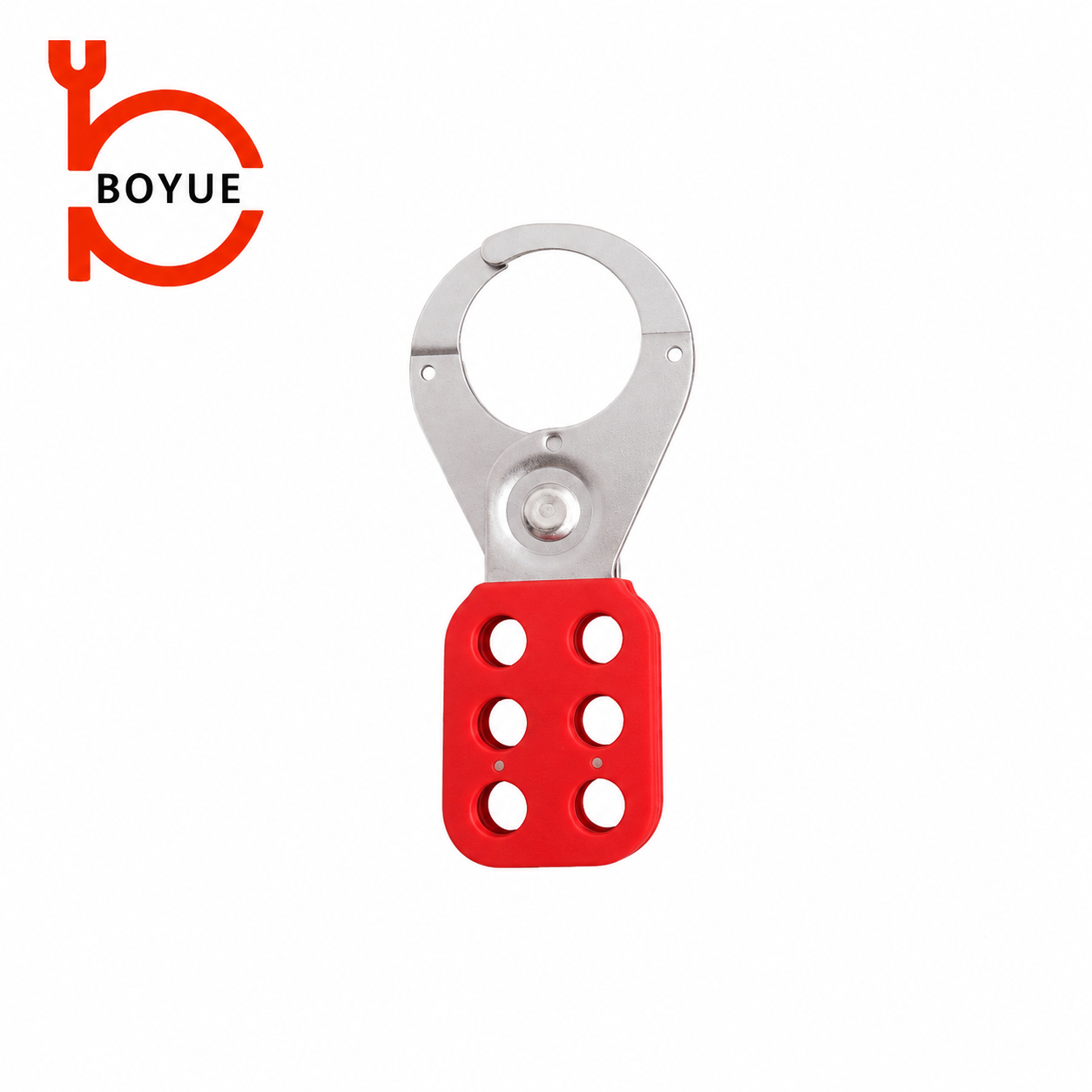
A hasp is one item that may be retrieved from a station. Its available quantity, compatibility and condition must be verified independently of whether the storage location is convenient.
Validate retrieval with the intended users
Before final acceptance, ask representative authorized users to find the station, identify a specified item and explain where unavailable or rejected equipment is reported. Use a safe planning exercise with unused stock. No live servicing task is needed to test whether labels can be read or whether access depends on someone who is absent.
Observe the process rather than coaching the employee through a preferred answer. Confusion between two stations, unclear compartment labels or an inaccessible cover are findings to resolve. If specialist items are held centrally, the area station should direct users to the approved source instead of suggesting that an unsuitable local substitute is acceptable.
There is no universal maximum walking distance or retrieval time established by this guide. Measure actual travel if useful for comparing options, but do not present an internal convenience target as a legal requirement. The acceptance criteria should be agreed by the site and include safe access, reliable availability and correct equipment identification.
Maintain the placement decision as the facility changes
A once-good location can become unsuitable when a production line moves, a door changes access rules or pallets begin accumulating in the approach. Include location and access in relevant change reviews. Update the floor plan and station coverage information when machines or servicing responsibilities change.
Keep condition and stock checks separate but connected. The lockout station inspection checklist addresses damage, organization and available inventory. The lockout bag selection guide supports approved transport arrangements for mobile work. A portable bag can help with remote tasks, but it should not conceal an unresolved lack of access to required equipment.
Record the accepted location, covered areas, access arrangements, owner and conditions that trigger another review. If users repeatedly collect equipment elsewhere, investigate why. The goal is a location that supports the real work consistently, with the required personal control and procedure remaining intact.
Educational context: equipment retrieval precedes the work
This SAFE Work Manitoba video introduces the wider lockout process. Use it to place hardware retrieval in context; it does not prescribe station locations or replace the facility’s approved planning and training.
Watch Lock Out Procedures by SAFE Work Manitoba.
Frequently asked questions
Must every machine have its own lockout station?
Not necessarily. The appropriate arrangement depends on equipment coverage, approved device availability, safe retrieval and site responsibilities. Central, area and combined storage can each be appropriate when their limits are clear.
Is there a universal maximum distance from a machine?
This guide provides no universal distance. Evaluate actual safe access and dependable retrieval, and check applicable site and jurisdiction requirements rather than inventing a standard walking limit.
Can a storage station also hold active isolation keys?
Do not mix those functions informally. Active key control requires an approved arrangement that maintains personal protection. An ordinary storage cabinet is not automatically a suitable group lock box.
What should trigger a placement review?
Changes to equipment layout, access permissions, shifts, traffic routes, environmental exposure or stock coverage should prompt review. Repeated user difficulty retrieving the correct devices is also a practical reason to reassess the location.