
Cord and Plug Lockout: Exclusive Control and Its Limits
For cord and plug lockout, unplugging alone is not a universal substitute for a documented energy-control method. OSHA’s general-industry rule contains a limited exception where unplugging controls the relevant unexpected-startup or energization hazard and the plug remains under the exclusive control of the employee doing the work. The work, energy sources and continuous control all matter. A plug lockout enclosure can form part of an approved arrangement, but buying or closing a box does not establish that the entire machine is safe.
This article explains how to frame the decision and identify situations needing a fuller procedure. It addresses a different question from plug lockout box sizing, which covers physical fit. The discussion is limited to the cited US general-industry context; a qualified reviewer must determine which requirements apply to the particular task and location.
Define the task before deciding how to control the plug
Describe the actual servicing activity, the area workers will enter and the hazards they could encounter. Clearing a mechanical jam, replacing an electrical component and cleaning a detached accessory can create different exposures. Avoid assigning one permanent “unplug only” label to every task involving the same machine.
Create a record of all connections and relevant energy sources. A visible mains plug may coexist with a battery, another supply, an air line or energy stored in the machine. Identify these from equipment documentation and the site’s assessment rather than assuming that a small appliance has only one hazard. A photograph of an unplugged connector cannot establish the internal energy state.
For purchasing discussions, the BOYUE rectangular plug lockout enclosure is a product example to evaluate against an approved arrangement. Its role is to restrict access to a compatible disconnected plug when correctly locked. It is not a voltage tester, an electrical protective enclosure for live work or a device for releasing stored mechanical energy.
Understand the limited exclusive-control exception
Read the exact scope in 29 CFR 1910.147(a)(2)(iii)(A). Both the effect of unplugging and control of the plug are relevant. Treat the exception as a task-specific assessment, not a general rule that cord-connected equipment never needs lockout.
OSHA’s November 30, 2010 interpretation explains that exclusive control involves the employee’s authority and continuous ability to prevent others from reconnecting the equipment. A short distance, clear view or nearby coworker does not by itself settle the question. Consider what happens when attention changes or the employee moves around the equipment.
The same interpretation distinguishes electrical work governed by Subpart S, which has its own requirements and does not contain the same exclusive-control exception. Do not extend a conclusion about unexpected startup under section 1910.147 to exposure to electrical parts. Have the responsible electrical-safety reviewer determine the controls and verification required for that work.
Ask what could interrupt continuous control
Walk through the task from preparation to completion. Will the worker leave the plug to collect a tool, enter an enclosure or work behind a machine? Can someone outside the immediate area reach the connector? Could the plug be confused with an identical adjacent lead? These are useful review questions, not a new legal distance test.
Avoid setting a universal permitted radius around a plug. A measurement alone does not describe access, visibility, task duration or the worker’s ability to prevent reconnection. Document the actual arrangement and the conditions that require reassessment. A change in work position may matter even though the equipment and cable are unchanged.
If continuous control cannot be maintained, pause and use the site’s assessed energy-control arrangement before work proceeds. Do not improvise a watcher system or rely on a handwritten note beside an accessible connector. Define who applies each personal device, who controls keys and how all exposed workers remain protected throughout the activity.
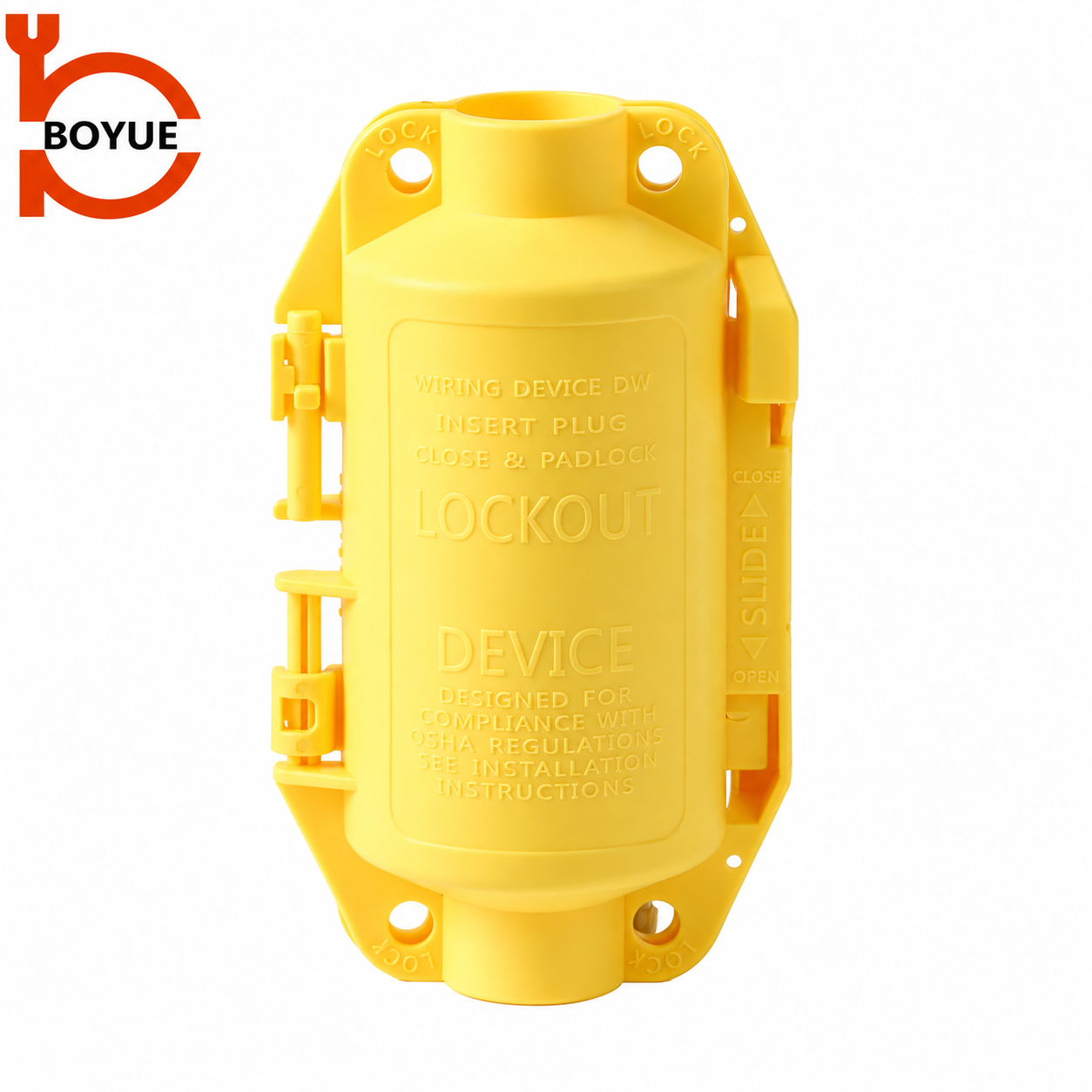
An elongated enclosure such as the illustrated EP-12/EP-13 family may suit a different connector envelope from a small rectangular box. Selection follows the assessed control method. Neither shape establishes exclusive control, electrical isolation verification or suitability for every plug described as industrial.
Use a decision record instead of an automatic exemption
The table below is a discussion aid for the employer’s task assessment. It is not a legal determination or a substitute for the applicable procedure. Its scope follows the cited regulation and interpretation; physical fit and other energy hazards need separate evidence.
| Question for the reviewer | Evidence to obtain | Decision boundary |
|---|---|---|
| What hazard does the task expose? | Task description and equipment information | Distinguish unexpected startup from electrical contact and other hazards |
| Does unplugging control the relevant hazard? | Identified supplies and stored-energy assessment | A disconnected main plug alone may be insufficient |
| Who continuously controls reconnection? | Actual work position and connector access | Proximity alone does not establish exclusive control |
| Are several workers exposed? | Roles, duration and personal protection arrangement | Review the group procedure rather than assuming one person’s control covers everyone |
| Does the task include electrical exposure? | Qualified electrical assessment | Apply the relevant electrical work requirements separately |
| Has any condition changed? | New task, supply, worker arrangement or equipment configuration | Reassess before relying on the previous decision |
Keep the reasoning accessible to the people doing the work. A checkbox marked “cord and plug exception” without a description of the task or control arrangement gives the next shift little useful information. Record the limits so a different job does not inherit an unsupported conclusion.
Evaluate an enclosure after choosing the control method
Check the disconnected plug’s complete envelope, including strain relief, connector projections and cable exit. Use the exact product instructions and a suitable sample to establish that the enclosure closes without crushing the cable or leaving a path that defeats its intended restraint. Do not cut or file a box to accommodate a connector.
Assess the lock and enclosure together. Confirm that the assigned personal padlock closes fully in its designated position and that the locked assembly behaves as the manufacturer’s instructions require. An oversized shackle, obstructed closure or conflicting hardware should trigger a fit review. Do not assume that one successful combination validates all padlocks held in the storeroom.
Inspect the enclosure before issue for damaged hinges, cracks, deformed locking ears and unreadable identification. Review the personal lock through the safety padlock condition checklist. Good enclosure condition and good lock condition are both needed within the approved assembly; neither replaces verification at the equipment.
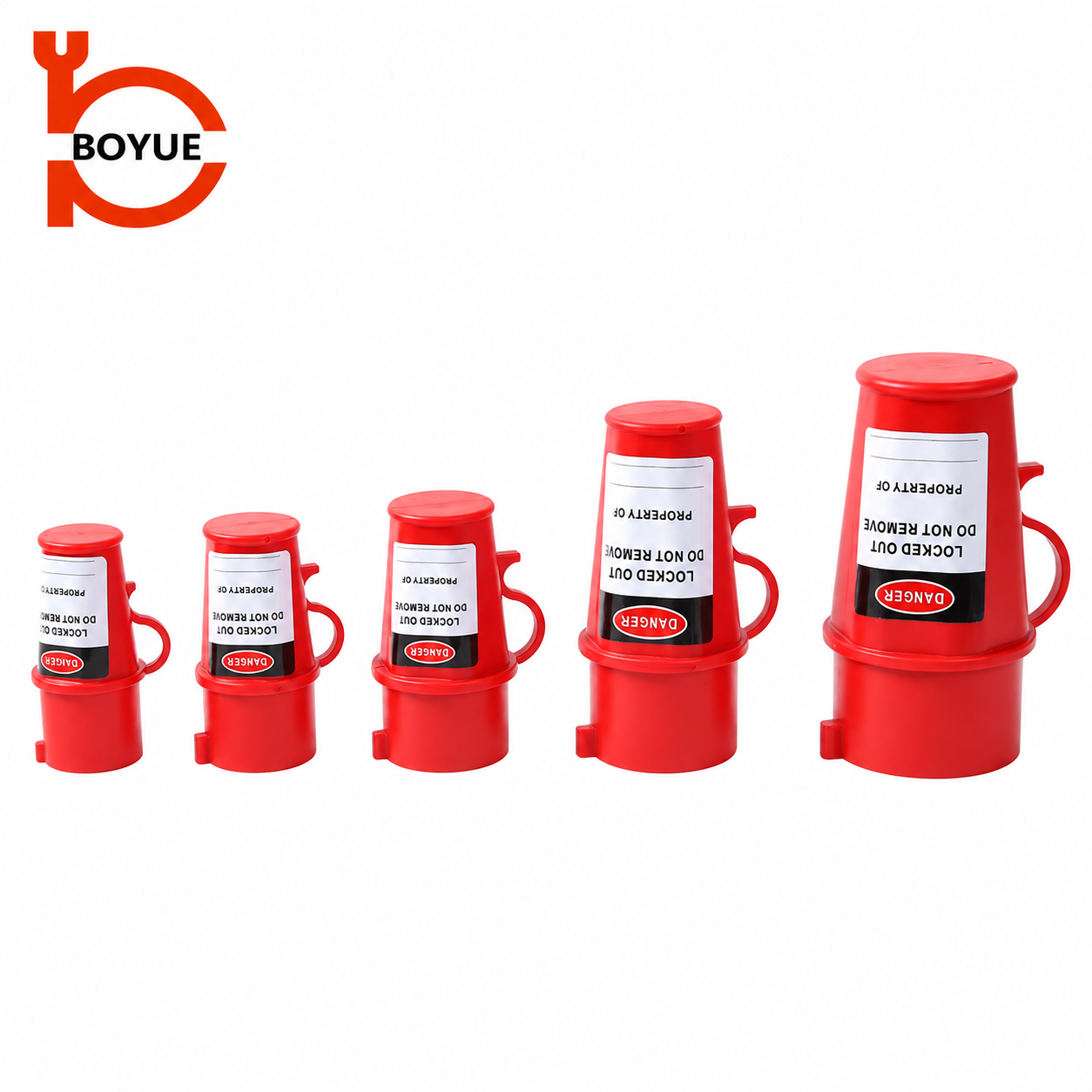
The cylindrical product family is shown only to illustrate visibly different enclosure sizes and closures. The image does not establish dimensions, water resistance or approval for a particular connector. Obtain the exact variant’s information and confirm its compatibility; do not infer ratings from a product name or red housing.
Keep other energy and verification requirements visible
A disconnected electrical lead may leave pressure, heat, gravity or other stored energy relevant to the work. The NIOSH hazardous-energy resource emphasizes that hazardous energy extends beyond electricity. Map the actual hazards rather than treating the plug as the whole system.
Follow the equipment procedure for controlling residual energy and verifying the condition required before work. Do not use a failed start attempt as universal proof of electrical safety. Electrical testing and other checks must be selected and performed by people with the appropriate competence under the applicable requirements. This article provides no authorization for live work.
Identify linked equipment too. A machine can receive material, movement or another form of energy from a connected process even when its own plug is disconnected. If the task boundary includes shared components, refer the full arrangement for review. A convenient plug enclosure must not obscure an isolation point elsewhere in the system.
Plan group work, interruptions and return to service
When several people are exposed, establish the approved group arrangement before work begins. One person’s possession of a plug should not be assumed to protect every worker in every configuration. The group lockout box procedure guide discusses the distinct ownership and key-control questions that arise when protection is shared.
Account for interruptions and personnel changes explicitly. If a worker leaves, the work scope expands or another trade joins, confirm protection before continuing. Do not transfer a personal key informally to keep production moving. The site procedure must determine how control is maintained and how each person’s exposure is accounted for.
Return to service requires its own checks and communications. Removing a box does not mean all tools are clear or every worker is outside the hazard area. Follow the applicable release sequence and removal rules. Record unresolved equipment defects separately so reconnection is not mistaken for repair approval or a successful functional test.
Prepare a useful plug-lockout enquiry
Send the supplier the connector reference, safe photographs, overall envelope, cable diameter, required locking arrangement and intended environment. Include the actual padlock dimensions and the required quantity of simultaneously protected connections. Ask for the exact variant and current fitting instructions rather than a generic “universal plug lock.”
Keep the safety decision with the employer’s competent reviewer. A supplier can help confirm device geometry and documented product limits; it cannot determine every hazard in an unseen machine. Separating those responsibilities produces clearer enquiries and avoids asking a catalogue photograph to prove a legal exception.
Training resource: the wider lockout sequence
The SAFE Work Manitoba video below introduces the complete lockout process. It is provided as neutral background learning, rather than a ruling on the US cord-and-plug exception or an installation demonstration for these enclosures. Use task-specific instruction alongside any general training resource.
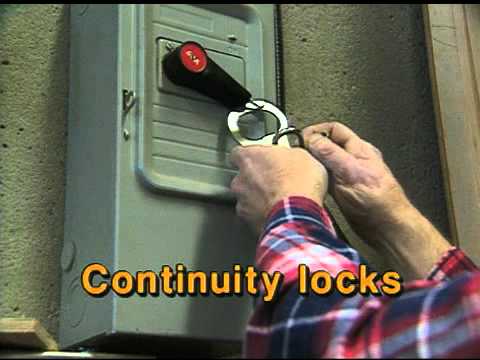
Watch Lock Out Procedures by SAFE Work Manitoba.
Frequently asked questions
Does every unplugged machine qualify for the exception?
No. The relevant hazard must be controlled by unplugging, and the plug must remain under the servicing employee’s exclusive control within the cited rule’s scope.
Does seeing the plug prove exclusive control?
No. Assess the employee’s continuous ability and authority to prevent reconnection throughout the actual task. Visibility or distance alone does not settle that question.
Can the same exception be assumed for electrical work?
No. OSHA’s cited interpretation distinguishes Subpart S electrical requirements. Have the applicable electrical controls and verification determined separately.
Does a plug lockout remove stored energy?
No. It restricts access to a compatible plug within an approved arrangement. Other supplies and residual energy require their own assessment, control and verification.