
Circuit Breaker Lockout Verification: Beyond the OFF Handle
Circuit breaker lockout verification must establish more than an OFF handle or a padlock attached to a clamp. The responsible team must identify the correct circuit, secure the intended isolation points, address other energy sources and complete the verification required for the actual work. Where workers may contact electrical parts, a qualified person must perform the applicable electrical checks; a failed restart attempt is not proof of absence of voltage. This guide helps maintenance planners and buyers distinguish accessory retention, circuit identity and electrical verification, and define the evidence needed before releasing a job for service.
Three questions that should never share one checkbox
The first question is mechanical: does the approved lockout accessory retain the identified breaker in the required position? The second is about the system: does that breaker actually isolate the equipment and the parts covered by the task? The third concerns exposure: has the required verification established the condition that workers will rely on? Each question can fail independently.
An accessory can fit perfectly on the wrong breaker. The correct breaker can be locked while a separate supply remains connected. A machine can fail to start because a control circuit is disabled while other parts remain energized. Combining all three questions into “LOTO checked” leaves the most important assumptions hidden from the next person reviewing the job.
This distinction is especially important when mechanical servicing and electrical work overlap. The employer must select the rules and procedures appropriate to the work. US electrical exposure requirements are addressed in OSHA 1910.333; machine energy control has a related but distinct framework. Local law, equipment instructions and the site’s program determine the complete approach.
Start with the equipment identity and work boundary
The work order should identify the asset and describe what the worker will touch, remove or enter. “Pump maintenance” is less useful than an identified pump and a defined task boundary. A change in task scope can change the sources that matter, even when the same equipment name remains on the work order.
Review the approved isolation document against the installed equipment and its identifiers. If the panel schedule, label and procedure disagree, stop the release and resolve the discrepancy through the site’s process. A handwritten guess or a label copied from a neighboring machine is not a suitable basis for selecting an isolation point.
Planning should consider possible alternate supplies and connected equipment without assuming that every installation contains them. Examples that may require review include separate control power, backup supply, stored electrical energy and linked mechanical or fluid systems. The point is to ask the equipment-specific question, not to add a generic list of unverified sources to every record.
Check mechanical retention using the supplied instructions
The BOYUE clamp-on breaker lockout family includes visually related versions. Identify the actual supplied model and follow its instructions for the breaker interface and permitted locking arrangement. Do not select a version from colour alone or treat a family photograph as an installation approval.
A retention check concerns the accessory, handle interface and intended padlock together. It must be performed through an approved safe method without defeating protection, exposing live parts or applying improvised force to the breaker. This article does not provide adjustment torque, tool substitutions or instructions for opening a panel. Those details require the manufacturer’s documentation and the employer’s electrical safety procedure.
For the separate question of accessory cracks, adjustment wear or missing components, use the breaker lockout inspection checklist. A condition inspection can reject a damaged clamp, but it cannot establish that an intact clamp is installed on the correct circuit.
Understand what an operating-control check can show
An approved operating-control check can contribute evidence about whether equipment can restart. It does not identify every electrical part to which a worker might be exposed. A dark indicator, stopped motor or silent controller may reflect a different condition from the one assumed by the person performing the work.
Plan the check so that no person is exposed to movement, discharge or other hazards if the isolation is ineffective. The responsible procedure must specify the safe condition, the person performing the check and the required control position afterward. Do not improvise a test simply because a start button is convenient to reach.
The University of Guelph lockout guidelines describe verification within a sequence that includes identifying energy sources and controlling residual energy. Treat that as support for a complete planning framework, rather than permission to use one operating control as an electrical test instrument.
Reserve electrical verification for qualified personnel
When work involves exposure to circuit elements or electrical parts, the site must arrange the applicable testing by a qualified person using appropriate equipment and procedures. The result must address the parts within the work boundary, including relevant backfeed or induced-voltage concerns. A planner should confirm who is responsible and what record is required, rather than prescribing a generic test sequence in a purchasing document.
The SLAC zero-voltage verification procedure provides an institutional example of assigned roles and formal electrical verification. It is useful for understanding why de-energization, lock application and verification are separate decisions. Its site-specific instructions are not automatically the procedure for another employer’s equipment.
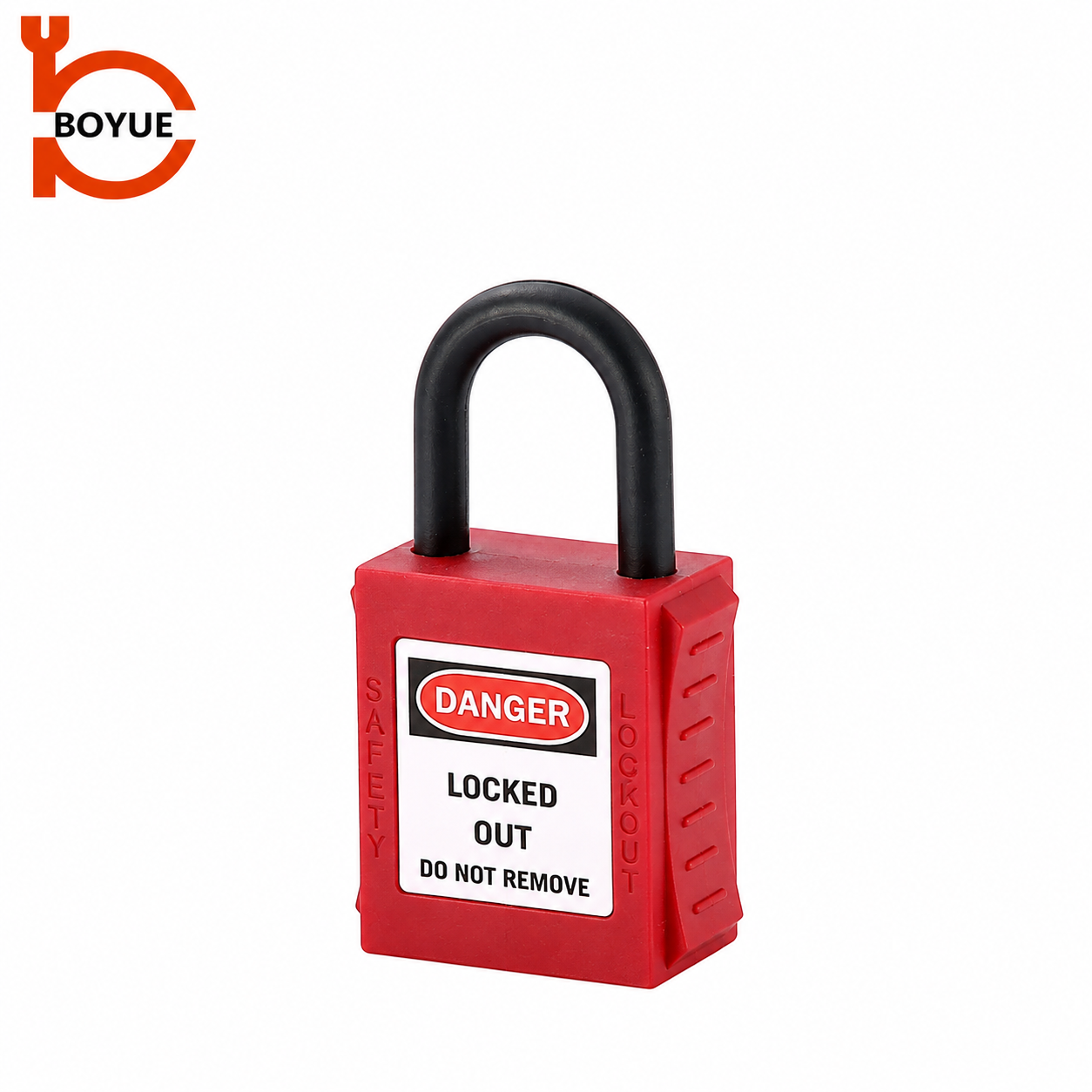
An insulating-shackle personal padlock is shown as a separate component. Its appearance or material description does not authorize electrical work, establish an electrical protection rating for the whole arrangement, or replace shock and arc-flash controls. Obtain documented product limitations and have the responsible electrical safety person assess the application.
Build a release record that distinguishes evidence from assumptions
Use the following planning table to structure the discussion. It deliberately avoids universal electrical test values or installation dimensions. The employer’s approved procedure must supply the technical requirements and acceptance criteria for the equipment and task.
| Review question | Evidence to identify | Reason to withhold release |
|---|---|---|
| Is this the intended asset? | Equipment identifier and matching work scope | Labels or records conflict |
| Is the correct isolation point selected? | Approved procedure and verified circuit identity | A point is inferred from appearance |
| Is the accessory suitable and retained? | Supplied model, instructions and approved interface check | Wrong variant, loose engagement or uncertain fit |
| Are other sources addressed? | Equipment-specific isolation boundary | A connected or stored source remains unresolved |
| Is operating verification controlled? | Named responsible person and safe check method | A restart check could expose someone |
| Is electrical verification complete where required? | Qualified person’s applicable verification record | Only an OFF handle or indicator is cited |
| Can work begin within this boundary? | Responsible release and communicated limitations | Task scope exceeds the verified condition |
The table is a suggested document structure. It does not establish compliance by itself. A tick should refer to evidence that exists and can be found, not to an expectation that somebody else probably checked the item.
Coordinate multiple workers without losing the circuit boundary
Several workers may rely on one isolation arrangement, but sharing a work area does not settle how each person receives protection. The procedure must define the personal-lock arrangement and the responsible person overseeing coordination. Device capacity and a crew list are different things; an empty locking hole does not mean a worker is accounted for.

The hasp shown above illustrates a separate multi-lock component. It is not evidence that it can be attached to every breaker accessory or that it preserves panel clearance. Evaluate any proposed combination before issue. Use the hasp versus group lock box comparison when planning how the site will organize personal control across one or more isolation points.
A worker joining a job needs the protection and information required by the approved group procedure. A change in team, task or isolation boundary should trigger the appropriate review. Avoid copying yesterday’s sign-off onto today’s permit simply because the same panel and padlocks are present.
Manage discrepancies before they become routine shortcuts
A common planning problem is a procedure that names a device no longer fitted to the machine. Record the discrepancy with the equipment identifier and stop using the obsolete reference as an acceptance criterion. The replacement accessory may be suitable, but suitability must be established rather than inferred from a successful installation on another circuit.
Another problem is a verification record containing only “machine does not run.” Ask what work was authorized and whether electrical exposure was part of that scope. If the job expands later, the original record may no longer answer the relevant question. A controlled scope change is more useful than adding a vague statement that the whole machine is safe.
The same principle applies after equipment modifications. A new auxiliary supply, replaced control system or rerouted circuit can affect isolation documentation. The accessory inventory should connect to a review process for such changes, so a suitable clamp does not become a permanent reminder of an outdated circuit boundary.
Specify verification support when requesting samples
A useful supplier enquiry identifies the breaker make and model, accessible interface information, proposed padlock and any clearance limitations that can be gathered safely. Request the exact accessory version, instructions and documented limitations. Do not ask a supplier to certify an unseen complete electrical installation from a photograph of a breaker handle.
Keep sample acceptance separate from permission to use it on live equipment. The responsible technical team should define a safe evaluation arrangement and record what the sample demonstrated. A buying decision can confirm that the correct model and documentation were supplied while leaving site installation approval to the appropriate personnel.
The clamp-on breaker fit guide addresses that interface review in more detail. Verification then connects the accepted hardware to the actual isolation boundary and required evidence for the job.
Further learning
This neutral video explains the broader lockout process. It supports discussion of roles and sequence; it is not a qualification course, an electrical test demonstration or a substitute for equipment-specific procedures.
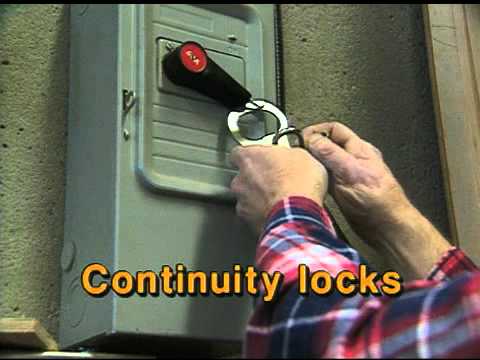
Watch Lock Out Procedures by SAFE Work Manitoba.
Frequently asked questions
Is the OFF marking enough to verify electrical isolation?
No. It identifies a handle position, not the full electrical condition of every part within the work boundary. The applicable procedure must establish correct isolation and any required electrical verification by qualified personnel.
Does a machine that will not restart prove absence of voltage?
No. An operating-control check and an electrical verification answer different questions. A disabled control system can prevent operation while other parts remain energized. Follow the procedure appropriate to the exposure and task.
Can the buyer approve electrical verification from product specifications?
No. The buyer can confirm model identity, documentation and supply requirements. Electrical verification concerns the actual installation, work boundary, qualified personnel and site procedure; a catalogue does not establish those conditions.
Must verification be reconsidered when the job scope changes?
Yes. Refer the change to the responsible team before continuing. A record supporting one defined task may not cover new exposure, additional equipment or altered isolation points, even when the original lock remains fitted.