
Lockout Hasp vs Group Lock Box: Compare Personal-Control Arrangements
The lockout hasp vs group lock box decision concerns how each authorized worker maintains personal protection across the job’s isolation points. A hasp allows several personal locks at a compatible locking point. A group lock box controls access to keys from identified isolation locks while workers attach personal locks to the box under an approved group procedure. Choose the arrangement by the actual energy-control plan, access, hardware compatibility and accountability requirements. Neither the number of available holes nor a convenient storage location establishes a complete group lockout method, and neither device replaces isolation and verification.
Follow the path of personal control
Begin the comparison with a simple question: what prevents the isolation from being released while an individual is still exposed? In a direct hasp arrangement, that person’s lock remains part of the restraint at each required point. In a lock-box arrangement, the person’s lock prevents access to the captured isolation-lock keys through the approved group mechanism.
Trace that path for every relevant point, key and worker. An unused hole proves only that another lock may physically fit; it does not show that the whole boundary is controlled. A box containing some keys is equally incomplete if another necessary key remains available outside the arrangement. The plan needs a defined link between the isolation schedule and the personal devices.
For covered general-industry work, OSHA 1910.147(f)(3) requires group arrangements to provide protection equivalent to personal lockout and assigns responsibilities for individual protection and coordination. The site must implement those principles in its own approved procedure. A product category is not itself an approved method.
What a hasp contributes
A lockout hasp creates multiple personal locking positions at a compatible point. Its usefulness depends on more than counting the holes. The jaw must suit the intended interface, the closed arrangement must remain retained, and each selected padlock must fit and function as required. The assembled weight and available working space also matter.
The BOYUE HS-01 / HS-02 steel safety lockout hasp is an example of this product family. Confirm the exact supplied variant and approved application. Do not infer jaw dimensions, electrical properties, capacity or a permitted stacking arrangement from the photograph. The visible positions are physical features, not evidence that a particular crew arrangement is approved.
Use the lockout hasp selection guide for the separate sizing and compatibility survey. Here the planning question is whether direct locking at the required points gives every worker a clear and practical route to personal control. A hasp that fits one point does not establish suitability at every other point on the job.
What a group lock box contributes
A group lock box changes where personal locks are applied. Identified isolation locks remain at the equipment, and their controlled keys are captured in the box. Personal locks secure the box through the approved locking mechanism so access to the keys remains restricted while protection is required. This arrangement needs a reliable isolation list and disciplined key accounting.
The box is not simply a place to keep spare padlocks. An ordinary storage box, a box with an accessible alternate opening or an incomplete key set does not automatically support the required protection. Verify the exact closure, locking positions and key-access path for the model and proposed procedure before accepting it for a job.
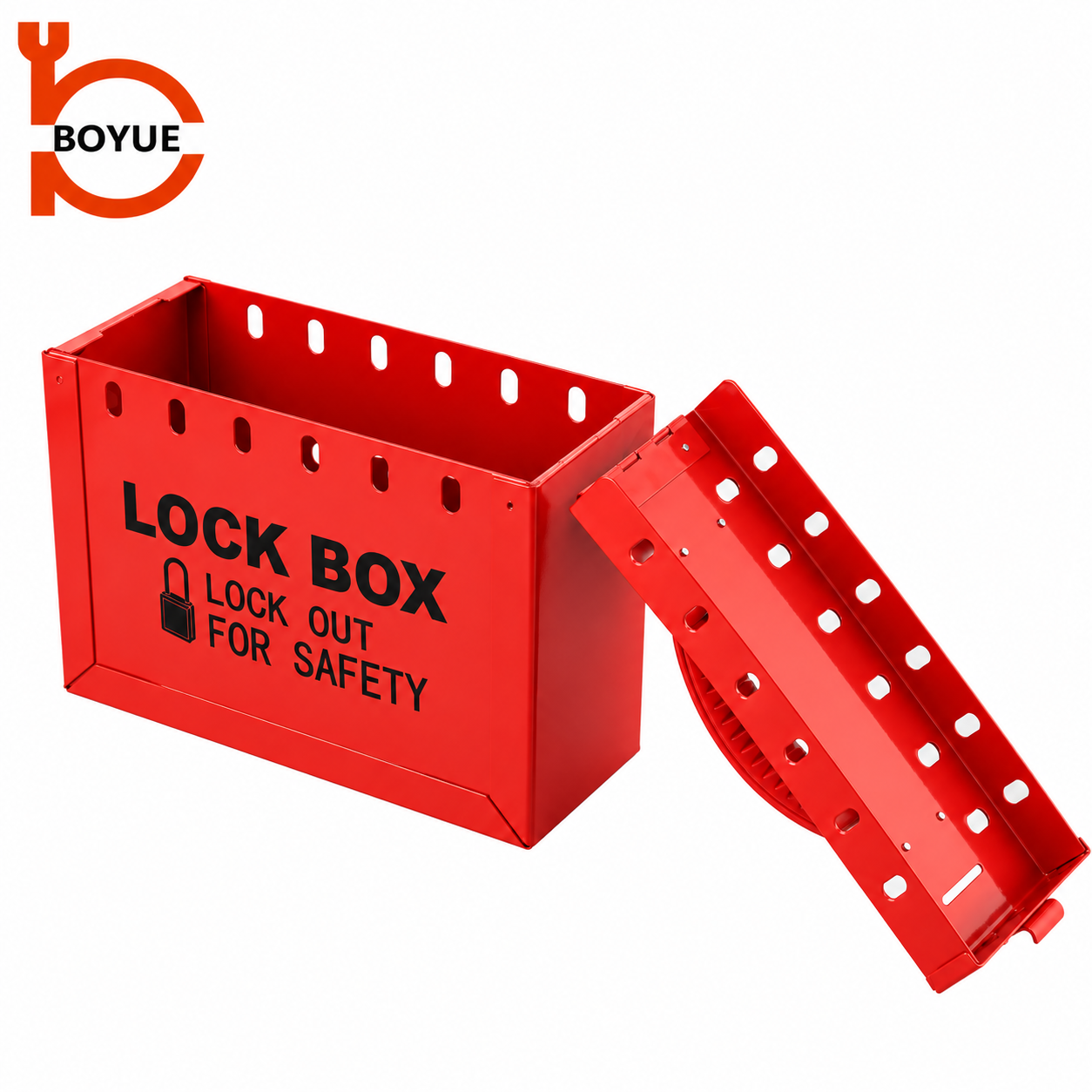
The illustration shows an open GL-01 / GL-02 family product for examining components. It does not demonstrate an active group lockout. During an actual protected job, opening or changing the box arrangement requires the site’s authorized process. Do not copy a product display with a detached lid as an operating configuration.
Compare the two arrangements against the work survey
The following qualitative comparison supports planning. It does not prescribe a worker-count threshold or a universal changeover point. Those decisions depend on the employer’s procedure and the actual equipment. Jefferson Lab’s group lockout procedure provides a useful institutional example discussing both hardware approaches and concerns about loading small isolation devices; its local rules are not universal limits.
| Planning factor | Direct hasp arrangement | Group lock-box arrangement |
|---|---|---|
| Location of personal locks | At each required compatible isolation locking point | At the designated group mechanism controlling captured keys |
| Point access | Workers need the access required by the procedure | Isolation team access and worker participation are defined by the group procedure |
| Hardware survey | Check each jaw, interface, lock clearance and assembled load | Check point-lock fit, complete key capture and box closure |
| Main accounting task | Confirm each person’s required direct lock placements | Reconcile isolation locks, captured keys and protected people |
| Changed scope | Review new points and required personal placements | Review isolation schedule, key set and group boundary |
| Acceptance evidence | Documented compatibility and a complete personal-control path | Documented isolation and a complete key-control path |
Consider practical accessibility early. A point reached only through a controlled access route may make repeated personal lock placement difficult. That difficulty is a planning issue to resolve, not permission for someone else to omit a person’s required protection. Conversely, a convenient box location does not justify using an unverified group procedure.
Do not choose by a universal number of workers
Claims such as “always use a box above three workers” can reflect a particular employer’s rule rather than a universal requirement. Copying the number without its context can mislead buyers and planners. A small crew may face many widely distributed points, while a larger crew may have a different accessible configuration. The approved site method determines what is acceptable.
Use actual demand to describe the job. Identify the maximum simultaneous workers, all isolation points, access restrictions and the permitted lock configurations. These are inputs for review. They do not allow an arbitrary accessory combination, extra hasps linked together or an improvised extension simply because the current device has too few positions.
Where assembled weight could affect a small valve, switch or accessory, obtain an application decision rather than assuming that a closed arrangement is adequate. A fit check can reveal interference or loading concerns, but it cannot create an unlisted rating. Ask for the exact manufacturer’s instructions and have the employer assess the complete arrangement.
Build a clear key-accounting method for a box
Separate isolation-lock identifiers from personal-lock identifiers in the record. Each isolation-lock entry should connect to the correct point and required position. The corresponding key-control entry should explain how access is restricted under the approved method. A pile of visually similar keys does not make that connection clear enough for a complex job.
Ask how the team confirms the captured set is complete before workers rely on it. Also ask how spare, duplicate or other authorized keys are managed. The answer belongs in the employer’s approved key-control process; a supplier’s description that a box “holds keys” does not establish control of every opening route.
When the job changes, review the scope before modifying the key set. Adding another point or transferring a key between boxes can affect people already relying on the arrangement. Keep the existing protection effective while the responsible coordinator resolves the change. An informal note that a key was added is not a substitute for the required authorization and verification.
Keep personal identification visible in either method
Personal locks must remain connected to the people they protect through the site’s approved identification system. In a direct arrangement, several locks may crowd one point; in a box arrangement, many locks may be gathered at one location. Either can obscure markings if the hardware and labeling are planned separately.
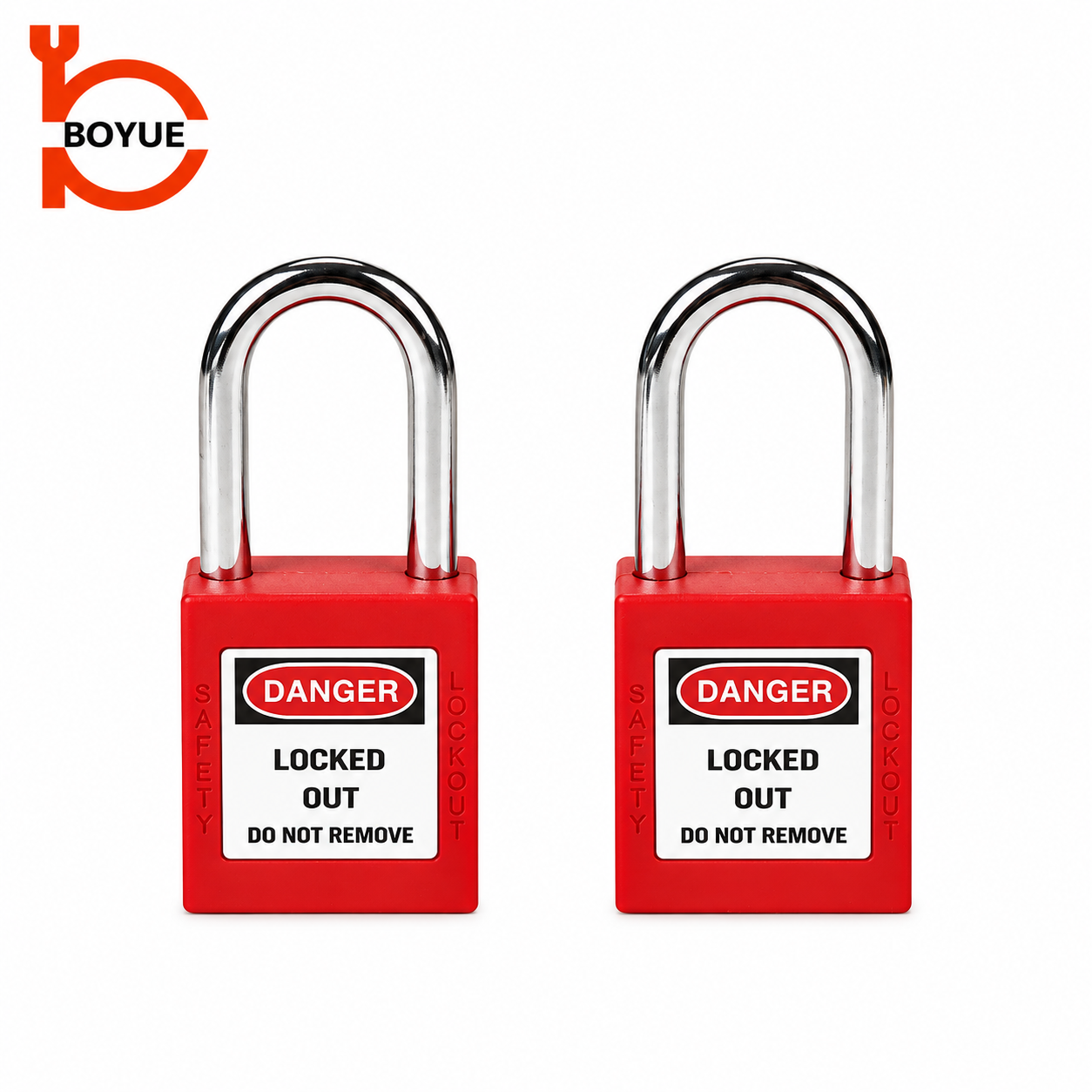
These padlocks are shown separately for product identification. The image does not demonstrate key compatibility or a completed personal-control arrangement. Confirm physical clearance and the actual marking method on unused samples, then retain the approved configuration in the job documentation. Do not rearrange an active lockout simply to make its labels easier to photograph.
The broader safety padlock keying systems guide covers cylinder and key-control choices. A change from direct hasps to a box should not silently change the approved ownership of personal keys. Likewise, identical-looking locks should not be assumed to have identical access rights or assignments.
Test the proposed workflow before procurement
Use a documented trial with unused equipment or another employer-approved safe setup. Walk through identification of points, permitted hardware placement, personal participation, record completion and the planned end-of-work process. Ask the participants to explain how their individual protection remains effective at each stage, including when another worker joins or leaves.
For a hasp proposal, inspect all different interfaces rather than testing only the easiest one. For a box proposal, verify the model’s complete closure and lock positions, how the keys fit inside, and how the intended records distinguish one group boundary from another. Record observations and unresolved questions instead of treating a successful photograph as acceptance.
Procurement can then request exact variants, current instructions, approved configuration information and replacement-part guidance. Keep the application approval with the purchase record. This makes receiving checks more meaningful: staff can compare supplied items with the accepted arrangement instead of approving any product that happens to have a similar color or shape.
Plan continuity and release as part of the method
Neither approach resolves coordination automatically. The responsible people must know the work scope, individual exposure status and conditions for joining, leaving or changing the group. The group lockout box shift-change guide addresses handover details separately. Choosing a box is not evidence that continuity has been arranged.
Restoring service also requires its own controlled process. An apparently empty hasp or a box with the last personal lock removed does not prove that tools, people and equipment are ready for restart. The documented release checks remain necessary. Do not use a hardware observation as a shortcut around the job’s authorization and communication requirements.
Finish the planning review with a decision record: chosen method, relevant points, approved hardware, personal-control path, key arrangements, responsible coordinator and unresolved restrictions. This record explains why the method fits the job and what changes would trigger review. It is more useful than a general statement that a lock box is better or a hasp is simpler.
Educational overview
SAFE Work Manitoba’s Lock Out Procedures video explains the broader context of controlling hazardous energy. Use it to support discussion of why hardware, authorization and verification work together. It does not approve a specific hasp or lock-box configuration, and the article’s comparison remains understandable without watching the video.
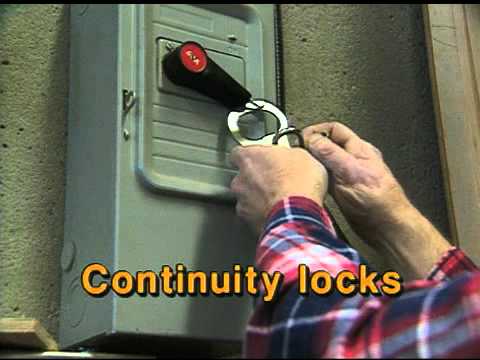
Watch Lock Out Procedures by SAFE Work Manitoba.
Frequently asked questions
Is a group lock box always safer than a hasp?
Neither product category proves a safe arrangement by itself. Compare the actual isolation boundary, hardware compatibility, individual protection, key control and approved procedure for the job.
Is there a universal number of workers that requires a box?
Do not assume one. Some employers set local thresholds, but the applicable procedure and actual work configuration determine the permitted method. State local limits as local rules rather than universal product facts.
Can a hasp and a group lock box be used in one job?
Only through a documented and approved arrangement that preserves each person’s protection and accounts for all relevant keys and points. Do not connect products together or split key sets without application review.
Does the last personal lock being removed authorize restart?
No. The equipment-specific release process still needs to address work completion, people, equipment condition, authorization and communication. Hardware status alone is not the complete restart decision.