
Valve Lockout Isolation Points: Match the Drawing to the Field
Valve lockout isolation point identification means confirming that the physical valve in front of the worker is the valve assigned by the approved isolation procedure for the stated job. Compare the equipment number, line service, location and work boundary before choosing a lockout device. A familiar handle shape, a nearby label or a closed position does not establish identity or prove that hazardous energy is controlled. If the drawing and field identification disagree, stop and have the responsible site personnel resolve the discrepancy. This guide addresses identification and documentation; device selection and isolation verification require their own checks.
Start with the equipment and the work boundary
A work request such as “replace the pump seal” is too broad to identify every relevant valve. The approved procedure needs to relate the task to the actual asset and the energy sources that could affect it. A duty pump and a standby pump may have almost identical inlet arrangements. A bypass may connect the supposedly isolated section to another source. Ask the site’s authorized personnel to establish the boundary rather than choosing whichever handle is closest to the maintenance access.
For U.S. general-industry work within its scope, 29 CFR 1910.147 provides the framework for energy-control procedures and verification. The point-identification exercise described here supports that procedure. It is not a substitute for assessing all hazardous energy or determining whether a particular valve is an adequate isolation method. Electrical, thermal, mechanical and stored-pressure hazards may remain relevant even when the fluid line is identified correctly.
Write down the asset and the exact component being serviced before reviewing valve numbers. If the work expands to a connected vessel or a different part of the line, refer that change to the people who control the isolation plan. Otherwise, a correct list of valves can quietly become an incorrect list for a larger task. The difference matters to both the person preparing the permit and the worker arriving later with only the job summary.
Use several matching identifiers
A durable valve identifier is useful because handle color and location can change. Compare the number on the approved record with the physical label, then confirm the line service and the asset relationship. Treat these as cross-checks rather than independent permission to proceed. A tag can be attached to the wrong branch after maintenance, and a drawing can lag behind a modification. Two matching labels copied from one outdated source do not provide two independent confirmations.
Where the site uses a piping drawing, record its revision and the isolation point reference. Where it uses photographs, confirm that the image depicts the current equipment and shows enough surroundings to distinguish adjacent points. A tightly cropped handle photograph may be excellent for checking device fit while being poor evidence of location. Explain to the procedure owner when the record cannot distinguish between two plausible valves.
Walk the intended route with a person authorized by the site. Check that the identifiers remain visible from the safe approach and that access does not require crossing the work boundary prematurely. Do not reach into an operating installation merely to read a hidden label. The site must decide how to obtain the information safely. Purchasing personnel can help by requesting clear identifiers and photographs without directing the field isolation.
A practical drawing-to-field reconciliation record
| Record field | Compare in the field | Escalate when |
|---|---|---|
| Equipment identifier | Asset marking and exact maintenance scope | The work order names a different asset or component |
| Valve identifier | Permanent label and approved point number | The label is missing, duplicated or inconsistent |
| Line service | Approved line information and system relationship | The branch or bypass cannot be reconciled |
| Drawing revision | Current authorized drawing and field modification record | A changed arrangement is absent from the record |
| Device interface | Actual handle mechanism and approved restraint method | The specified accessory cannot engage as intended |
| Verification responsibility | Named role and equipment-specific verification method | Identity is being treated as proof of isolation |
This is a planning aid, not an isolation instruction. A useful record makes uncertainty visible. “Valve beside pump” leaves the next crew guessing; an approved identifier tied to the correct drawing and asset gives them something specific to check. Keep unresolved discrepancies in the handover record so they cannot disappear when a new person copies the job into another system.
Separate identification from lockout-device fit
The BOYUE BUV-01 butterfly valve lockout illustrates a handle-restraint accessory. Its appearance does not tell a worker which valve to isolate. First identify the actual point through the approved procedure, then assess whether the chosen device can engage the real handle and remain secure with the approved personal lock. A product photograph cannot establish the installed handle geometry or available clearance.
Discuss the operating mechanism with the equipment owner. A lever-operated valve, a gearbox and an actuator present different interfaces. Do not assume that a device pictured on one mechanism is appropriate for another. Record the actual interface and request manufacturer confirmation when the product information does not resolve the application. The butterfly lockout selection guide addresses accessory selection in more detail.
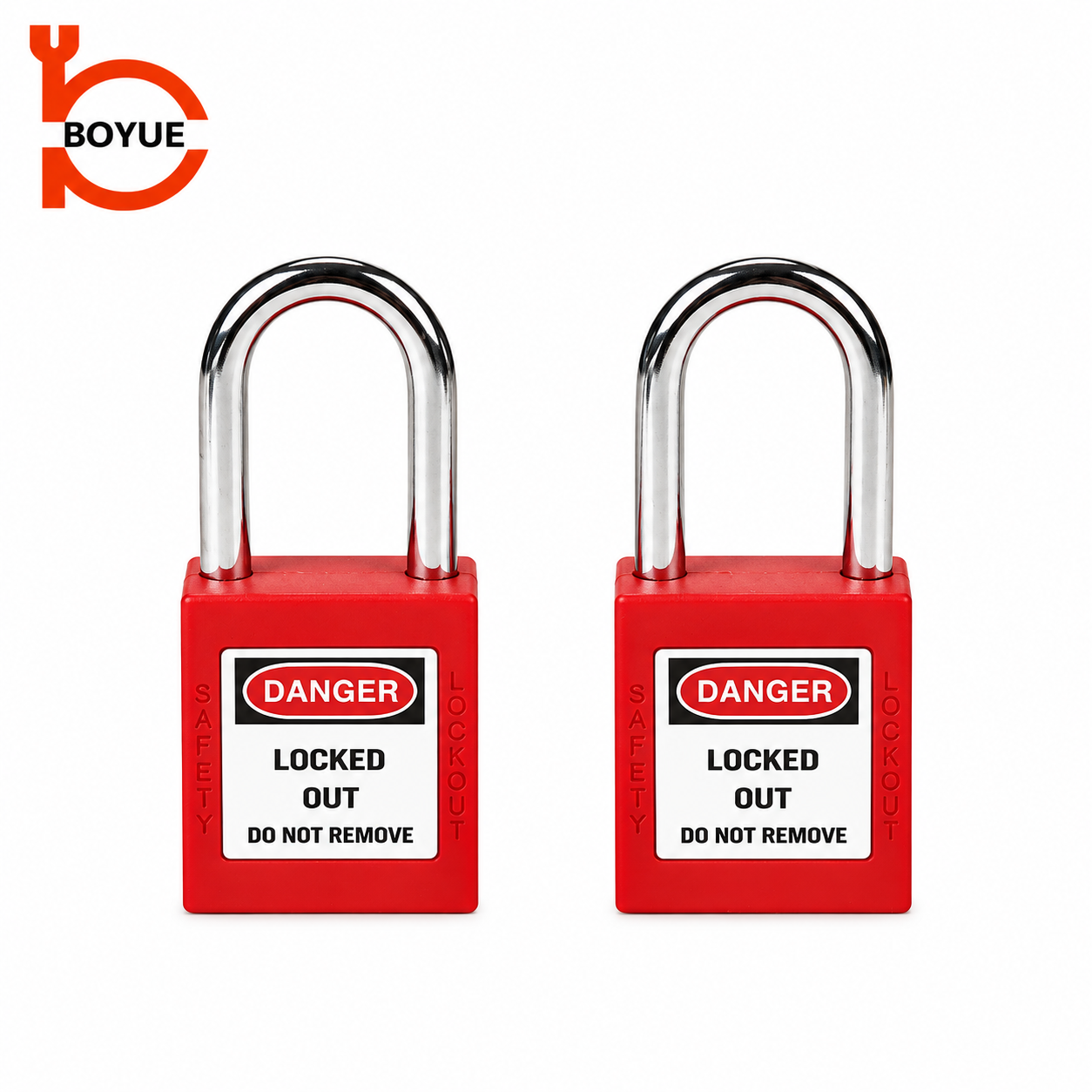
A padlock that passes through the accessory is only one part of the fit assessment. The installed arrangement must perform the role specified by the approved procedure. Do not infer that a large number of visible holes provides a particular worker capacity or supports an improvised multi-worker assembly. Where several people are involved, use the documented group method and check the relevant hardware independently.
Keep stored energy and verification in view
Correct point identification does not establish that pressure, heat or another hazardous condition has been eliminated. The site’s authorized procedure must address the actual hazards and its verification method. A closed valve can identify a required state while leaving energy downstream or allowing energy to reaccumulate. Do not use a position label as the sole evidence that work may begin.
The CCOHS lockout guidance provides a broader explanation of hazardous-energy control and the need to account for the equipment involved. Apply the local legal requirements and the employer’s procedure to the real system. The stored-pressure discussion explains why the lockout accessory and the pressure condition are different questions.
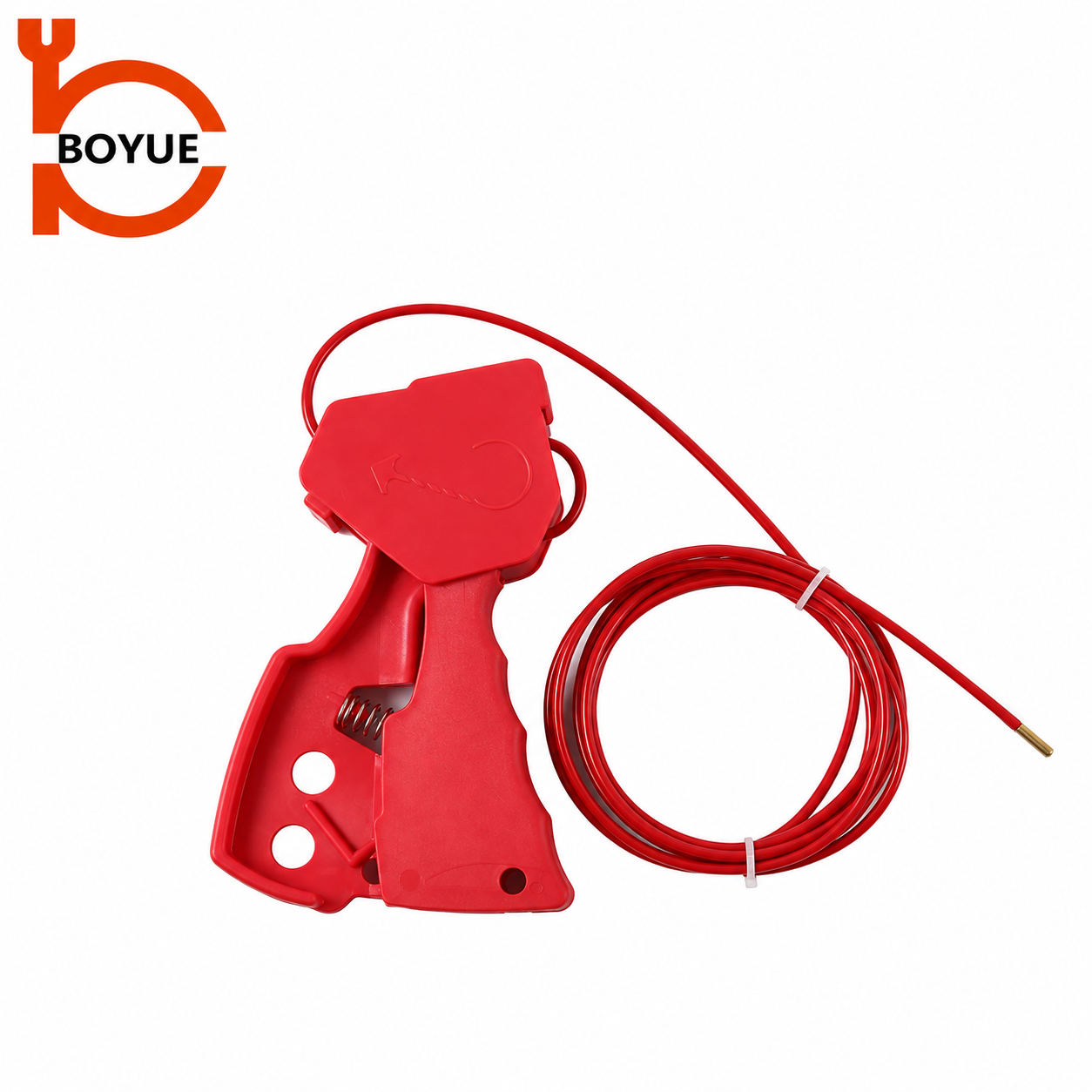
If a proposed alternative accessory changes the restraint method, refer it for approval. An adjustable cable may look convenient when space is restricted, but routing, restraint, possible movement and the actual operating mechanism need application-specific review. Document the approved alternative in the procedure rather than leaving the next crew to reconstruct the reason for the substitution.
Control changes before the next job
A valve replacement, relocated label or altered branch can invalidate a previously useful identification record. Give maintenance a way to report those changes to the procedure owner. When the equipment returns to service, the updated record should identify what changed and which job instructions were reviewed. Keeping an old photograph because the handle still looks similar creates unnecessary ambiguity for the next outage.
Before a repeat purchase, separate three questions in the request: which isolation point is involved, which accessory is approved there, and which personal device must fit it. Include current photographs and the confirmed product model. Avoid sending the supplier a drawing alone and asking them to decide the isolation boundary. That boundary belongs to the site’s competent personnel and energy-control program.
For incoming crews, put the discrepancy contact and the current record location in the briefing. Someone who cannot reconcile a label should know who can resolve it and how work remains on hold. The butterfly lockout inspection checklist covers the subsequent condition check after the correct product and point have been established.
Further safety education
SAFEWorkManitoba’s Lock Out Procedures video introduces the wider isolation process. Use it as background education alongside the employer’s equipment-specific instructions. It does not identify any valve at your site.
Record a resolved discrepancy clearly
Consider two adjacent valves with matching handle styles but different asset numbers. If the site discovers that one label was moved during maintenance, correcting the label alone leaves the old photograph and job package inconsistent. The responsible reviewer should reconcile the affected records and brief the people who will use them. Record which identifier changed and which current document now governs the work. This example illustrates document control, not a method for deciding the correct valve from appearance. The approved field verification and isolation process still have to establish the safe condition for the stated task.
Frequently asked questions
Is a valve number enough to identify an isolation point?
Use the approved procedure to reconcile the number with the asset, line service and work boundary. A number alone cannot resolve a misplaced label or outdated record.
What if the drawing and physical label disagree?
Stop and ask the designated site personnel to resolve the discrepancy. Do not select the more convenient interpretation and begin work.
Does fitting BUV-01 prove that a valve is isolated?
No. Device fit, point identification and effective isolation are separate checks within the approved energy-control process.
Can a product supplier choose the isolation boundary?
A supplier can clarify product compatibility using confirmed application information. The site must establish and approve the isolation boundary and verification method.