
Multilingual Lockout Tags: Choose Warnings Workers Understand
Multilingual lockout tags should communicate the same warning, restriction and responsible-person information to every worker who may encounter the protected equipment. Choose languages from the actual workforce and contractor needs, then review the wording, readable layout and identification fields before approving artwork. Adding translated text is useful only when people understand the message and know how to act on it. A bilingual tag remains a warning device; translation does not give it the physical restraint of a lock.
This guide focuses on language selection and artwork acceptance rather than tag material durability. It offers a practical purchasing and review process, not a certified translation or a universal tag design. The employer’s applicable energy-control program, local requirements and trained personnel determine how a tag is used on a particular installation.
Start with the people who need the message
List the groups likely to encounter a lockout: authorized maintenance personnel, equipment operators, cleaners, supervisors and relevant contractors. The language used in a purchase order may not be the language understood by everyone in those groups. Review day and night shifts as well as visiting teams; a layout that works for one department can leave another relying on an unfamiliar warning.
Ask how workers recognize a lockout and whom they contact when they find one. Those questions reveal comprehension gaps that a language list alone can miss. A person may recognize a translated “do not operate” message but still misunderstand a field identifying the employee who applied the lock. The design needs both a clear restriction and useful identity information.
Avoid assumptions about language based on nationality or job title. Use the site’s training and communication processes to establish needs. Where reading ability varies, the response may include improved training and supervised explanation alongside an appropriate label. A pictogram can reinforce a message, but its intended meaning still needs to be understood in the workplace.
Keep the warning separate from job-specific details
A tag usually carries two kinds of information. The fixed artwork communicates the warning and restriction. The completed fields connect that warning to the particular lockout and person. Both need to remain clear. A strong translated headline will not rescue an unreadable handwritten identity, and neatly completed fields cannot repair an ambiguous instruction.
OSHA 1910.147 addresses tag legibility and understanding, identification of the employee applying devices, and training on tag limitations within its scope. It does not turn the presence of two languages into a complete compliance decision. Match the design and its use to the applicable program rather than treating “bilingual” as an approval mark.
Write down the purpose of each field before sending artwork to a printer. A name, employee identifier, contact route or job reference should mean the same thing across the language versions. If a field is not used by the site, decide whether it belongs in the design. Unexplained blank boxes can encourage workers to invent inconsistent completion habits.
Build a controlled wording master
Start with the approved meaning in the site’s source language. Identify the action being prohibited and the authority rules that must remain intact. Translation should preserve that meaning rather than merely imitate the number of words. Have a competent reviewer familiar with workplace safety language assess the translated warning and field labels before artwork release.
Keep one controlled master with the approved text for each language, the revision and the reviewer. A printer should not have to choose between an email attachment, an old sample and a photograph of last year’s tag. Resolve conflicting instructions before production. This reduces the risk that a correct quotation produces an obsolete or mismatched warning.
As a practical recommendation, ask a second competent reviewer to explain each version back in plain language. This can uncover a translation that looks fluent but changes who may operate equipment or who may remove a tag. Do not rely on a generic translation tool or an unreviewed internet phrase for safety-critical wording. Record any unresolved term before approving the order.
Review content with a side-by-side acceptance table
Use the table below to organize an artwork review. It is a recommended workflow, not a prescribed regulatory form. The warning and major message should be understandable to the relevant employees; OSHA 1910.145 provides the applicable accident-prevention tag requirements within its scope.
| Design element | Review question | Evidence to keep |
|---|---|---|
| Warning and restriction | Do all language versions communicate the same prohibited action? | Approved wording with competent language review |
| Person identification | Can users identify the responsible employee without guessing? | Field definitions and a completed example |
| Removal wording | Does each version preserve the site’s authority rules? | Review against the approved energy-control procedure |
| Reading order | Can a worker find the warning before the secondary details? | Full-size front and back proofs |
| Write-on space | Can normal completion remain readable in every version? | Representative handwriting on a physical sample |
| Version control | Will stores issue the approved design consistently? | Artwork revision and receiving reference |
Do not let the checklist become a substitute for reading the actual proof. Review the complete front and back, including small print and field labels. Confirm that punctuation, line breaks and abbreviations do not change the message. A spelling correction after approval should still pass through the controlled master so the next reorder does not recreate the error.
Fit the language to the available area
Adding another language consumes space. Simply shrinking every line may create a technically bilingual tag that is difficult to use. First consider the information hierarchy: warning, major restriction and responsible-person fields should remain easy to find. Then review whether a larger approved format, different layout or another carefully controlled design is needed.
Review at actual printed size. A screen preview enlarged to fill a monitor can hide a cramped field or an overlong translation. Ask reviewers to use the same writing method expected at the site and to complete a representative example. Include realistic names and job references without placing private employee information in a supplier’s sample unnecessarily.
Consider how the tag hangs in the proposed use. The attachment, lock body or nearby structure may obscure a line that is clear on a flat proof. Assess the finished arrangement safely as part of the approved application review. Do not assume that text printed on both sides will always be visible from the normal approach to equipment.
Use the BOYUE tag range as a product reference
The BOYUE LT01-06 tag product page describes the tag range, writable identification information and the possibility of custom wording or design. Confirm the exact artwork, supplied size and printing arrangement in the quotation. A catalog family image does not establish that a particular bilingual version is already stocked or approved.
The product illustration shows the existing range with its original visible labels. It is not a specimen translation for every workforce. Do not order a language combination from the picture alone or assume that a custom warning has been checked by the manufacturer for the employer’s procedure. Buyer-approved artwork should remain attached to the order and receiving record.
For procurement, request a full-size proof and agree what counts as an acceptable production sample before a large run. Keep language approval separate from material and attachment approval. The lockout tag durability guide addresses environmental and marking questions; understanding the wording does not prove resistance to a particular chemical or exposure condition.
Connect tag wording to personal-lock identity
A clear warning should help people recognize the active protection and contact the responsible person. It should not imply that anyone who can read the tag may remove it. Explain the site’s identification and authority rules through the normal training process, including what to do when an employee cannot be reached or information appears inconsistent.
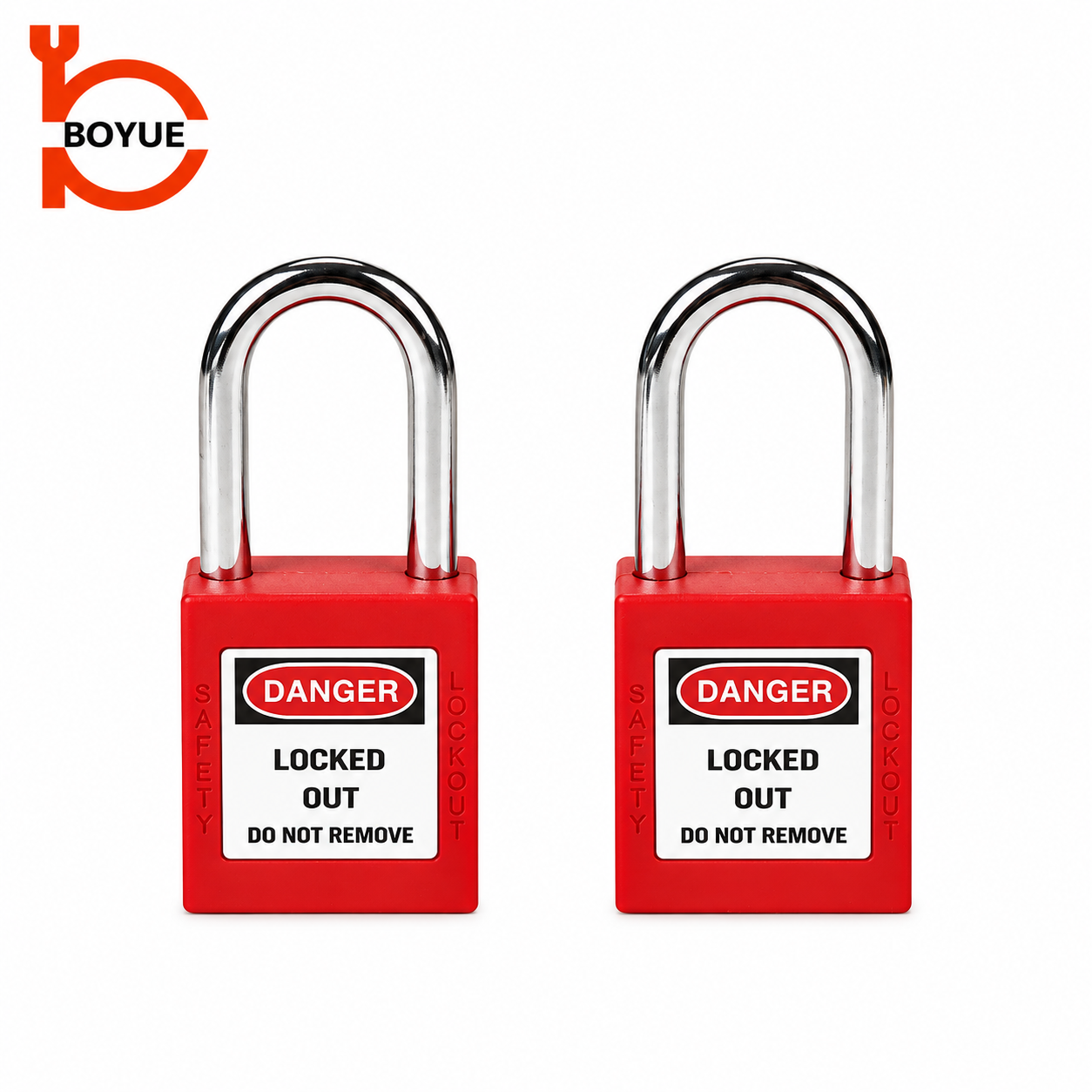
The safety padlock identification guide explains the separate role of lock identity. Keep the label conventions aligned so workers do not have to interpret different employee identifiers on the lock, tag and job record. If a contact field changes, review the issuing process as well as the artwork; printing a new box does not ensure it will be completed correctly.
Do not weaken an active arrangement while correcting an identification problem. A damaged or incorrect tag discovered during work needs the responsible personnel’s controlled response. Reprinting a replacement warning is not permission to remove an active lock or improvise a transfer of responsibility. Keep any correction linked to the site’s established procedure.
Make issue, storage and contractor use consistent
If several language versions are stocked, label their storage positions clearly and train custodians to issue the approved version for the job. Avoid mixing visually similar obsolete and current tags. A batch reference or artwork revision in the stock record helps receiving staff compare delivered goods with the approved proof without trying to translate every sentence themselves.
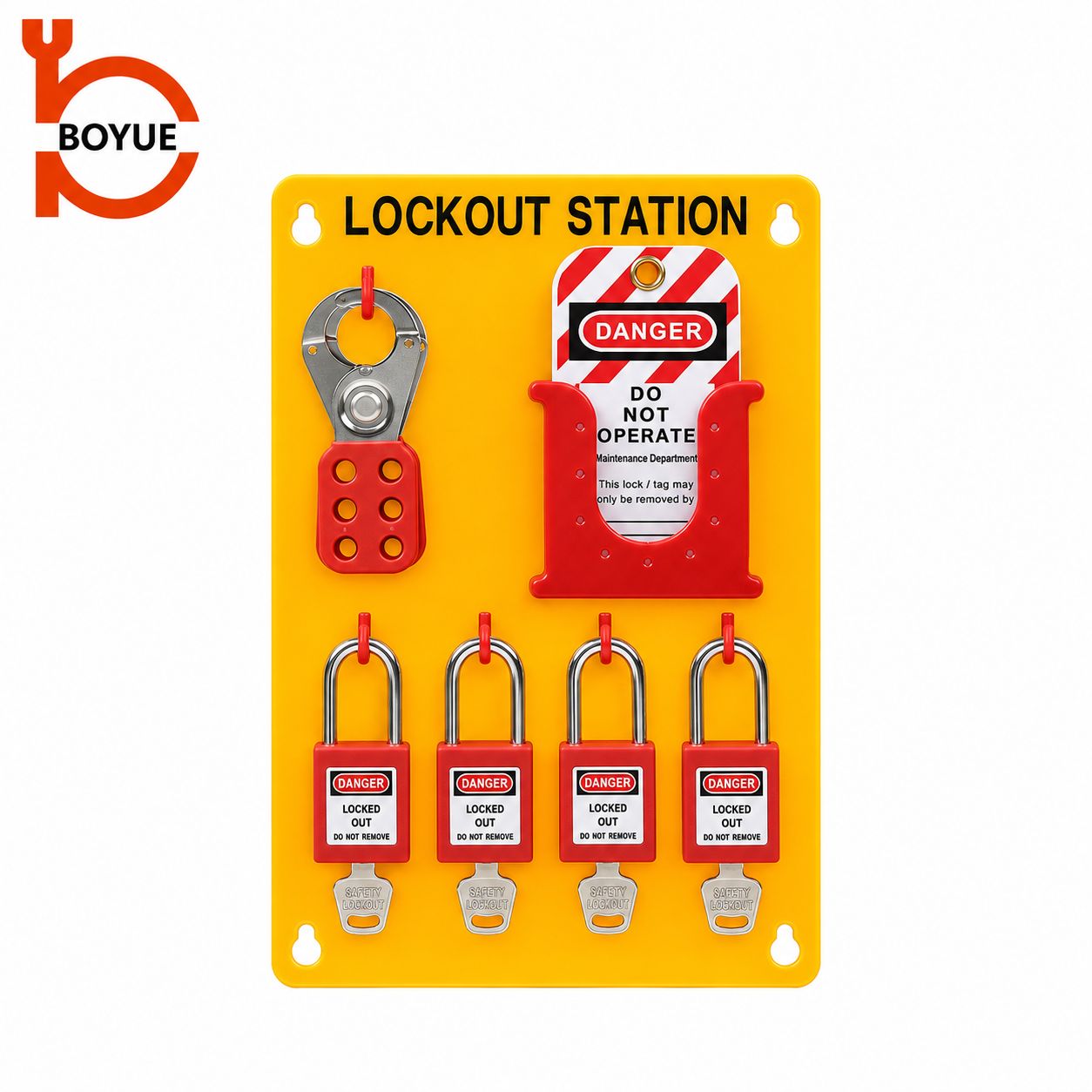
A storage station can organize tags and other devices, but it does not decide which wording is suitable. Keep the issue instructions with the station’s reference information. The lockout station shift-handover guide addresses stock-status continuity, which is useful when a new artwork revision is introduced between shifts.
For contractors, agree the warning and identification conventions before work begins. If the host and contractor use different languages or field meanings, resolve the interface through the required coordination process. A temporary explanation at the equipment may be insufficient when another crew will encounter the tag later. Review whether the agreed design and training cover the people actually exposed to the work area.
Validate understanding and train on limitations
Use representative workers to check whether they can explain the warning, identify the responsible person and describe the correct response to an unexpected tag. Treat confusion as feedback on wording, layout or training. This is a practical comprehension review, not proof that a single sample exercise satisfies every training obligation.
SAFE Work Manitoba’s educational video provides general lockout procedure context. Its English narration is not a substitute for instruction workers understand, and it does not approve a translated tag. Use suitable language support and equipment-specific training when incorporating it into a learning session.
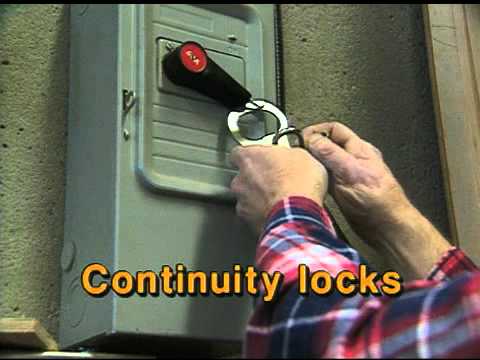
Watch Lock Out Procedures by SAFE Work Manitoba.
Frequently asked questions
Are English and Spanish always the correct two languages?
No. Select languages from the needs of the workers and contractors who may encounter the warning. A common language pair is not automatically suitable for every workplace or shift.
Does a bilingual tag replace a personal lock?
No. Translation improves communication but does not provide physical restraint. The applicable energy-control program determines the permitted arrangement and the training required for tag limitations.
Can a supplier catalog image serve as approved artwork?
No. Confirm the exact warning, translations, field labels, size and revision on the production proof. A product-family image does not establish the wording or acceptance of the particular version being ordered.
How should a site check a new language version?
Use competent language and safety review, inspect a full-size sample and check understanding with representative workers. Resolve differences before issue and keep the approved master connected to training, purchasing and receiving records.