
Group Lockout Box Key Reconciliation: Match Keys to Isolation Points
Group lockout box key reconciliation means checking that the isolation record, installed isolation locks, controlled key set and identified lockbox all describe the same job before workers rely on the arrangement. Counting loose keys is not enough: one key may operate several assigned locks, and an unexplained key may belong to another job. The responsible coordinator must resolve those relationships under the site’s approved group procedure. This guide explains how to build a clear reconciliation record, handle mismatches without weakening protection and prepare a useful handover. It supplements the energy-control procedure; it does not replace isolation verification or individual worker protection.
Define what the reconciliation must connect
A useful record connects four things: the work boundary, each designated isolation point, the isolation lock or controlled lock set used there and the box that holds the relevant keys. Without those connections, a box full of keys can look complete while an isolation point remains outside the documented arrangement. Begin with the approved procedure and identify the task and equipment to which the box will apply.
Use the site’s approved identifiers consistently. A valve tag, disconnect label, isolation-lock number and key-set identifier have different purposes. Avoid using a single informal nickname for all four. The coordinator should be able to explain which field identifies the physical point and which field identifies the lock or key relationship. Where existing labels are unclear, resolve that ambiguity before accepting the record.
The Jefferson Lab group lockout procedure provides an institutional example linking isolation, keys placed in a box and workers applying individual locks before work. Its role names and administrative details belong to that institution. Use it to understand the relationships, not to copy a different employer’s authorization system into your site without review.
Keep isolation locks and personal locks distinct
Isolation locks secure the designated energy-isolating devices. Under an approved lockbox arrangement, the relevant keys are controlled inside the box while workers apply their personal protection to the group device. A worker’s personal key is not ordinarily part of the isolation-key deposit being reconciled. Mixing these categories makes it harder to establish who controls each lock and why access to a particular key must remain restricted.
Document the approved keying arrangement rather than assuming there is one loose key per isolation point. The number of points, locks, unique operating keys and physical keys can differ. For example, a controlled set may have a defined relationship between several isolation locks and a particular key. That relationship must already be authorized and traceable; a convenient key that happens to open several locks is not evidence of an acceptable system.
Duplicate and spare keys also require explicit control under the employer’s program. Depositing one key in the box does not resolve the risk of another accessible key operating the same isolation lock. Ask how additional keys are controlled and document the relevant arrangement. Do not create a new master-key practice during a job merely to simplify reconciliation or speed up restoration.
Identify the actual box and its boundaries
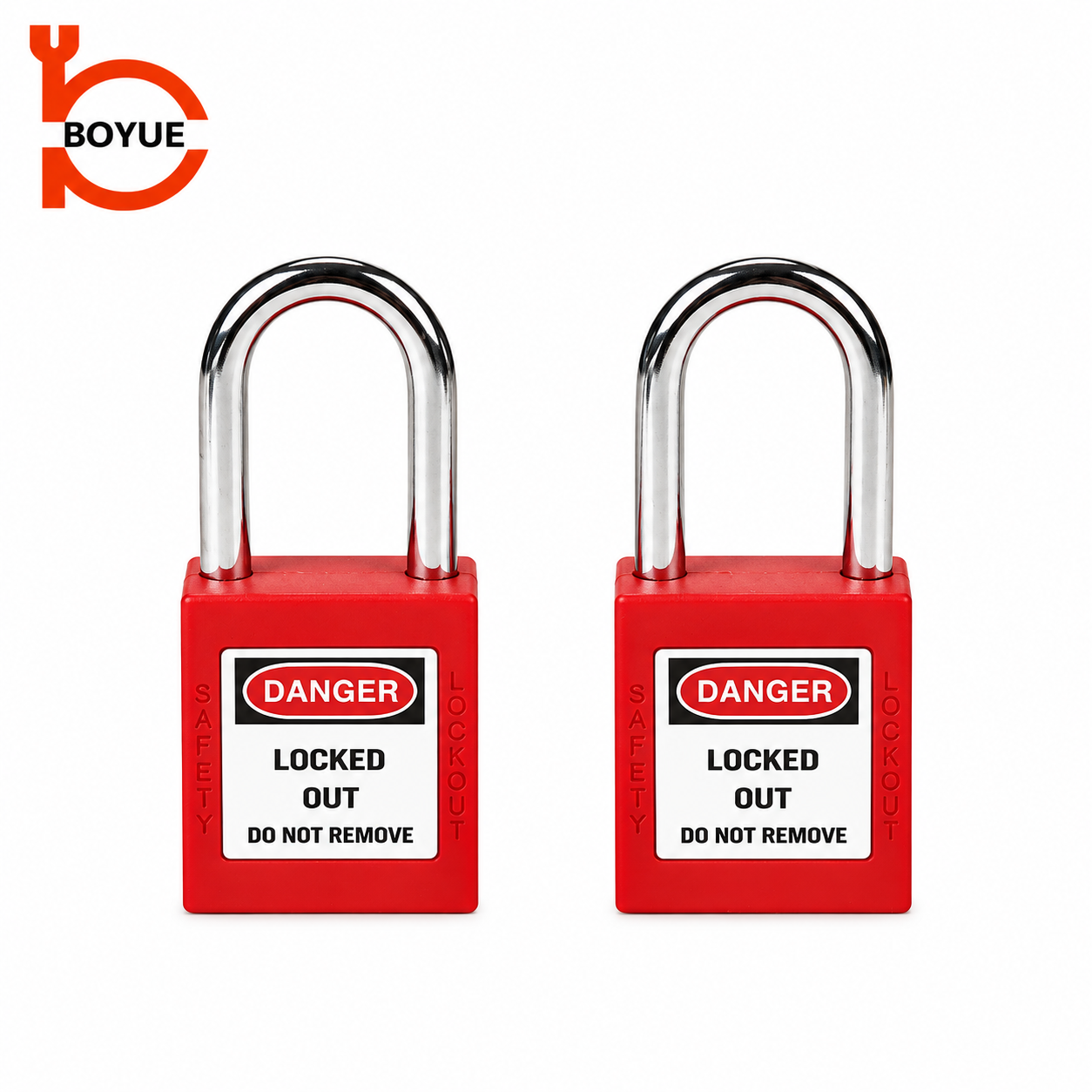
The BOYUE GL-01 and GL-02 portable metal group lockout boxes are product references for this article. Confirm the supplied model and its current instructions. The product name does not establish that it suits every crew size or approved procedure. Check the actual locking arrangement, labeling space and method of controlling access to deposited keys before adopting it.
Give the box a stable identity that can be connected to the work record. If several boxes are used nearby, a color alone may not distinguish them adequately. Record which equipment and work scope each box covers. Keep storage boxes, spare-device containers and active group boxes clearly identified according to the site program so employees do not interpret any locked container as an active isolation boundary.
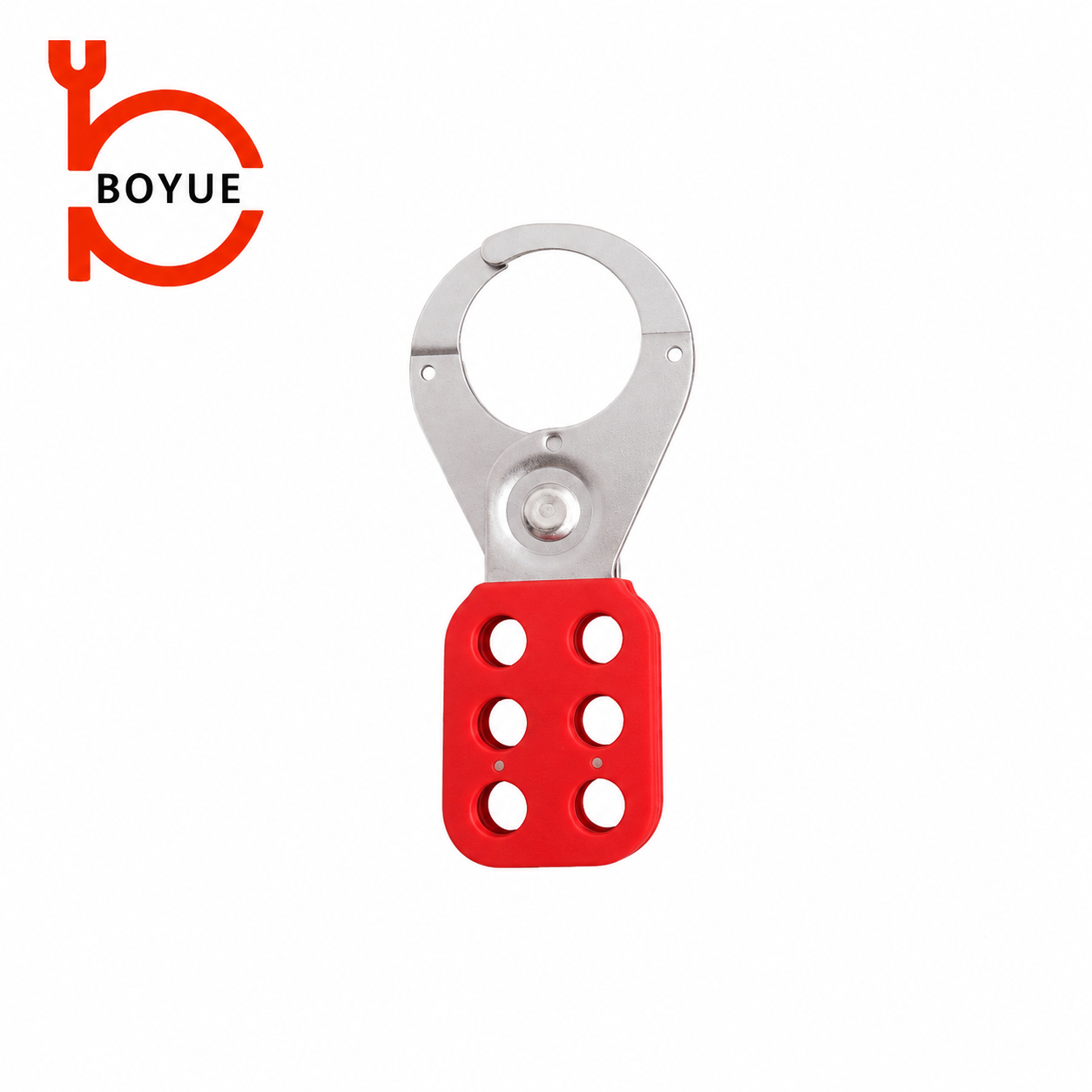
Where a hasp forms part of the approved box arrangement, include it in the compatibility check. A photograph of a hasp illustrates a supporting component, not proof that it fits a particular box. Review the full assembly using lockout hasp jaw clearance and the product instructions. Do not infer extra personal-lock capacity by adding unreviewed adapters or placing locks through unintended openings.
Reconcile the record before workers start
Begin with the isolation list and confirm that the designated actions have been performed through the approved procedure. The reconciliation should link the installed lock identifiers to the keys being deposited. It must also confirm the box identity and the responsible person’s acceptance. The method should make omissions visible, rather than requiring reviewers to infer completeness from a neat arrangement of keys.
Verification of isolation remains a separate requirement. The NIOSH hazardous energy control resource guide supports planning and checking equipment-specific energy-control arrangements. A complete register and a locked box cannot establish that a wrong disconnect was not selected or that stored energy has been controlled. Record the verification required by the approved procedure and resolve unexpected results before exposure.
Workers must receive the information and apply the individual protection required by the employer’s group procedure before beginning work. Signing a list is not a substitute for the required personal lock. Equally, attaching a lock to a box whose scope is unknown does not tell a worker which hazards are controlled. The coordinator’s briefing must connect the job, boundaries, verified isolation and workers’ responsibilities.
Use a reconciliation table that exposes gaps
The following table describes fields for a planning record rather than a universal legal form. The site program determines the authorized roles, required verification and approval sequence. Keep the actual point-by-point register with the approved job documentation.
| Record field | What it should identify | Check to make | Mismatch requiring resolution |
|---|---|---|---|
| Job and scope | Equipment and authorized work boundary | Does the isolation list cover the task? | Box associated with a different job |
| Isolation point | Physical device tag and location | Does the record match the installed point? | Unidentified or omitted point |
| Isolation lock | Lock or approved set identifier | Is the expected lock installed? | Unrecorded substitution |
| Key relationship | Approved operating-key or key-set identity | Are the relevant keys controlled as specified? | Missing or unexplained key |
| Group box | Stable box identifier and location | Does the deposit belong in this box? | Mixed keys from separate jobs |
| Verification record | Required checks and responsible acceptance | Is isolation verified for this scope? | Incomplete or conflicting result |
| Worker protection | Required individual lock-on arrangement | Can each assigned worker apply protection? | Worker exposed without the required control |
Do not populate missing fields from memory just to close the record. A reconciliation is useful because it distinguishes confirmed relationships from assumptions. If a point cannot be positively identified, mark the issue and escalate it. The record should make the next safe action clear without instructing anyone to remove an active protective device to investigate a paperwork discrepancy.
Handle missing and unexplained keys safely
If the count or identities do not agree, suspend reliance on the affected arrangement until the discrepancy is resolved. Maintain the controls required to protect workers and follow the site’s escalation process. Do not open an actively protected box, borrow another worker’s key or remove a personal lock merely to compare the contents with a spreadsheet. Investigation must preserve protection throughout.
An unexplained extra key is also a discrepancy. It may be unrelated stock, a duplicate operating key or evidence that the wrong deposit was made. Treat its meaning as unconfirmed until the responsible review establishes the relationship. Avoid testing unidentified keys against active isolation locks as an informal identification method. The employer must determine the safe method for resolving uncertain key ownership and operating capability.
If a key is missing, distinguish an inaccurate record from an uncontrolled operating key. The second situation may affect the integrity of protection even when the visible isolation locks appear correct. Escalate the issue to the responsible personnel rather than assuming that the box remains effective because its lid is closed. Document the finding, resolution and any required revision before work resumes under the arrangement.
Keep the relationship clear through changes
When the work scope changes, reassess whether the isolation boundary and key deposit still cover the revised task. Do not add a new isolation point to a handwritten list while leaving workers unaware of the change. Follow the authorized change process, update the affected records and communicate the revised protection arrangements. If multiple jobs share part of an isolation, the procedure must address that relationship explicitly.
Shift changes require continuity of protection under the approved method. Reconciliation helps the incoming coordinator understand the box contents and outstanding issues, but it does not authorize removal of outgoing workers’ locks. For the separate transfer question, see group lockout box shift changes. For organizing external crews within an approved arrangement, see contractor group lockout.
Before restoration, the responsible people must complete the site’s release sequence, confirm the work and personnel status and remove devices through the authorized process. A reconciled key set is only one input. It does not establish that tools are removed, guards are restored or people are clear. Archive the final record so later reviewers can trace the relationship between the job, isolation and controlled keys.
Training resource
SAFE Work Manitoba’s general lockout video provides context for the overall sequence. It does not demonstrate a specific group-box keying system or approve the GL-01 or GL-02 for a particular site. Use it with practical training on the actual record, box identity and individual lock-on responsibilities.
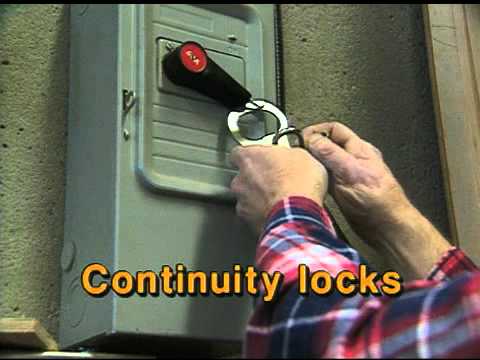
Watch Lock Out Procedures by SAFE Work Manitoba.
Frequently asked questions
Must the number of keys equal the number of isolation points?
Not necessarily. The approved keying arrangement determines the relationship between points, locks, unique operating keys and physical keys. Reconcile those identities and their control instead of imposing a count that may not describe the authorized system.
Does a complete key register prove the machine is isolated?
No. The register supports traceability, while the required isolation and verification steps establish the relevant equipment state. Both must be addressed under the approved procedure before workers rely on a group arrangement for protection.
Can an extra key be left in the box if its purpose is unknown?
Do not treat an unexplained key as harmless administrative clutter. The responsible personnel must establish its relationship to the job and resolve the discrepancy through a safe process that maintains worker protection and appropriate key control.
Can one worker sign for everyone instead of individual lock-on?
A signature is not a substitute for personal protection required by the approved group lockout procedure. Each assigned worker must understand the covered scope and apply the required individual control before exposure, with coordination managed by the designated responsible people.