
Cable Lockout After Equipment Modification: Reapprove the Arrangement
Cable lockout after equipment modification requires a fresh review of the complete isolation arrangement before workers reuse it. A cable that fitted yesterday may follow the wrong path after a guard, bracket, valve handle or access panel changes. Confirm the work boundary, identify every energy source, check the actual locking geometry and verify the isolation under the revised procedure. A device that closes successfully is only one part of that decision. This guide explains how maintenance planners can document the change, arrange a controlled compatibility check and decide whether the existing cable device remains suitable for the next job.
Start with the change, not the familiar cable
Equipment modifications range from relocating a bracket to adding another powered attachment. Their effect on hazardous energy control is not proportional to their physical size. A small relocated hole can alter the cable path; a new actuator can introduce another energy source. Record what changed, who owns the modification and which equipment-specific procedure was previously approved. Do not assume a drawing revision automatically updates the isolation instructions used at the machine.
Separate the mechanical compatibility question from the energy-control question. The first asks whether a particular cable, device and padlock can retain the designated isolator in its required position. The second asks whether those isolators control every hazard for the planned work. A successful fit check cannot answer the second question. The employer’s competent personnel must review both before authorizing use, following the applicable program and local requirements.
The CCOHS lockout guidance describes equipment-specific instructions covering energy sources, isolating devices, stored energy and verification. Use that framework when identifying which parts of an existing procedure need review. This article provides planning questions, not a substitute for an approved machine procedure or instructions for working on energized equipment.
Map the changed work boundary
Begin with the task employees will perform. Replacing a conveyor guard may expose a different zone from adjusting a sensor outside that guard. Identify the components workers will touch, the spaces they will enter and the movements or releases that could reach them. Then trace the relevant energy sources with the people responsible for the equipment. Include connected equipment when its operation could affect the work area.
Ask whether the modification added a second supply, changed a valve arrangement, moved a disconnect or altered where stored energy can remain. Do not treat the cable itself as an energy-isolating device. It is an accessory used to secure an appropriate isolator in a particular arrangement. An emergency stop, selector switch or control screen does not become an isolator because a cable can be wrapped around it.
Compare the revised boundary with the previous procedure one isolation point at a time. Mark unchanged points as confirmed only after checking their identity and function. Record added, removed and relocated points separately so the reviewer can see why the procedure changed. If the change creates uncertainty about the adequacy of an isolator, stop the approval process and obtain the required engineering or equipment-manufacturer assessment.
Check the complete mechanical arrangement
The BOYUE AC-02 adjustable cable lockout is a product reference for this review. Its listing establishes the product identity; it does not establish compatibility with a modified machine. Confirm the exact supplied device and current instructions rather than transferring assumptions from a similar-looking cable model. Avoid making unverified claims about load capacity, chemical resistance or electrical protection.
A hasp is a supporting component only where the approved arrangement requires it; the illustration below is not a demonstration of an installed cable assembly.

With the equipment in a safely controlled condition under an authorized procedure, assess the full path the cable would take. Check access to the designated locking features, closure of the device and room for the intended personal lock or approved group arrangement. The cable must not rely on removable trim, a loose component or an unintended attachment point to preserve the required isolator position.
Review the effect of the new bracket or guard on movement and visibility. Can a changed part press against the release mechanism? Is the cable forced around a sharp edge? Does a panel hide the locking point or prevent inspection? Do not prescribe an improvised spacer, drilled hole or alternate cable route merely to make the old device fit. Changes to the approved arrangement need review and documented acceptance.
Use a change-review decision table
The following is a qualitative planning checklist based on the equipment-specific approach in CCOHS guidance. It contains no universal cable dimensions or acceptance forces. The responsible reviewer must set the applicable criteria from the equipment design, device instructions and site program.
| Changed condition | Question to resolve | Evidence to retain | Decision if unresolved |
|---|---|---|---|
| Relocated locking feature | Is it still part of the designated energy isolator? | Updated point identification and reviewer confirmation | Do not approve the old arrangement |
| Different cable path | Can the approved combination secure the required position without unintended release? | Actual-device compatibility record | Review an alternative device or arrangement |
| New powered attachment | Does the task now involve another energy source? | Revised energy-source and isolation list | Extend the procedure before work |
| New guard or enclosure | Can workers apply and inspect the device safely? | Access review and current photographs | Correct access or revise the method |
| Changed pressure circuit | Can energy remain or reaccumulate in a new section? | Approved stored-energy control and verification method | Obtain competent technical review |
| Revised work scope | Does existing verification cover every exposed hazard? | Task-specific verification instructions | Reassess the work boundary |
Verify the revised isolation independently of appearance
Do not use cable tension or a locked padlock as proof that the machine is safe. Verification must address the relevant energy sources using the approved procedure and appropriate competent personnel. The required approach depends on the equipment and hazards. Electrical testing, for example, needs the applicable electrical safety procedures and qualified workers; it cannot be reduced to a generic pull on the cable or a start-button check.
The NIOSH hazardous energy control resource guide emphasizes planning, equipment-specific procedures and checks of isolation arrangements. Treat verification results as evidence about the revised equipment state. If a result conflicts with the expected state, keep people clear of exposure and resolve the discrepancy under the site’s process rather than explaining it away as a documentation issue.
Stored energy deserves a separate review. A relocated component may change how elevated parts are supported, where pressure is trapped or how another machine can affect the work area. The responsible technical personnel must determine how those hazards are dissipated, restrained or otherwise controlled and whether continuing checks are necessary. Reusing the same lockout product does not mean the energy-control method remains unchanged.
Update instructions people actually use
After approval, replace obsolete point descriptions, photographs and cable-route illustrations in the controlled procedure. An updated engineering drawing is useful, but workers also need clear instructions at the point of use. Show the designated isolator, approved accessory combination and relevant limitations. Record the procedure revision so the next crew can distinguish an approved change from an informal workaround photographed during maintenance.
Communicate the change to authorized employees before the revised procedure is used. Include affected employees and contractors according to their roles. A short practical review should explain what changed and what decision workers must make differently. For related personal-device condition checks, use the safety padlock inspection checklist rather than assuming a previously issued padlock remains suitable indefinitely.

When the assembly includes a hasp, confirm its fit as part of the complete arrangement and consult lockout hasp jaw clearance. Do not add a hasp just to compensate for an unapproved cable route. Every added component changes the assembly that needs assessment, including clearance, closure and the ability of each worker to apply the required personal protection.
Prepare a useful supplier enquiry
If the previous cable device cannot be approved, send a focused enquiry rather than requesting a universal replacement. Identify the isolator type, required secured position, accessible locking features and surrounding restrictions. Provide measurements and photographs taken under safe conditions, the existing model and the reason it no longer fits. Ask for current instructions and applicable compatibility information without assuming the supplier can approve the machine’s energy-control procedure.
Keep procurement acceptance separate from operational approval. Receiving a new device only confirms that a purchase has arrived. The actual product must still be checked against the specified arrangement and incorporated into the controlled procedure before use. Maintain a record of rejected combinations so another shift does not retrieve them from storage and repeat an unsuccessful trial. Routine condition checks remain covered by cable lockout inspection.
Training resource
SAFE Work Manitoba’s general lockout training supports discussion of the overall isolation process. It does not demonstrate approval of the AC-02 or a particular modified machine. Review it alongside the current site procedure and device instructions, especially when explaining why hardware compatibility and verification are separate checks.
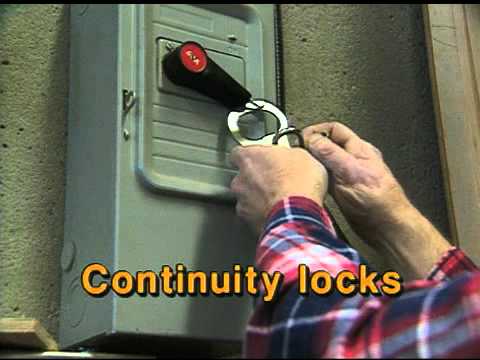
Watch Lock Out Procedures by SAFE Work Manitoba.
Frequently asked questions
Does every equipment modification require a new cable lockout device?
No. The existing device may remain suitable if the responsible review confirms the revised isolation method, actual compatibility and verification requirements. The important step is reassessment and documented approval, not automatic replacement or automatic reuse.
Can a longer cable solve a changed locking-point problem?
Length alone cannot establish suitability. The isolator, cable path, retention, closure, access and instructions all matter. A longer model also needs assessment as an actual combination; it must not be used to bypass an unresolved isolation-point problem.
Is a photograph enough to approve the revised arrangement?
A photograph can document identity and visible geometry, but it cannot prove complete energy isolation or every aspect of retention. Use it as supporting evidence within the site’s review, compatibility assessment and task-specific verification process.
What should happen if the old procedure no longer matches the machine?
Do not start the affected work using instructions known to be inaccurate. Escalate the discrepancy, maintain the required safe controls and have the responsible personnel revise and approve the procedure before the affected task proceeds.