Lockout Hasp Jaw Clearance: Check the Whole Locking Point
Lockout hasp jaw clearance must be checked on the complete locking point, including the approach path, the space inside the closed jaw and the personal locks that will be used. A nominal jaw size does not prove that a hasp can reach, close and remain secure around a particular attachment. Identify the approved isolation point, compare the actual geometry and evaluate the intended combination before issue. This guide concerns physical compatibility. It does not establish that an attachment is an energy-isolating device or replace the employer’s equipment-specific energy-control procedure.
Start with the approved attachment
The first question is where the hasp is supposed to be attached. Obtain the current equipment identifier and the approved procedure, then identify the designated locking feature. A convenient nearby hole or bracket is not automatically an acceptable alternative. The responsible reviewer must establish that securing the intended feature supports the required isolation function.
If the field point differs from the procedure photograph, treat that difference as an open issue. A changed switch handle, valve operator or protective housing can alter both the access and the function of the attachment. Do not close the question by selecting a hasp that happens to fit the new shape.
The CCOHS lockout and tagout overview explains the connection between energy-isolating devices, locking hardware and established procedures. Use that framework to keep product fit evidence separate from the overall safety decision. A hasp is one component in the approved arrangement, not a substitute for understanding the equipment.
Separate approach clearance from closed-jaw clearance
Approach clearance is the room needed to bring the open hasp to the attachment without forcing it around an obstruction. Closed-jaw clearance concerns the space enclosed after the jaw is fully shut. Both matter. An attachment may fit inside the closed opening while a guard or enclosure prevents the open jaw from reaching it in the intended way.
Describe the actual profile rather than recording only one diameter. A thick rectangular tab, a round eye and a recessed operating handle can present different constraints. Record relevant measurements with units and identify the orientation in which they were taken. Use photographs to explain the geometry, but retain the equipment identity alongside them.
The BOYUE HS-01 and HS-02 steel safety lockout hasps provide identifiable variants for evaluation. Select the exact variant from current product information. Do not infer that a larger nominal jaw automatically improves every application; the resulting movement, access and lock-body positions still need review.
Examine closure and movement together
Check the complete intended assembly according to the manufacturer information and the site’s authorized assessment process. The jaw should reach its designed closed position without distortion or interference. A partly closed jaw can appear attached while failing to represent the configuration the product was designed to use.
Consider the movement that remains after attachment. Clearance that permits installation may also allow the hasp to rotate into adjacent components or obstruct a control. Whether that movement matters depends on the approved application and surrounding equipment. Record the observation and refer uncertainty to the responsible reviewer rather than assuming that any free movement is either acceptable or defective.
Use the lockout hasp selection guide for broader selection questions. This clearance review adds the installation-specific evidence that a general product choice cannot supply. Keep the chosen jaw variant, actual attachment and intended personal lock together in the acceptance record.
Use a complete-assembly compatibility record
The following qualitative table is a review aid, not a statement of product tolerances or a universal test procedure. The employer’s approved method and current manufacturer instructions determine acceptance. The hazardous energy control standard provides the relevant U.S. general-industry framework for the hardware and procedure.
| Clearance finding | Question for the reviewer | Record needed before acceptance |
|---|---|---|
| Jaw cannot approach a recessed point | Is the intended accessory compatible with this installation? | Identified obstruction and approved alternative decision |
| Attachment fits but jaw will not close | Is there an unrecognized profile or interference? | Complete profile measurements and exact variant |
| Hasp rotates against nearby hardware | Does remaining movement affect the approved function? | Installed orientation and responsible assessment |
| First lock fits but others collide | Can all required personal locks be used as intended? | Actual lock-body and shackle combination |
| Labels become hidden | Can required identification remain understandable? | Approved marking and access arrangement |
| A modified hasp is offered | Does it still match the documented product? | Hold and supplier clarification; no assumed equivalence |
Do not enlarge a hole, grind a jaw or bend an attachment to obtain a convenient fit. Such work changes the assembly being assessed. Refer an unfavourable result for an approved accessory or engineered arrangement instead of treating modification as routine adjustment.
Include the issued personal locks
A product photograph showing several empty lock positions does not demonstrate how the site’s actual locks will fit. Lock bodies can collide even when their shackles pass through the holes. Check the intended combination rather than using the smallest demonstration lock to establish a general approval.
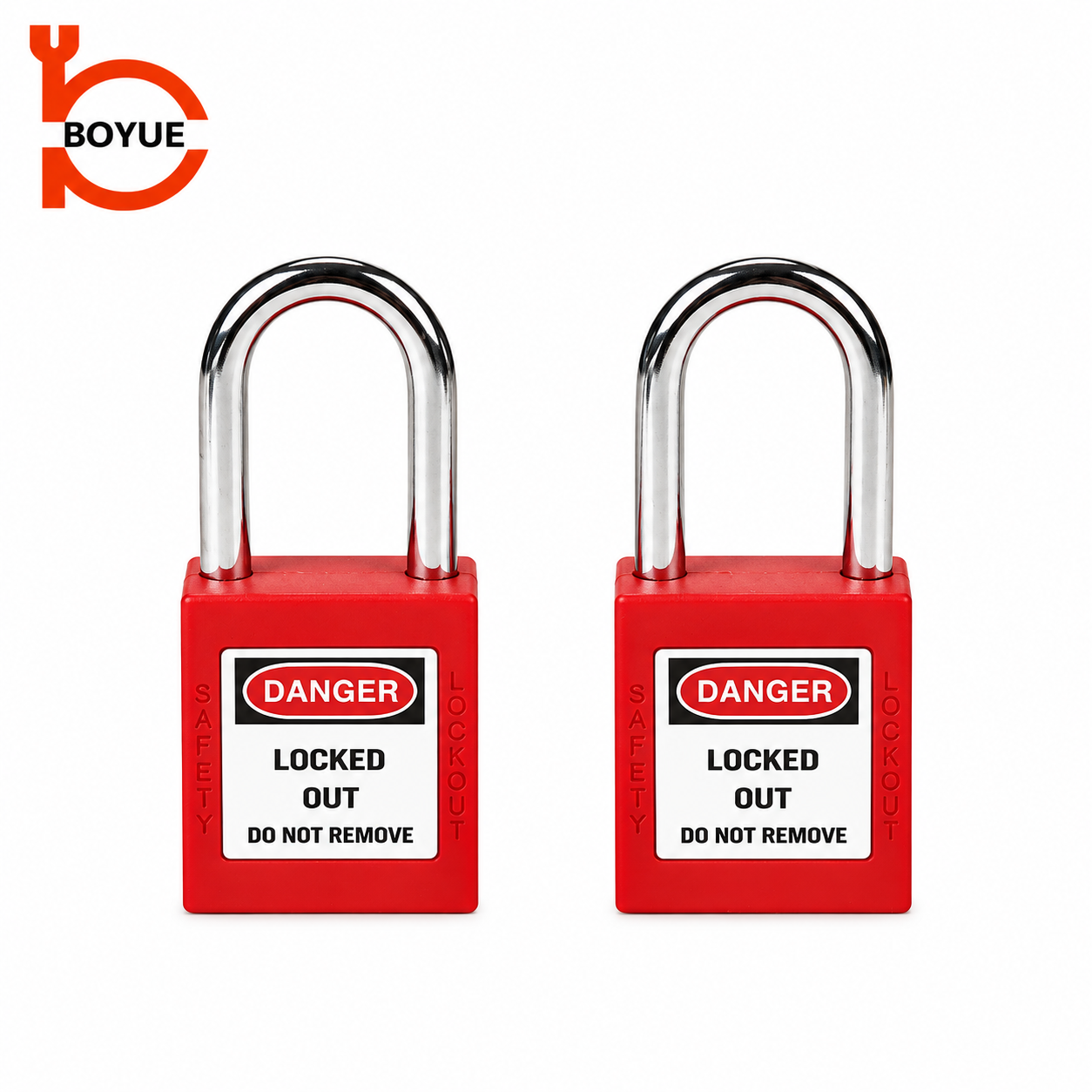
Record the shackle and body configuration relevant to the assessment, together with the site’s assignment and key-control requirements. Do not substitute an unassigned lock simply because it closes more easily. Personal protection and removal responsibility remain governed by the approved procedure.
If the required number of workers changes, review whether the established arrangement still supports their protection. Do not extrapolate from one successful lock fit to every possible combination. A change in lock brand or body profile can justify a new compatibility review even when the hasp itself remains unchanged.
Keep a group box decision separate
A group lock box may be part of a different approved method, particularly when the job involves several isolation points or workers. Its suitability cannot be decided solely by whether a hasp has enough convenient space. The employer must define how each authorized person’s protection is maintained under the group arrangement.
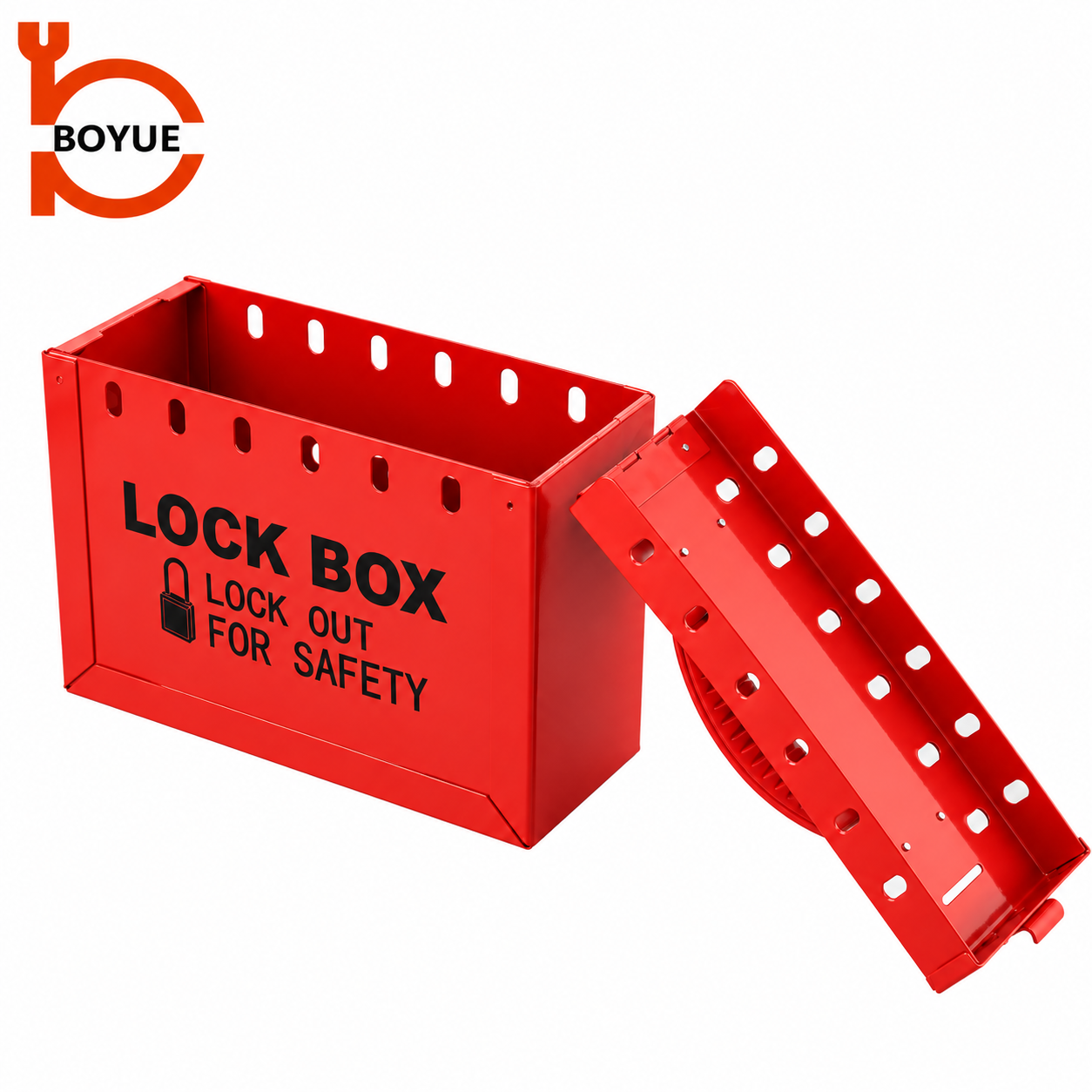
The illustrated group box is shown as a separate product category, not as an attachment instruction for a hasp. It helps distinguish storage of isolation keys under an approved method from direct attachment of multiple locks at one point. The site’s procedure must determine which arrangement applies.
The hasp and group lock box comparison provides related context. Use it to frame questions for the responsible person, while retaining the actual task and equipment record as the basis for approval. Product appearance does not select a group method.
Record an unsuccessful sample clearly
An unsuccessful sample assessment is useful evidence when it identifies the actual interference. Record whether the difficulty involves the approach, the closed jaw, the locking holes, the lock bodies or another feature. A note that says only “too small” may lead purchasing to request a larger jaw without solving the real problem.
Include the exact sample identity and the equipment point assessed. Keep photographs and measurements together so that a supplier can respond to the relevant geometry. If the supplier proposes a different variant, retain that proposal as pending until the site accepts it for the intended application.
A failed sample should not return to available stock with an ambiguous approval label. Mark its status and preserve the finding for the next buyer. This avoids repeating the same trial and prevents a later user from interpreting the presence of the device as evidence that it has already been accepted.
Recheck after equipment or accessory changes
A previously accepted combination depends on the configuration that was examined. Replacement handles, revised guarding or a new personal lock can alter access and clearance. Compare the changed arrangement with the acceptance record and resolve differences before relying on the earlier conclusion.
Condition inspection is another distinct requirement. The lockout hasp inspection guide addresses damage and mechanism checks. Passing a fit review does not make a damaged device serviceable, and passing a condition inspection does not prove that an otherwise sound device fits a new attachment.
For general process context, the following educational video explains lockout principles. It does not demonstrate this particular hasp or approve the measured clearance. The equipment-specific procedure and authorized training remain the instructions for work.
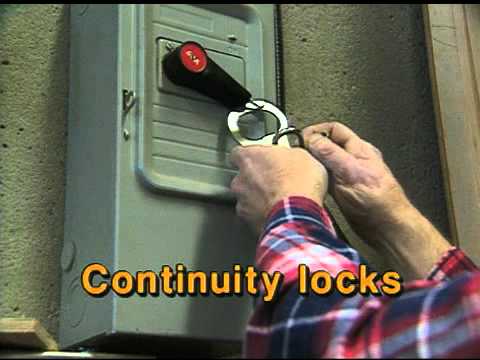
Watch Lock Out Procedures by SAFE Work Manitoba.
Give receiving a reproducible description
Once approved, describe the accepted configuration in a way receiving staff can recognize. Include the hasp variant, approved application reference, associated lock configuration and any restrictions on substitution. Retain supplier information that explains the product identity rather than relying on color alone.
Check deliveries against that description before issue. If the supplied jaw, hinge or locking layout differs, hold the affected items while the difference is resolved. A product with the same broad name may still be a different configuration. Close the record only when the delivered item and the accepted arrangement agree.
Frequently asked questions
Is nominal jaw diameter enough to choose a hasp?
No. It is one input. Review the approach path, complete attachment profile, designed closure, surrounding hardware and actual personal locks. A nominal dimension alone cannot establish compatibility with an installed point.
Should a larger hasp always replace a tight one?
Not automatically. The original problem may be access or lock-body interference rather than jaw size. A larger accessory can introduce different movement or obstruction. Identify the actual problem and assess the proposed alternative.
Can a hasp be reshaped to fit?
Do not treat reshaping as routine fitting. A modified device no longer matches the configuration being assessed from the manufacturer information. Hold the issue and obtain an approved solution through the responsible review process.
When should an accepted combination be reviewed again?
Review relevant changes to the attachment, surrounding hardware, hasp variant or personal lock. Retain the original acceptance record so the reviewer can determine which assumptions changed and what additional evidence is needed.