
Multiple Plug Lockout Identification: Match Every Supply to the Job
Multiple plug lockout identification means connecting every relevant plug and supply to the equipment and maintenance task before choosing enclosures. A machine that stops after one plug is removed may still have another supply, retained energy or a connected accessory within the work boundary. Reconcile current labels, drawings and the installed arrangement through the approved procedure, then identify the controls required for the task. This guide addresses source identity and documentation. It does not authorize electrical testing, energized troubleshooting or disconnection of unfamiliar equipment; those activities require qualified personnel and applicable site controls.
Define the equipment and the work first
Begin with the actual maintenance scope and equipment identifier. A workstation can contain a main machine, a separate controller and auxiliary equipment, and their physical proximity does not determine whether they belong to one work boundary. The responsible reviewer must establish what can affect the person performing the task.
Record whether the job concerns an external accessory, internal servicing or another defined activity. Avoid writing a universal instruction such as “unplug the machine” where several connections exist and their functions have not been reconciled. The purpose is a procedure that identifies the necessary supplies clearly enough for authorized personnel to use.
The CCOHS explanation of lockout and tagout describes equipment-specific instructions that identify hazardous energy and the methods used to control it. Use that principle to frame the source record. A numbered plug label supports an instruction, but the number alone does not establish what energy the connection supplies.
Match plugs to current source records
Use current drawings, equipment documentation and an authorized field review to associate each relevant connection with its source and destination. Retain identifiers that remain meaningful when a cable is moved. A photograph can help locate a connection, but it should include enough context to distinguish adjacent plugs and equipment.
Treat a disagreement between the drawing and installed labels as an unresolved issue. Do not select the most plausible label and continue. A cable may have been replaced or moved since the previous photograph, and identical housings do not prove identical functions. Refer uncertainty to the responsible qualified personnel.
Keep the source map separate from the accessory list. The BOYUE electrical plug lockout enclosure range provides products to evaluate after the method identifies which interfaces need securing. An enclosure cannot establish whether a plug is the correct one for the task.
Do not confuse a stop with complete isolation
A machine that becomes quiet or whose screen goes dark has shown an observable response, not necessarily the complete condition required for servicing. The approved method must address the sources and exposures relevant to the work. Do not assume that an auxiliary connection is harmless because normal operation has stopped.
Consider other energy categories through the responsible assessment process. A plug enclosure does not address gravity, pressure or mechanical energy simply because the equipment uses electricity. Retained electrical energy also requires appropriate equipment-specific controls. This article does not prescribe a test method for those hazards.
The U.S. general-industry control of hazardous energy standard establishes a framework with defined scope and exceptions. Its cord-and-plug exception depends on specified conditions, including exclusive control of the plug by the servicing employee. Do not assume that several plugs, several workers or a changed work scope automatically meet that exception. Other electrical requirements may also apply.
Use an identification record that exposes uncertainty
The following qualitative table is a planning aid rather than an electrical isolation procedure. It keeps the identity question visible before the reviewer accepts a plug-control arrangement. The employer must determine the applicable method for the equipment, task and jurisdiction.
| Connection finding | Question to resolve | Record supporting the decision |
|---|---|---|
| Two similar plugs beside one machine | Which equipment and function does each supply? | Current source-to-equipment map |
| Separate controller or accessory | Can it affect the planned work boundary? | Task scope and equipment documentation |
| Label conflicts with the drawing | Which identifier is correct now? | Reconciled field and controlled-document record |
| Cable routing has changed | Does the old photograph still identify the connection? | Current located photograph and identifier |
| One plug cannot be traced | Can the affected procedure be relied on? | Hold with an assigned qualified reviewer |
| New equipment has been added | Is the existing energy-control method still complete? | Reviewed change record and revised procedure |
Do not turn an uncertain connection into an assumed exclusion. Record it as open, identify who will resolve it and prevent the affected work from relying on an incomplete boundary. A clear unresolved status is more useful than a confident but unsupported label.
Select enclosures only after identity is established
Once the approved method identifies the connections requiring restraint, match each enclosure to its actual plug and cord. Record the complete plug envelope, cord exit and the intended personal lock. Avoid grouping dissimilar plugs under a single enclosure description merely because their cables serve the same workstation.
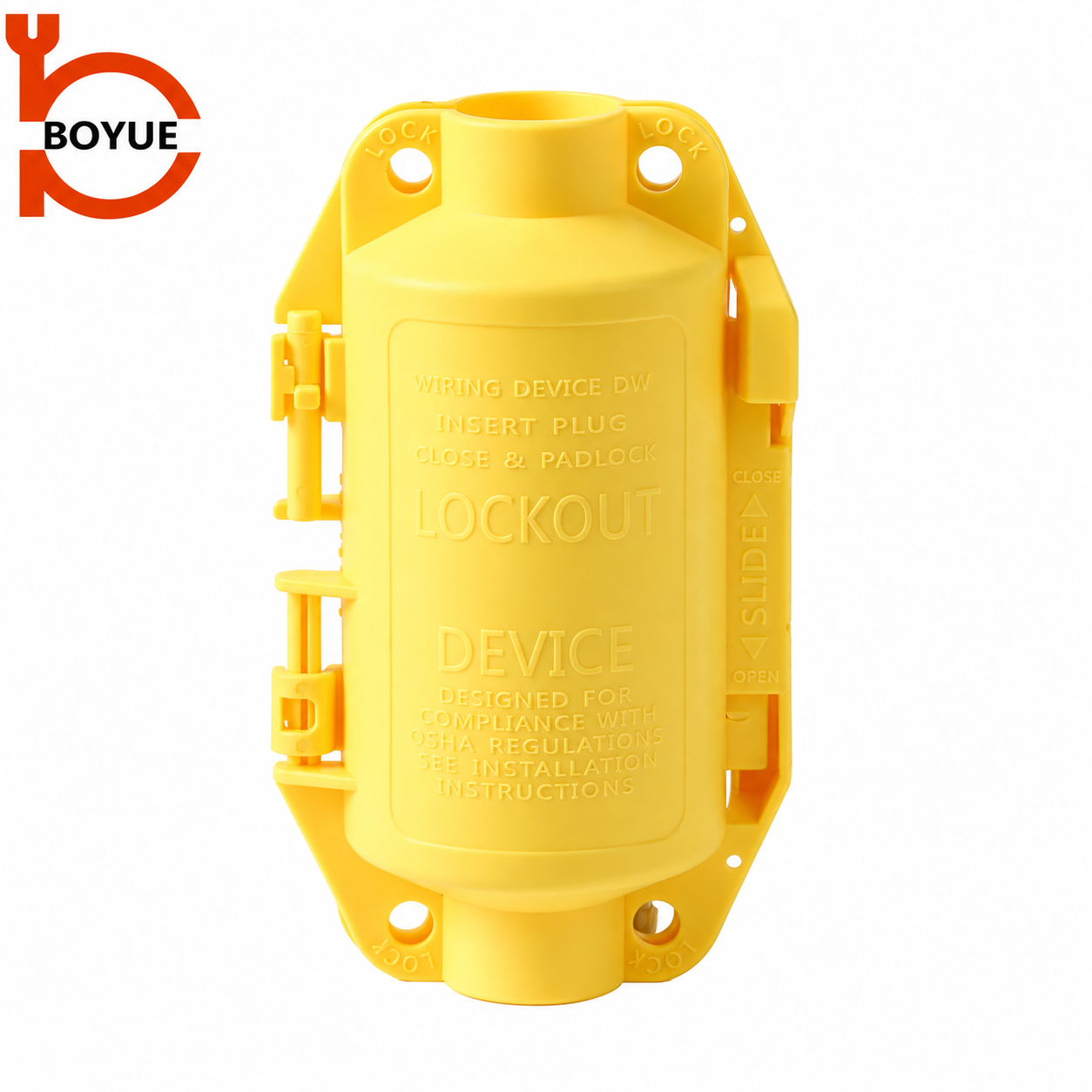
The illustrated elongated plug enclosure belongs to a different product configuration from the rectangular cover. It shows why the purchasing record should identify a particular variant and interface. It does not establish that several plugs can be placed together inside one enclosure or that the illustrated product fits an unidentified connector.
The plug lockout box sizing guide covers the dimensional assessment. This source-identification review should precede that work. A well-sized cover on the wrong plug leaves the essential question unanswered.
Keep each person’s protection understandable
Where more than one authorized person is involved, use the employer’s approved group method. The record should make clear how each person’s protection applies to the relevant energy sources. Do not rely on an informal understanding that another worker has already dealt with all the plugs.
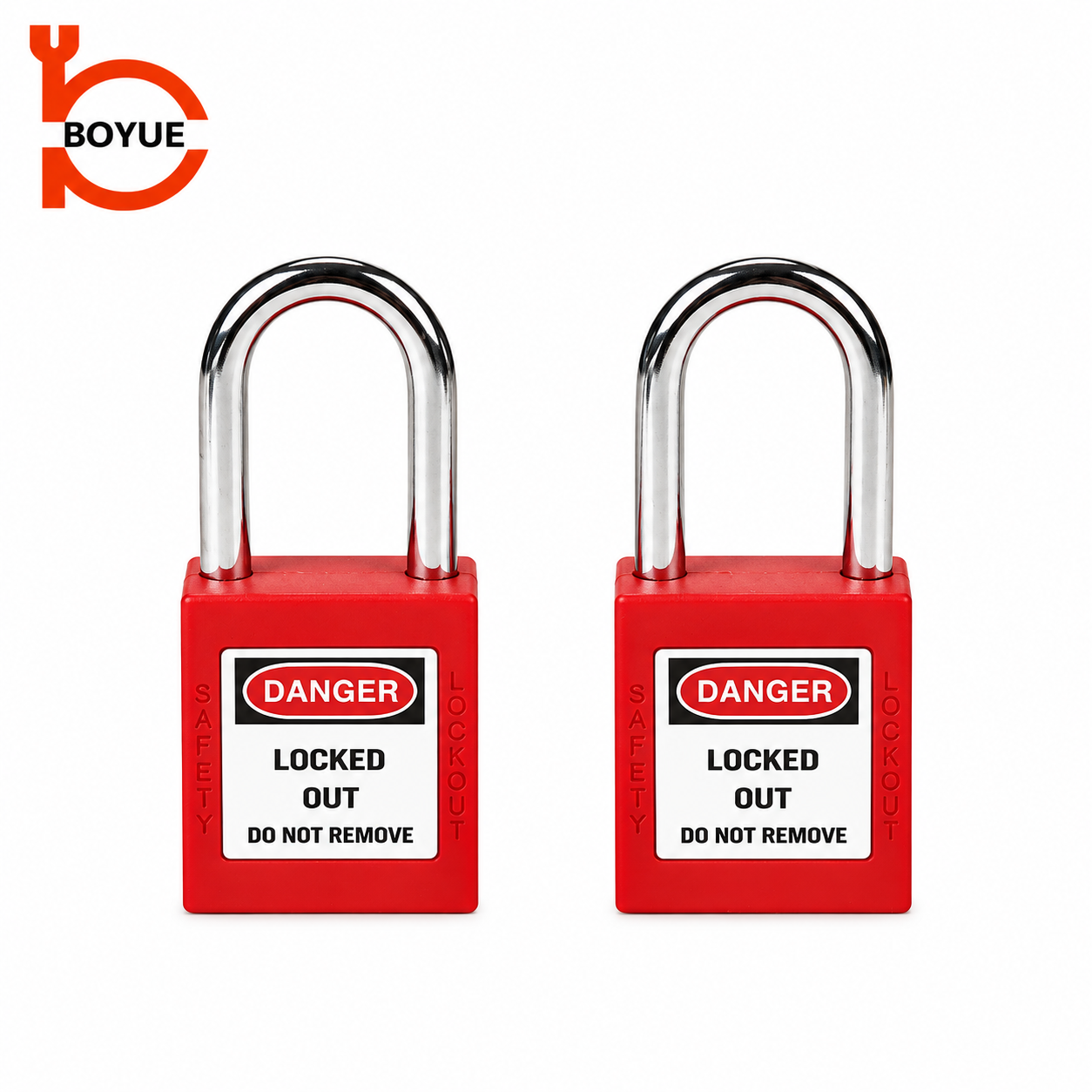
Personal locks need the correct assignment, key control and physical compatibility with their intended accessory. Check the actual issued combination. A supplier’s demonstration lock may differ in shackle or body dimensions, and a convenient spare may have an inappropriate assignment arrangement.
The group lockout box procedure guide provides related context when a group system is appropriate. It does not mean that a box must be adopted for every multi-plug task. The responsible site review must determine the method and maintain a clear connection between the source record and individual protection.
Verify the established condition through the approved method
Identification and labeling help people locate the intended connections. They do not independently establish the safe condition required before work. The procedure must define verification suited to the equipment and hazards, performed by people authorized and qualified for the work involved.
Do not use an indicator light, one control attempt or a photograph as a universal substitute for that process. Different equipment can have different retained-energy and supply arrangements. Record the intended verification method in the controlled procedure rather than leaving it for a worker to improvise from a generic blog article.
For broader educational context, the following video explains lockout principles and the difference between normal stopping and energy control. It does not trace the plugs on this particular machine or demonstrate an electrical test. The site’s procedure and training remain the instructions for the job.
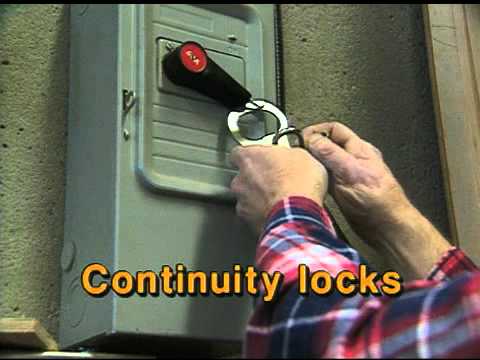
Watch Lock Out Procedures by SAFE Work Manitoba.
Control later changes to labels and accessories
When a cable, power supply or accessory is replaced, compare the new arrangement with the existing source record. A matching plug housing can conceal a change in destination or function. The review should reconcile the field label, current drawing, procedure photographs and associated device list.
Do not reuse an old identifier on a different connection without the controlled process establishing what it means. A stable-looking label can create false confidence if its relationship to the equipment has changed. Retain the revision and communicate it to people who use the procedure.
The electrical plug lockout inspection guide addresses accessory condition as a separate matter. A sound cover still needs the correct application, while a correctly identified plug still needs a serviceable approved enclosure where the method requires one.
Make the record useful at the point of work
Use descriptions that distinguish the actual connections without relying solely on color or location. Where photographs are used, keep them current and legible in the format available to authorized personnel. A clear equipment identifier and the controlled revision help prevent a saved screenshot from becoming an unofficial substitute for the current procedure.
At handover, identify any unresolved source question and the person responsible for its resolution. Do not present a partially completed source survey as an approved job package. Close the review only when the identity, method, required devices and communication agree for the stated task.
Frequently asked questions
Does removing the main plug isolate every accessory?
Only the equipment-specific review can establish that. Identify separate supplies and determine whether they can affect the task. Normal shutdown after removing one connection does not establish that all relevant hazardous energy is controlled.
Can identical plugs share one label description?
They need descriptions that distinguish their actual source and destination. Identical external housings do not prove identical functions. Reconcile the connection record and field identifiers before relying on a common description.
Is a plug enclosure always required for cord-connected work?
The applicable method depends on the equipment, task, jurisdiction and relevant requirements. The U.S. cord-and-plug exception has specific conditions; do not generalize it to every arrangement. The employer must determine and document the appropriate controls.
What happens when a connection cannot be identified?
Keep the issue open and hold affected work that depends on the uncertain boundary. Assign a qualified reviewer to resolve the source and destination, then update the procedure and labels as needed before use.