
Lockout Hasp Inspection: Closure, Damage and Replacement Checks
A lockout hasp inspection should check the exact device’s identity, jaws or loop, pivot or sliding mechanism, locking holes, identification and compatibility with the intended personal locks. Withhold a hasp with cracks, distortion, unreliable closure or unexplained modification until it receives a documented disposition. Do not straighten, drill or grind it as a shortcut back into service. Even a sound hasp must be used on the correct isolation point within an approved procedure; a visual inspection does not verify that hazardous energy has been controlled.
This checklist concerns devices already held in service or stock. The separate lockout hasp selection guide addresses initial geometry and purchasing choices. Adapt this inspection framework to the supplied model’s current instructions and the site’s withdrawal criteria. It sets no universal wear allowance, proof load, inspection interval or product lifetime.
Establish which hasp and assembly you are inspecting
Begin with the model, material description and permitted application. Several devices may share a red body and multiple locking holes while using different closure arrangements. A hinged steel hasp, a sliding polymer design and a double-end device should not inherit one another’s functional check or environmental limits merely because they occupy the same storage board.
The BOYUE HS-01/HS-02 steel hasp is one example of a circular-jaw design. Confirm the exact supplied variant and instructions before judging fit or condition. The photograph identifies visible features, but it cannot establish remaining strength, chemical resistance or approval for an electrical exposure.
Record the intended isolation point and padlock combination. A device can remain undamaged while becoming unsuitable after a machine latch, guarding arrangement or personal lock changes. Keep condition and application approval as separate questions on the inspection record. An answer of “no visible damage” should not silently become approval for an unfamiliar installation.
Examine the jaws, loop and closure interface
Inspect the accessible surfaces in adequate light. Look for cracks, bent sections, damaged tips, corrosion, sharp damage and separation of parts. Pay attention to the surfaces that meet when the device closes. A visible gap may be part of a particular design or a sign of distortion; compare with the exact instructions or an identified reference rather than forcing it to resemble another model.
Do not close a questionable hasp around energized equipment to investigate it. Perform preliminary condition checks on the unused item in a safe area. If the installed device is suspected of being defective during active work, preserve protection and notify the responsible authorized person. Removing it to inspect the jaws could interrupt another worker’s protection.
Look for field modifications. Enlarged holes, filed edges, substituted pins or a bent loop may indicate an attempt to overcome poor fit. Record the observation even if the device opens and closes. A successful movement check does not validate an altered component. Quarantine it pending a manufacturer-supported disposition or replacement.
Check the pivot or sliding mechanism as instructed
A pivot should be examined for visible displacement, damage and abnormal movement within the manufacturer’s criteria. Operate the hasp only as directed and watch how the closure surfaces approach one another. Binding or inconsistent engagement requires investigation. Do not use a hammer, pliers or the padlock shackle to force the device shut.
Sliding designs need their own assessment. Check the accessible slide, stops and locking alignment using the supplied instructions. Do not apply a hinged steel hasp’s assumed behavior to a polymer loop device. A change in material, geometry or mechanism can change what should be checked and how the permitted configuration is established.
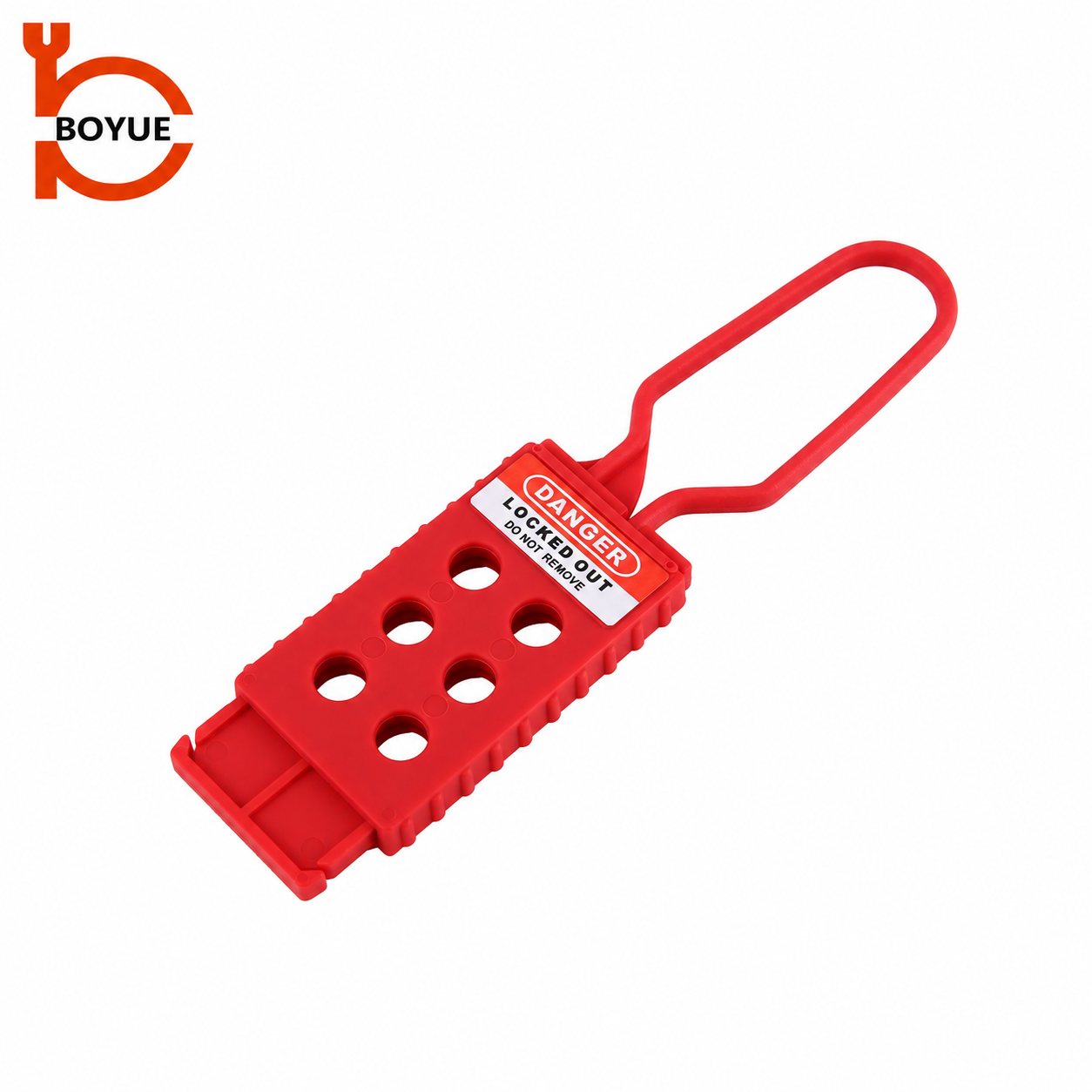
The HN-01 illustration shows a long loop and sliding section rather than the circular steel jaws of the featured example. Its appearance alone does not establish an insulating rating. Obtain the exact model’s documented limits and instructions, especially when the intended work includes electrical hazards or exposure to chemicals and temperature extremes.
Inspect locking holes and the complete padlock combination
Examine each intended locking position for distortion, cracking, burrs or damage that interferes with full closure. Look at both accessible faces and the surrounding material. A hole that still admits a shackle may nevertheless be damaged. Do not enlarge it to accept a different padlock; refer the device and lock combination for reassessment.
Check that the assigned personal padlock occupies the manufacturer’s designated position and closes completely. Assess adjacent locks and bodies in the actual approved arrangement. A nominal number of holes does not guarantee that the same number of every padlock model fits without interference. Keep the approved combination identifiable so a later stock substitution does not bypass review.
Inspect each padlock separately using the safety padlock inspection checklist. A reliable hasp closure does not compensate for a damaged shackle or incorrect key-control arrangement. Equally, a good padlock does not make a cracked hasp acceptable. Record the component that failed rather than marking the whole assembly vaguely unsuitable.
Apply a hold-or-release checklist
This table provides practical record fields, not acceptance tolerances or a standardized test method. The general durability, identification and restraint context comes from OSHA’s materials and hardware guidance. Exact inspection methods and permitted service actions must come from the device instructions and site program.
| Check location | Concern to record | Required disposition before issue |
|---|---|---|
| Identity | Uncertain model, unknown history or unapproved substitution | Establish traceability and application approval |
| Jaws or loop | Crack, bending, damaged closure surface or corrosion concern | Quarantine for responsible assessment |
| Pivot or slide | Binding, visible damage or inconsistent engagement | Withhold; follow model-specific service guidance |
| Locking holes | Distortion, crack, altered diameter or incomplete alignment | Reject the affected combination pending resolution |
| Padlock assembly | Incomplete closure or interference with neighboring locks | Recheck the approved hasp and padlock configuration |
| Identification | Unreadable or conflicting owner and application information | Resolve identification under the site’s system |
Document an inaccessible area or unresolved observation explicitly. A reviewer should be able to distinguish “checked and acceptable within the instructions” from “not examined.” Avoid recording an unconditional pass when the report also says that the pivot could not be assessed because contamination concealed it.
Keep cleaning separate from structural repair
Remove contamination only through a method accepted for the exact device. A cleaner suitable for one coating or polymer may be unsuitable for another. Avoid recommending a universal solvent, lubricant or soaking routine across all hasp models. If the instructions do not address the contaminant, obtain guidance before treating the item and returning it to issue stock.
A structural defect needs a disposition, not cosmetic improvement. Do not straighten a bent jaw, replace an unidentified pivot or cover a crack with paint. The absence of visible damage after such work would not establish restoration of the original performance. Ask whether an approved service option exists; otherwise arrange a verified replacement and control disposal of the withdrawn item.
Use separate storage for held devices. A note in a spreadsheet is insufficient if the defective hasp remains on the same ready-to-use hook as serviceable stock. Identify the item, explain the observed concern and assign a reviewer. Complete the disposition record so an unresolved hold does not disappear during replenishment or a change of shift.
Review the isolation point and group arrangement separately
Hardware inspection does not identify every source of hazardous energy. The CCOHS lockout overview places device use inside equipment-specific procedures. A hasp attached to a convenient control handle does not necessarily secure an energy-isolating device. Verify the specified point and configuration through the approved machine procedure.
For group work, establish ownership and continuity of protection independently of the number of holes. Read the group lockout box procedure guide for the related key-control questions. This inspection checklist does not prescribe whether a hasp, group box or another arrangement is appropriate for a particular crew and task.
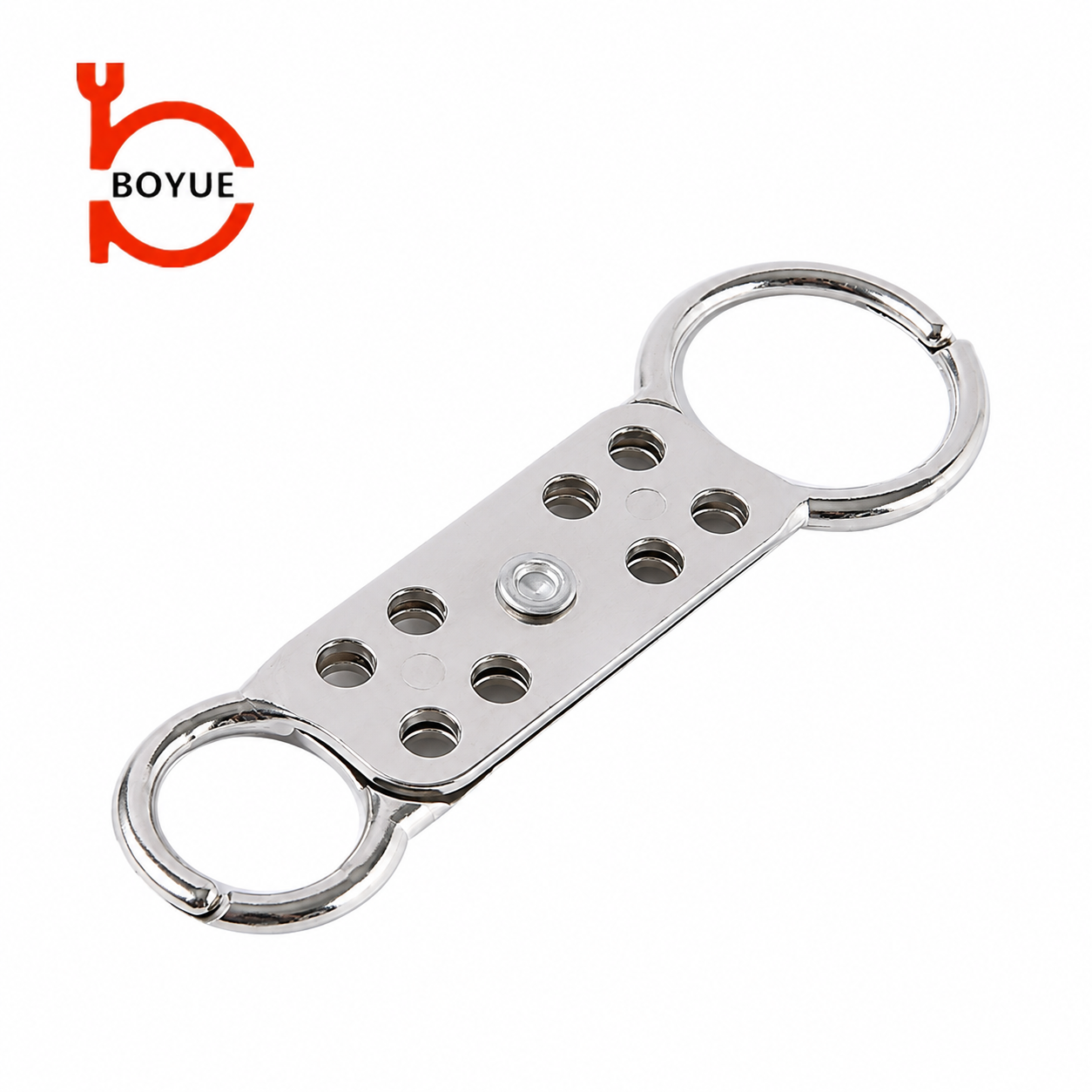
The DHA-01 double-end example has two unequal jaws and a different locking layout. Confirm which end and locking positions are approved for the intended application. Do not assume that every visible hole can be used in every orientation or that the two jaw sizes allow unrelated devices to be combined without assessment.
Make inspection records useful for procurement
Record the model, asset or batch reference, date, inspection scope, observation and decision. Include a photograph that shows the defect location without exposing workers to the equipment hazard. Distinguish a physical defect from an application mismatch; replacing a sound hasp with another identical item will not resolve the wrong jaw geometry.
Track repeated failures by location and task. Several damaged closure tips returned from one machine may indicate poor fit, interference or misuse worth investigating. Do not convert that pattern into an unsupported claim that every item in the range is defective. Review the actual combination and use history, then decide whether the equipment arrangement or approved stock list needs revision.
A replacement enquiry should identify the exact hasp, intended isolation point, padlock shackle and body dimensions, environmental exposure and observed defect. Request current instructions and confirmation of the variant supplied. Keep purchasing descriptions specific enough that an apparently similar device cannot be substituted without an appropriate fit and application review.
Training resource: condition checks within energy control
The SAFE Work Manitoba video below introduces the complete lockout process. Use it as general learning alongside equipment-specific instruction. It does not demonstrate an inspection test for the BOYUE models shown, approve their use on a particular machine or replace the site’s practical training and verification requirements.
Watch Lock Out Procedures by SAFE Work Manitoba.
Frequently asked questions
Can a bent hasp be straightened and reused?
Do not make an improvised structural repair. Quarantine the device and obtain a documented manufacturer-supported disposition or a verified replacement.
Does smooth opening prove that the hasp is acceptable?
No. Identity, jaw or loop condition, pivot or slide condition, locking positions and the approved padlock combination also need assessment.
Does six-hole capacity mean any six locks will fit?
No. Check the actual lock dimensions, adjacent interference and permitted arrangement. Hole count alone does not establish usable capacity for every combination.
Is there a universal expiry date for a lockout hasp?
This checklist establishes none. Follow the exact manufacturer’s guidance, exposure assessment and site withdrawal criteria, and reassess any damaged or uncertain item before issue.