
Lockout Bag Selection: Storage, Access and Replenishment
A lockout bag for carrying equipment should fit the approved devices, keep small parts and tags accessible, close without forcing, and remain manageable when loaded. Select it using the actual contents and working route rather than its empty appearance. Also confirm what the seller means by lockout bag: a storage pouch carries supplies, while a purpose-designed locking cover may enclose a plug or control. A normal zippered tool bag must not be assumed to perform that locking function.
This guide addresses portable storage, access and replenishment. Start with the BOYUE lockout bag range, then assess the exact bag against the devices already approved for your work. Bag selection supports readiness; it does not establish that the equipment is safely isolated.
Distinguish a carry bag from a locking cover
Search results use the same term for products that perform different jobs. Some are ordinary pouches, satchels or cases used to transport padlocks and accessories. Others are covers designed to enclose a particular connector or control and be locked in a specified way. The closure, intended use and instructions determine the distinction, not the colour or the word lockout printed on the fabric.
State the required function on the enquiry. For storage, ask how the bag organizes and carries the approved contents. For an enclosure, request its intended equipment interface and approved locking arrangement. Do not attach a padlock to ordinary zipper pulls and assume the bag has become an energy-isolating accessory.
The CCOHS explanation of lockout places locking hardware within an equipment-specific isolation process. A carrier holding that hardware does not itself verify isolation or control stored energy. Keeping these roles separate prevents storage features from being mistaken for safety performance.
Start with an approved contents list
Lay out the actual personal locks, hasps, device bodies, tags and other approved accessories the user must carry. Identify their models and normal quantities. Include awkward parts such as a coiled cable, protruding valve device or long shackle instead of measuring only the neatest items. Empty-bag dimensions rarely reveal whether that complete arrangement will work.
Keep the contents list linked to the assigned work scope. A personal pouch used for a defined route should not gradually become a miscellaneous bag for unapproved devices. When the equipment or work scope changes, review the contents before asking whether a larger bag is needed. More storage does not solve an unresolved device-selection question.
The TLB-05 personal lockout bag provides a compact zippered form. Check its usable interior and opening with your actual devices. Do not infer how many padlocks it holds from a photograph, because lock-body shape, shackle length and tag arrangement all affect the usable space.
Check opening size and retrieval with gloves
A device may fit inside the cavity but still be difficult to pass through the opening. Test the largest awkward item first, including its protruding parts. Check whether the zipper opens sufficiently and whether the sides collapse over the opening. Place and remove the item without bending its structure or dragging a safety label against a sharp edge.
Then test ordinary retrieval. The user should be able to find the required device without tipping the contents onto a floor or work surface. Where the job requires gloves, assess access with those gloves under safe demonstration conditions. Keep the zipper path clear of cables, tag strings and lock shackles so normal closure does not trap or damage them.
| Storage need | Practical sample check | Reason to change the arrangement |
|---|---|---|
| Largest device fits | Insert and remove the complete device through the normal opening | Fitting requires bending the device or forcing the zipper |
| Small accessories stay available | Locate each required part without emptying the bag | Parts collect beneath heavy locks or disappear into folds |
| Tags remain usable | Retrieve readable tags with their approved attachments | Tags crease, absorb contamination or snag during closure |
| Loaded bag is manageable | Carry it through the normal safe route using intended handles | Load shifts, obstructs movement or strains the closure |
| Return condition is visible | Compare the returned contents with an issue list | Missing or damaged devices can be hidden by a full-looking bag |
This table gives qualitative storage checks, not load ratings or standardized test conditions. Any claimed capacity or environmental performance must come from the exact product’s documentation.
Choose the carrying form for the actual route
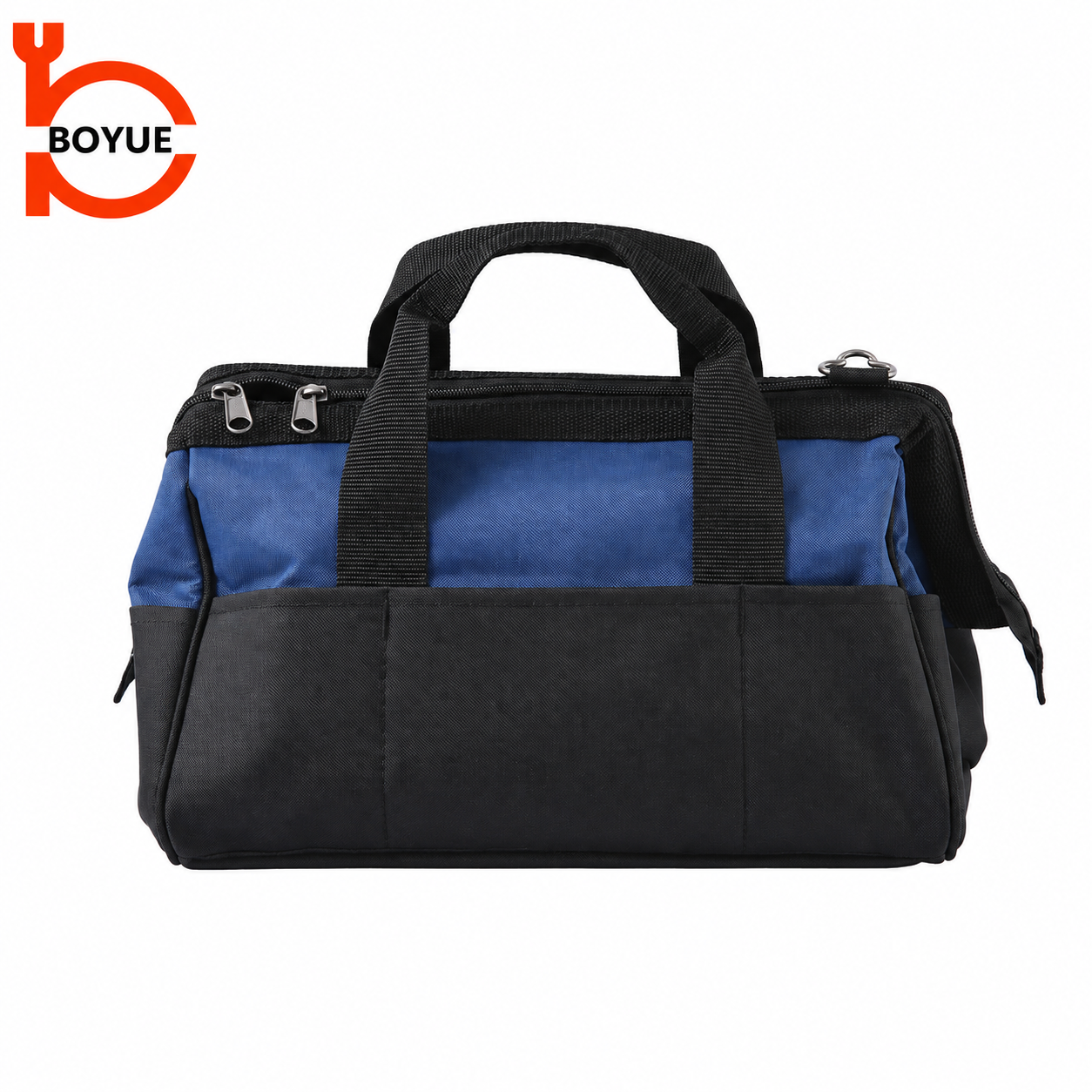
A pouch, handled tool bag and flat case offer different access patterns. The TLB-01 tool bag shown here has carrying handles and a wider tool-bag form. Confirm the supplied straps, compartments and dimensions for the ordered variant. A visible attachment or handle does not establish its rated load or suitability for every carrying method.
Consider the normal route between storage and the work location. Stairs, doors, vehicles and narrow walkways affect how the load is carried and where the bag can be set down. Keep bags and loose straps out of access paths. If a worker needs both hands for the route, the carrying arrangement requires review rather than an assumption that one hand can always remain occupied.
For a shared bag, designate who checks and returns it. For a personal carrier, identify its owner while maintaining the site’s separate control of personal locks and keys. A shared bag must not become an uncontrolled communal key store. The guide to padlock keying systems addresses that separate decision.
Organize contents to reveal shortages
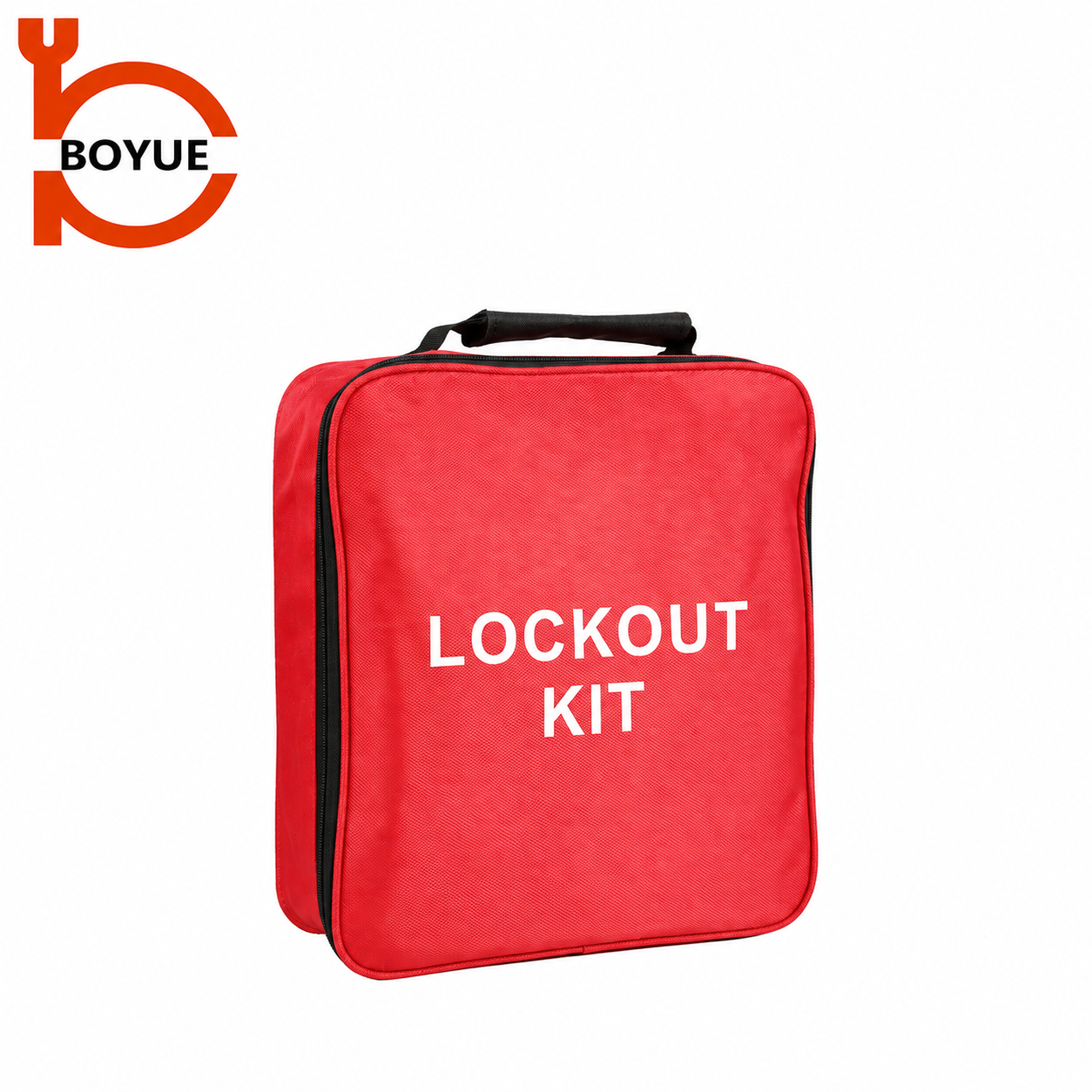
The TLB-04 zippered case offers another form to assess with the required contents. Its printed kit wording does not tell you which devices are included in the purchase. Confirm whether the quotation is for an empty carrier or a defined assembled kit and record that clearly on the order.
Use an arrangement that makes the expected items easy to count. Separate consumable tags from durable accessories, and keep small pieces in suitable approved storage so they are not mistaken for debris or lost during handling. Avoid overfilling pockets in a way that hides missing items. The organization should remain understandable to the person issuing or checking the bag.
Maintain a simple contents card or controlled list associated with the bag identifier. Record the approved device models and normal quantities. If a device is on active work, show that status through the site’s system rather than treating its absence as an unexplained shortage. A substitute should be approved for the application before it joins the bag.
Confirm material and exposure limits
Specify the environment in which the bag will be carried and stored. Outdoor rain, oily workshops, cleaning chemicals and dusty vehicles present different exposures. Ask for the exact fabric, coating, seam and closure information needed to assess those conditions. General catalogue descriptions should not be converted into a waterproof enclosure rating or chemical-resistance guarantee.
In particular, a fabric described as water resistant does not prove that a zippered opening keeps water away from the contents. Protect identification and instructions according to their own requirements. If the bag becomes wet or contaminated, follow the product guidance and site process for assessing the bag and affected devices before reissue.
Do not claim electrical insulation, flame resistance or hazardous-area suitability from the bag’s colour or trade name. Such requirements need evidence for the exact product and intended conditions. Keep the carrier away from exposures outside its approved use instead of assuming it provides protection because it contains safety equipment.
Inspect the bag and contents as separate checks
Inspect handles, stitching, base fabric, closures and any carrying attachments for damage or unreliable operation. Check the zipper path and interior for sharp objects that could damage stored parts. A worn carrier may still look tidy from outside. Remove a suspect bag from service pending assessment rather than relying on makeshift repairs that have not been approved.
Inspect the devices separately. A sound bag can hold a cracked lockout body, distorted hasp or damaged cable. Conversely, serviceable devices may need a replacement carrier. Keep damaged items segregated so they do not return to the ready stock during a quick count. Record repeated damage patterns, since they may reveal a poor packing arrangement.
Use manufacturer instructions for cleaning, drying and storage. Do not assume that a solvent safe for metal tools is safe for coated fabric, printed labels or polymer devices. Review cleaning methods for the complete load rather than treating the bag and all contents as one material.
Set an issue, return and replenishment routine
Before issue, compare the contents against the assigned job requirements and the controlled bag list. On return, check completeness and condition before placing it in the ready location. Consumables should be replenished through a defined process. Buying another bag should not be the default response when the actual problem is missing tags or an unreturned accessory.
For shared resources, link the bag to a return location and responsible checker. Keep in-use, awaiting inspection and ready-for-issue states distinguishable. Where fixed storage supports the same team, the separate article on padlock stations explains the stationary storage question. Check that the approved mobile contents remain available for the defined work.
When ordering replacements, identify the exact bag model and accepted configuration. Confirm whether custom printing changes the delivered variant or lead time, and approve the artwork without covering safety information. Retain a sample record of the loaded arrangement so later reorders do not silently reduce usable access.
Further learning: readiness is only one part of lockout
NIOSH’s hazardous energy control resources explain why a planned programme must address different energy sources. The SAFE Work Manitoba video below introduces the wider process. It is not a bag test or a substitute for equipment-specific instructions.
Watch Lock Out Procedures by SAFE Work Manitoba on YouTube.
Frequently asked questions
Can I lock an ordinary zipper bag around a plug?
Do not assume an ordinary storage bag can serve as a locking cover. Use a device specifically intended and approved for the equipment and follow its instructions and the site’s isolation procedure.
Does a lockout bag come filled with devices?
Not necessarily. Confirm whether the quotation covers an empty carrier or a specific component list. Product photographs and printed kit wording do not establish what will be delivered.
How should I choose the bag size?
Use the complete approved contents and check the opening, loaded arrangement, retrieval and normal closure. External dimensions alone do not establish usable capacity or carrying suitability.
Does water-resistant fabric keep the contents waterproof?
Not automatically. Check the exact construction, closures and documented limitations. Protect and assess the contents separately when the bag is exposed to water or contamination.