
Lockout Station Inspection Checklist: Inventory, Returns and Restocking
A lockout station inspection checklist should confirm that the right devices are available, identifiable and in usable condition, while distinguishing issued equipment from genuinely missing stock. Reconcile the station against the site’s approved inventory, remove damaged returns from circulation and assign every shortage a clear action. An empty hook may belong to a device currently protecting a machine; it is never a reason to remove that device early. A fully stocked board supports readiness, but it does not demonstrate that an energy-control procedure has been followed correctly.
Define what the station is expected to hold
Begin with a named station, a responsible person and a current approved contents list. Record the area it serves, device models, compatible variants, quantities and normal storage positions. Match this list to the site’s equipment and planned maintenance activities rather than copying a photograph of another facility’s board.
The BOYUE BY-4 wall station illustrates a fixed storage arrangement. Confirm the actual ordered contents and product configuration separately. A photograph containing padlocks, a hasp and tags does not establish that every order includes those items or that those quantities cover the requirements of a specific work area.
Different storage formats can serve different roles. A board may display frequently used devices while a cabinet holds less common variants. Define which inventory belongs to each location so the same spare is not counted twice. The broader padlock station overview explains the purpose of organized storage; this checklist focuses on keeping the arrangement ready over time.
Reconcile available, issued, quarantined and missing items
Count what is physically present, then compare that count with the issue record and quarantine record. A device may be available on the board, issued to an active job, awaiting condition review, transferred to another station or unaccounted for. Record the actual state before deciding to buy or replace anything.
For example, if a local inventory lists four designated devices and only two are hanging, the shortfall is not automatically two lost devices. Check whether the other two have been issued and remain accounted for under the site’s process. The count is a stock-control question; it does not authorize anyone to interfere with an active lockout.
Use clear language for unresolved items. “Not on board; issue record being checked” is more useful than “missing” when the status is unknown. Assign an owner to the follow-up and an appropriate safe-work response if upcoming maintenance lacks the required equipment. Do not close the discrepancy merely because a different red device has been hung in the same space.
Check padlock identity and key-control records
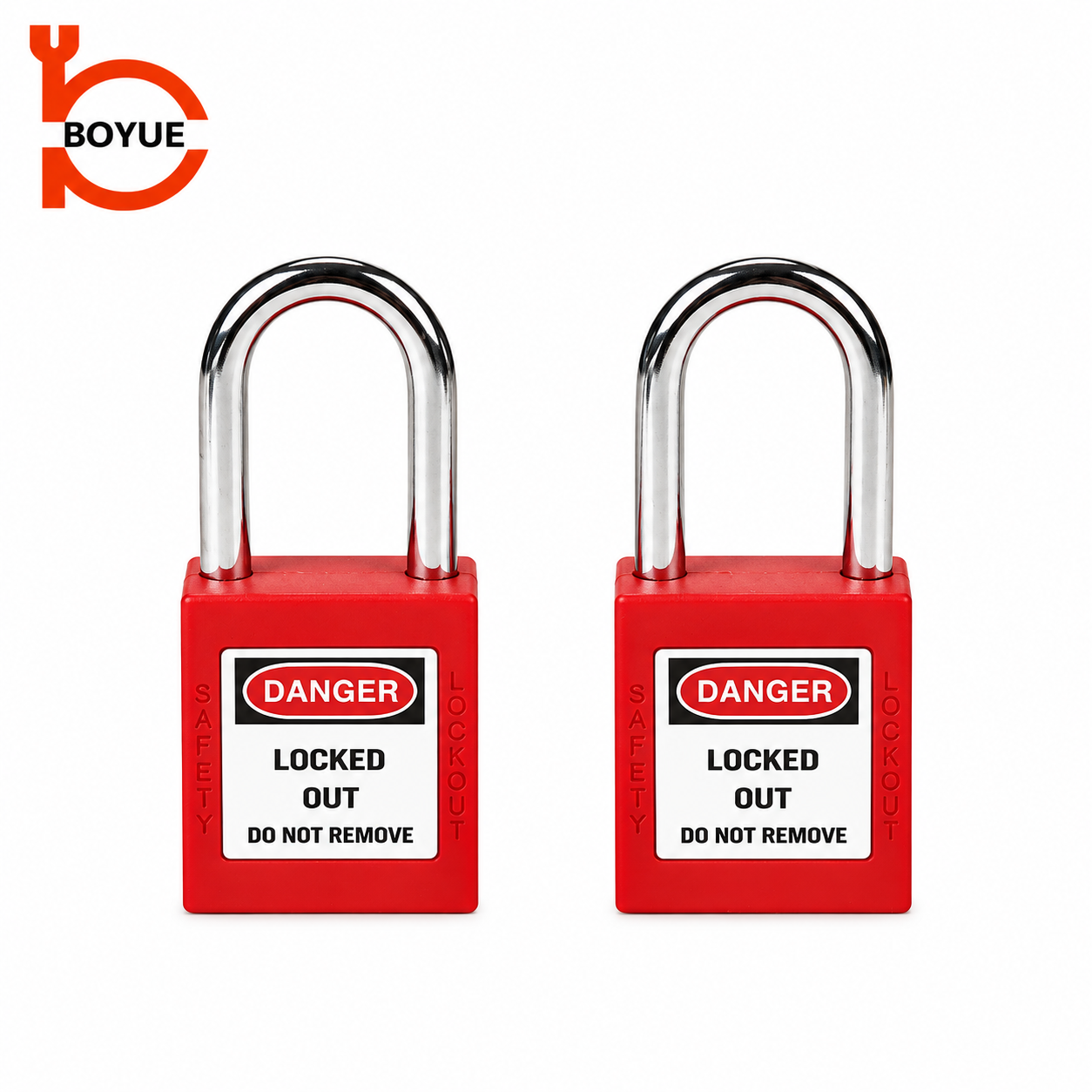
Inspect returned padlocks for visible damage, normal permitted operation and readable identification. Verify the model and assigned purpose against the station’s contents list. Keep the check linked to the site’s key-control and personal-assignment rules; an inspector should not decide to exchange keys or reassign personal locks simply to make the board look complete.
A spare should be identifiable as the intended spare, not an anonymous lock from a toolbox. Check that any required assignment or issue record follows the device when it moves. Do not use a lock reserved for another purpose as an informal substitute for a missing energy-control padlock.
The safety padlock inspection guide addresses detailed condition checks. At station level, the question is whether each available item has passed the appropriate checks and remains correctly identified. Record a defect through the established process instead of repeatedly opening and closing a doubtful lock until it appears to work.
Inspect the storage arrangement and access
Check that the station remains visible, accessible to the intended users and protected from conditions that could damage its contents. Look for loose or damaged storage features, unstable mounting, accumulated contamination and labels that no longer match the inventory. Arrange any mounting assessment or repair through the responsible facilities process; this guide does not specify fixings for an unknown wall or load.
Look beyond the station itself. Stacked materials, a relocated workbench or a locked room can make a previously convenient location difficult to reach. Note the practical access problem and who will correct it. Do not move the station without updating its assigned location and informing the people who rely on it.
Check that personal information and key arrangements are handled according to site rules. Easy access to required devices does not mean uncontrolled access to keys or permission to remove other employees’ locks. Keep the storage-access decision separate from the authority to alter an active energy-control arrangement.
Use the checklist to decide an action
The following table is a suggested local inventory aid. Its device-condition principles are consistent with OSHA’s materials and hardware guidance. Quantities, review frequency, storage location and the approval process must come from your actual program and equipment needs.
| Check | Evidence to record | Action for a discrepancy |
|---|---|---|
| Contents list | Current revision, station identity and device models | Reconcile outdated lists before ordering |
| Available stock | Count by exact accepted variant | Confirm readiness for planned work |
| Issued devices | Issue reference and responsible job or person | Reconcile safely without disturbing active protection |
| Returned devices | Condition check and release decision | Quarantine damage or uncertain condition |
| Tags and identification | Legible required warnings and usable supplies | Replenish approved items and resolve missing identity |
| Storage condition | Damaged holders, contamination or mounting concerns | Assign cleaning, repair or relocation review |
| Access | Obstructions and ability of intended users to reach stock | Correct access through the responsible site process |
| Open actions | Owner, due date and closure evidence | Escalate unresolved readiness gaps |
Avoid a checklist that records only ticks. If a line fails, capture the specific item, observed condition and next step. A short exception note and supporting photograph often help the next reviewer more than a page of unexplained “no” answers.
Assess hasps and special devices by variant
Count hasps, connector devices, valve covers and breaker lockouts separately. Devices with different jaw sizes, connector profiles or closure arrangements are not interchangeable just because they occupy similar storage space. Match the approved list to the intended equipment and keep identifying information visible.
A hasp with the expected number of holes can still be damaged or incompatible with the assigned padlocks. A valve cover may be in good condition but belong to another size group. Route those details to the relevant device check instead of treating every object on the board as one equivalent unit of stock.

For less frequently used items, preserve the instructions or a clear way to retrieve them. Do not discard the model reference when repackaging a spare. When equipment changes, review the related stock requirements; a neatly labeled station can become obsolete while remaining visually tidy.
Keep returned devices separate until accepted
Create a clear return route so used items do not immediately mix with ready stock. The responsible person should review condition, identity and any reported unusual exposure or incident. A returned device with an unexplained modification or contamination needs an explicit disposition before release.
Quarantine should be physically and administratively clear. Label the item unavailable, record the reason and assign responsibility for replacement or manufacturer guidance. Do not keep rejected devices on the same ready hook with a handwritten warning that can fall off or be overlooked.
For accepted returns, update the stock record and restore the correct storage position. For rejected returns, update both the defect record and the replenishment request. This prevents a damaged item from being counted as available simply because it remains inside the station cabinet.
Distinguish station checks from formal procedure inspections
A storage check answers whether appropriate supplies can be issued. It does not observe whether an authorized employee identifies energy sources, follows the equipment procedure or verifies isolation. Those activities require their own scope and records.
OSHA 1910.147(c)(6) addresses periodic inspection of energy-control procedures, including an at-least-annual requirement within its scope. Do not label a stock count as that inspection. The inspector qualification, independence, review and certification requirements need to be addressed through the employer’s program.
Likewise, this article does not establish a universal daily or weekly board-inspection interval. Set the local cadence according to use, environment, return activity and expected demand. Add a review after station damage, equipment changes or repeated shortages so the check responds to actual conditions rather than only a calendar reminder.
Restock against upcoming work and close the record
Review planned jobs before placing an order. Confirm the exact device model, required variant, compatible padlocks and quantities that will be simultaneously needed. Distinguish a replacement for damaged stock from an approved increase in capacity. Record who authorized an inventory change so the next check uses the updated baseline.
A hypothetical plan may need several different valve covers even when only one is used on a routine day. Conversely, buying identical spares for every empty hook can leave the station unable to serve a new piece of equipment. Make the request specific enough for the supplier to confirm the item, then check the received goods before adding them to ready stock.
Close each action with evidence: accepted replacement received, damaged item disposed of under the site process, contents list revised or obstruction removed. If a required item remains unavailable, leave that limitation visible to maintenance planning. A completed inspection form should communicate remaining readiness gaps, not hide them behind the date of the last count.
The general training video below explains why the stored equipment must support a complete energy-control process. It does not prescribe station capacity or replace the site’s device-selection and personal-protection rules.
Watch Lock Out Procedures by SAFE Work Manitoba.
Where devices also travel in personal kits, use the lockout tagout kit selection guide to keep kit requirements distinct from fixed-station stock. Record transfers so the same accepted spare is not counted in both places.
Frequently asked questions
Does an empty hook always mean a device is lost?
No. Reconcile issue, transfer and quarantine records first. A device may be correctly deployed on active work and must remain under the applicable protection process.
Can rejected devices remain on the board as emergency spares?
Keep them unavailable and separate from ready stock. Obtain an approved disposition or replacement before returning any doubtful item to service.
Is a station inventory check the annual LOTO inspection?
No. A stock check and inspection of an energy-control procedure have different purposes. Address the applicable procedure-inspection requirements separately.
Should every station contain the same devices?
Use the approved needs of the equipment and people each station serves. Standardize where appropriate, while preserving the exact variants required for actual applications.