Pneumatic Quick Disconnect Lockout: Selection and Fit Checks
A pneumatic quick disconnect lockout is a physical device used in an approved arrangement to prevent an air-hose fitting from being reconnected. Choose it by the actual coupling profile, capture geometry, padlock fit, and the work’s energy-control requirements. A matching pipe-thread size alone is insufficient. A fitting lockout is not automatically an upstream isolation valve or a device that vents trapped pressure. Before anyone handles a connection, authorized personnel must establish the safe conditions required by the equipment and coupling manufacturers and the site’s procedure.
This guide explains what industrial buyers should measure, how to separate fitting restraint from pressure control, and what to verify before issuing a device. It does not provide permission to disconnect a pressurized hose or improvise an isolation arrangement.
Understand what the device is intended to prevent
A disconnected fitting may be vulnerable to someone reconnecting the hose and restoring a supply. A suitably selected fitting lockout obstructs that reconnection path or captures the fitting in the manufacturer’s intended way. The exact function depends on the device and coupling design.
The device does not necessarily stop pressure already trapped downstream, restrain an actuator, or prevent another supply from entering the machine. It may be one component of a wider arrangement that also includes approved upstream isolation, energy dissipation, restraint, and verification.
The Cal/OSHA lockout definitions resource distinguishes hazardous energy sources and energy-isolating devices. Use that distinction when reviewing a fitting lockout: a product’s ability to obstruct a connector is not a complete description of the machine’s energy-control needs.
Three functions that should not be confused
| Function | Question it addresses | What it does not establish by itself |
|---|---|---|
| Prevent fitting reconnection | Can the disconnected connection be restored while personal protection remains applied? | That all trapped pressure has been released or other supplies isolated |
| Isolate the upstream supply | How is additional compressed-air energy prevented from reaching the relevant system? | That downstream components cannot retain or reaccumulate hazardous energy |
| Control and verify stored energy | How are residual pressure, actuator movement, and other applicable hazards made safe? | That an unsuitable fitting device will physically fit or restrain reconnection |
This table is an explanation of separate functions, not a generic installation sequence. The approved procedure must decide which devices and controls achieve them on the actual equipment.
Why the coupling profile matters more than the thread label
The threaded end connects a fitting to a hose or component. The profile that mates with a quick coupling can have a different shoulder, neck, head, or overall shape. A catalogue thread designation does not define all of those features.
Identify the coupling manufacturer and series where possible. Record the head diameter, the reduced neck or capture feature, the available length, and nearby obstructions. Photographs from more than one visible side help the supplier see features that a single ruler measurement misses.
Do not mix dimensions from different connections that look similar. A plant may use multiple coupling families across departments, imported machines, or replacement hoses. Classifying them as small, medium, and large can conceal a profile mismatch that only becomes apparent when a sample is checked.
Review the actual product geometry
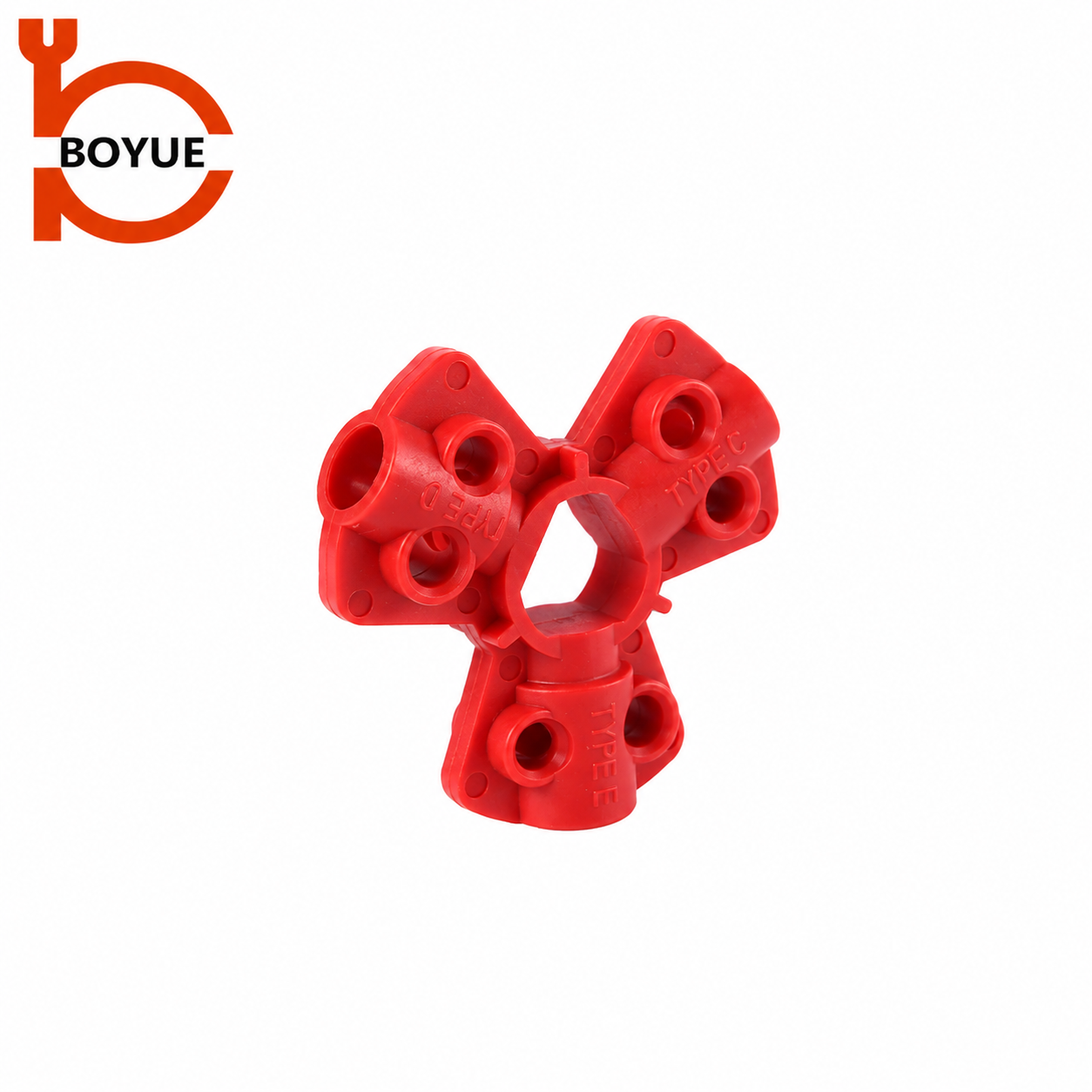
Boyue’s AS-01 quick-disconnect lockout product page shows a red molded device with multiple interface features. A buyer should compare the real fitting against the intended feature described in the current instructions. Do not assume every opening has the same purpose, or that the central opening is necessarily the correct capture point for a particular fitting.
Ask the supplier to identify the approved fitting position, padlock position, and engagement checks for the selected configuration. The product image is useful for identifying the model, but it cannot establish compatibility with an unidentified hose connector.
Preserve that geometry in purchase records. The opening shape, surrounding material, lock holes, and retaining features are functional details. A generic stock illustration with a different hole arrangement is a poor substitute when the task is to confirm the supplied product.
A purchase checklist for fitting compatibility
| Information to supply | Reason it matters | Acceptance question |
|---|---|---|
| Fitting manufacturer and series | Similar-looking couplings can use different engagement profiles | Has this exact profile been reviewed? |
| Head, neck, and capture-feature dimensions | The device must engage its intended retaining geometry | Does it restrain reconnection in the approved configuration? |
| Actual padlock model and shackle dimensions | The lock must engage without incomplete closure or interference | Can the assigned lock close fully in the permitted position? |
| Hose end and surrounding clearance | Bends, sleeves, guards, and adjacent fittings can obstruct placement | Can the device be fitted and inspected without forcing it? |
| Work scope and energy-control arrangement | Other supplies and retained energy may need separate controls | Has the site approved the complete arrangement? |
| Environment and identification needs | Exposure and traceability affect the exact product specification | Are material suitability, labels, and model identification confirmed? |
The checklist is a procurement aid. It does not replace a manufacturer’s fitting instructions, establish a universal pressure rating, or certify a particular assembly.
Do not confuse a fitting lockout with pressure release
A cylinder, accumulator, trapped section of pipework, or spring-loaded mechanism can remain hazardous after a supply has been shut off. Pressure can also be retained behind valves or reintroduced through another connection. The details must be identified from the machine and its energy sources.
The CCOHS lockout guidance discusses residual hydraulic and pneumatic energy after supply isolation. Use the manufacturer’s and site’s approved means of controlling and verifying those hazards. Do not crack open a fitting, loosen a hose, or improvise a vent simply to see whether pressure remains.
A device labelled pneumatic lockout may obstruct a connector while offering no venting function at all. If an application needs an isolation or exhaust valve, have the appropriate person specify that equipment separately. A low-cost fitting lockout should not be described as a replacement for a function it does not provide.
Comparing molded and metal fitting-lockout designs
A molded multi-position design and a flat metal design may solve different geometric problems. Compare the actual retaining arrangement, approved connector profiles, padlock positions, handling, and exposure conditions. Do not rank one design as universally safer merely from its material or appearance.
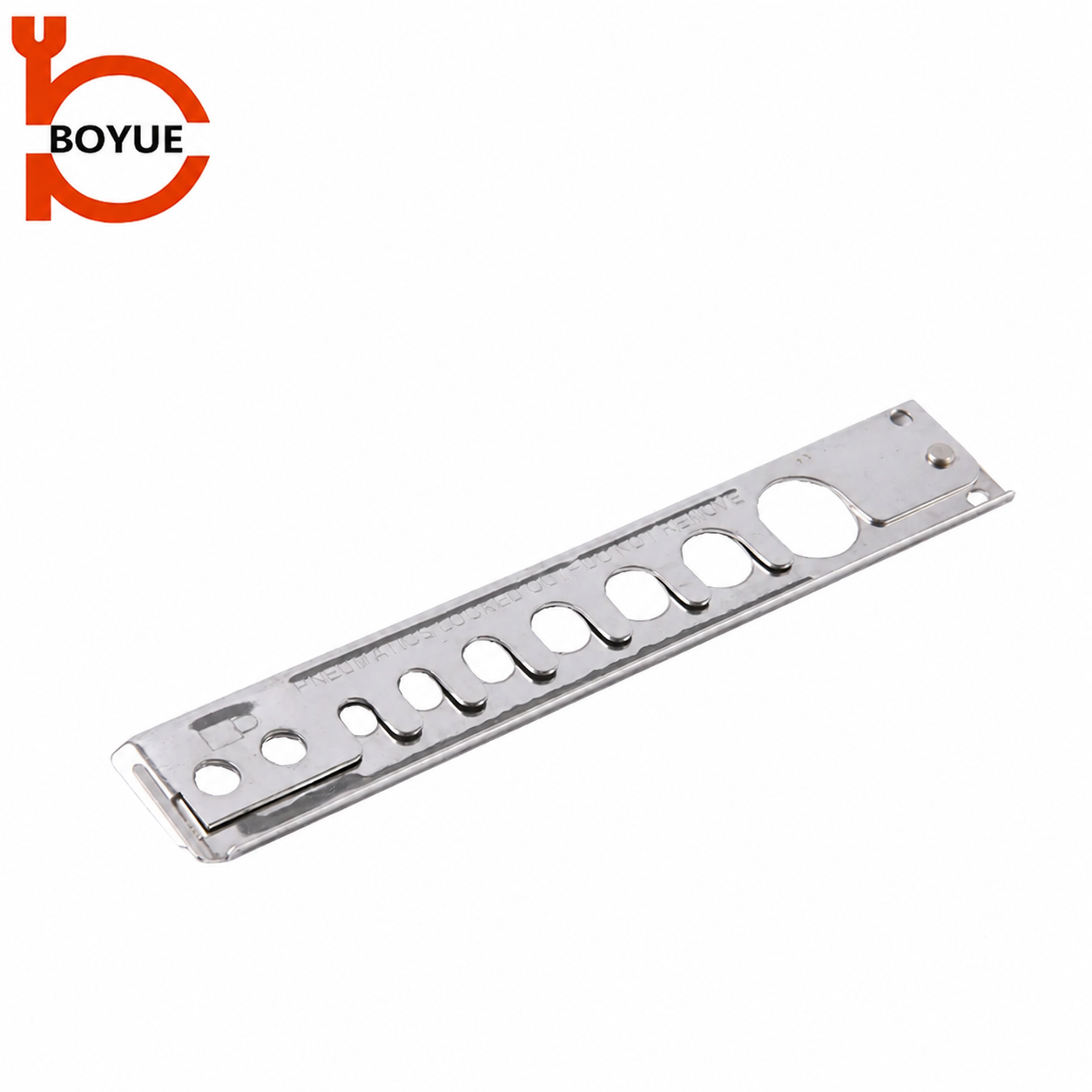
The Boyue AS-02 stainless-steel air-source lockout provides another product design to evaluate. Its published image shows graduated apertures and retaining features. Confirm the applicable position for the fitting and the instructions for the supplied variant rather than assuming any opening that looks close in size will work.
Material suitability requires the exact product specification and application conditions. Request confirmation of the supplied material, cleaning exposure, and relevant environmental limits. Avoid transferring a property from one Boyue model to another, and do not infer electrical insulation from a red body.
How to evaluate a sample without creating an exposure
Arrange a controlled bench review using a safe, unpressurized representative fitting or other approved test arrangement. Do not use active equipment as a convenient compatibility test. The reviewer should have the intended device, fitting, personal padlock, and the current manufacturer instructions available together.
Check that the fitting enters the intended position without forcing or altering the device. Confirm that the padlock closes completely, that the retaining features perform their intended function, and that the assembled arrangement obstructs reconnection as specified. Follow the agreed evaluation method; a casual pull is not proof of every conceivable removal condition.
Inspect for cracked material, damaged apertures, distorted metal, loose parts, or unreadable identification. Record the tested device and fitting references. If a different fitting is introduced later, repeat the relevant compatibility review instead of treating the previous acceptance as universal.
Plan ownership and participation before buying quantities
A correct physical fit does not decide who owns the personal lock or who can remove it. For that separate decision, see Boyue’s safety padlock keying guide. The issued key arrangement should support the site’s approved protection and removal rules.
If several workers are involved, have the site define the approved group arrangement and its capacity. Do not add an improvised hasp or share a personal lock merely because the fitting device has limited attachment positions. The group lockout box guide addresses coordinated key control where that method is appropriate; it is not automatic approval to use a lockbox on every pneumatic system.
For an application inquiry, provide fitting identification, photographs, measured geometry, device and lock quantities, expected users, environmental exposure, and the controls already specified by the site. Boyue’s industrial lockout applications page can help start that discussion.
Write down what passed and what remains unresolved
A useful acceptance note states exactly which fitting family and supplied device were reviewed, the padlock used, and any restrictions. Store it with the purchasing record so future replacements do not silently substitute a different connector or product variant.
If the device fits only after material is removed or a locking feature is bypassed, it has not passed the intended selection check. Stop the substitution and obtain a suitable design. Keep pressure verification and machine-isolation approval as separate recorded decisions rather than burying them in a note saying that the device fits.
Further learning on energy control
SAFE Work Manitoba’s educational video Lock Out Procedures provides broader background on identifying and controlling hazardous energy. It is not an installation demonstration for AS-01 or AS-02. Use local requirements and the actual machine and coupling instructions for the job.
Watch Lock Out Procedures by SAFE Work Manitoba on YouTube.
Frequently asked questions
Does a pneumatic quick disconnect lockout release trapped pressure?
Do not assume that it does. A fitting lockout normally addresses reconnection; pressure isolation, residual-energy control, and verification require the functions specified in the approved equipment procedure.
Can I choose it by the hose’s thread size?
No. Confirm the actual quick-coupling profile, including the head, neck, capture geometry, and surrounding clearance, together with the intended padlock and device instructions.
Can I disconnect a pressurized hose to fit the device?
Do not use this guide as permission to do that. Authorized personnel must first establish the safe conditions required by the site procedure and the equipment and coupling manufacturers.
Does one accepted sample cover every connector on the site?
No. Record the fitting family and exact device configuration evaluated. Different profiles or replacement connectors require the relevant compatibility review.