
Electrical Plug Lockout Box: Size, Cord Fit and Buyer Checks
An electrical plug lockout box should enclose the complete plug in its approved configuration, allow the cord to exit without damage, and close securely with the intended lock. Select it from the plug’s full external envelope and the manufacturer’s usable internal dimensions—not from voltage, nominal current, or an exterior box measurement alone. Include the strain relief, cable diameter, and any projection that affects closure. Confirm the exact variant with a safe sample before ordering a large quantity. This guide explains the measurements and checks that turn a general plug description into a useful purchasing specification.
A correctly fitting box addresses access to the enclosed plug. The equipment’s complete energy-control requirements, including other supplies and stored energy, still require the applicable site procedure.
Measure the complete plug, not just its pins
Begin with the actual plug on the equipment or a confirmed representative sample. Plugs with the same electrical rating can have different bodies, cable exits, strain reliefs, locking rings, and protective boots. A photograph of a similar connector is not a reliable dimensional specification.
Record the complete body length, width, and height, or the relevant maximum diameter for a rounded body. Include projections that must fit inside the enclosure. For a right-angle cable exit, show the shape rather than treating the plug as a simple straight cylinder.
The usable interior of a lockout box can differ from its outside dimensions because of hinges, ribs, latch structures, and cord-exit geometry. Ask the supplier for the applicable internal envelope and instructions. A longer exterior case does not automatically provide more usable room around the plug.
Use a fit record with clearly named dimensions
| Item to record | Include in the measurement or photograph | Question to resolve |
|---|---|---|
| Complete plug body | Outer length, width, height, and relevant projections | Does the usable cavity accommodate the whole plug in the approved orientation? |
| Strain relief and cable exit | Boot, gland, bend, and connection to the cable | Can the case close without pinching or forcing that assembly? |
| Cord outside diameter | The actual jacket at the intended exit position | Does the approved exit suit the cord without compromising restraint? |
| Lock interface | Personal lock model, shackle dimensions, and lock-body envelope | Can the lock close completely through the intended features? |
| Working environment | Expected exposure, handling conditions, and identification needs | Is the exact variant suitable and can it be inspected reliably? |
This is a purchasing checklist, not a universal dimensional standard. Keep every measurement associated with its unit, plug reference, and photograph. Avoid mixing a rounded catalogue size with an unlabelled measurement taken from a different connector.
Understand the enclosure and cord-exit relationship
A box can appear roomy yet have an unsuitable cord opening. Another may close around a small plug but leave a configuration that does not perform its intended restraining function. Both the enclosed plug and the cable exit must be reviewed together.
Boyue’s electrical safety plug lockout devices provide a relevant product family to evaluate. Confirm the actual supplied model, opening arrangement, and permissible locking positions. Do not assume that a feature shown on one size is identical on another.
Do not trim an exit opening, drill another locking hole, or cut a cable jacket to obtain a fit. If the proposed combination cannot be assembled according to the instructions, ask for a suitable variant or different approved approach. A modification that makes a case close can also change the feature intended to retain the plug.
Compare case shapes without assuming that larger is better
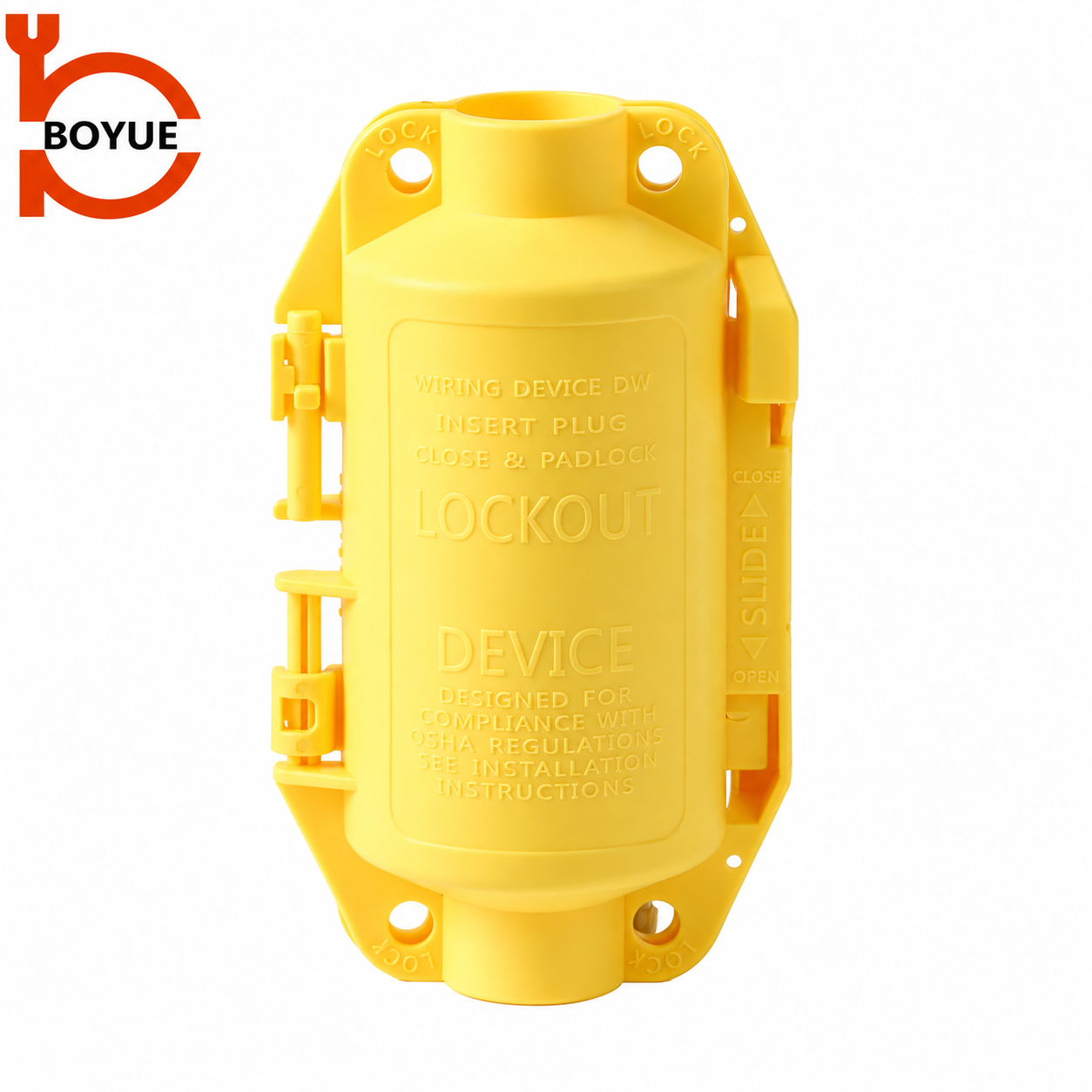
A rectangular enclosure, an elongated rounded enclosure, and a cylindrical style can offer different usable spaces. The right comparison is the approved internal geometry and closure arrangement for the actual plug. Shape alone does not establish a protection rating, a voltage rating, or suitability for a hazardous location.
The Boyue EP-12/EP-13 plug lockout page is one family to discuss with the supplier. Obtain a drawing that identifies exactly which dimensions apply to the plug and which describe the enclosure. Resolve ambiguous length or diameter labels before approving the order.
A very large box may be awkward to carry or position, while an undersized one may force the cable against a closure. Neither issue is solved by choosing the highest nominal size without a sample. Evaluate accessibility and the complete plug-and-cord assembly in a safe representative arrangement.
When does exclusive control of a plug matter?
Some rules contain a specific exception for defined cord-and-plug work when unplugging controls the relevant hazard and the person performing the work maintains exclusive control of the plug. For example, California’s Title 8, Section 3314 contains such conditions. This is a jurisdiction-specific provision, not a general exemption for every portable machine.
The employer must determine which requirements apply to the actual task. Do not assume that a plug lying behind a machine, a label beside a socket, or an unlocked box provides the required control. Multiple workers, several power connections, stored energy, or other hazards can require a different arrangement.
The purpose of discussing the exception here is to improve the purchase conversation. Decide why the box is required and how it fits the site’s approved protection method before issuing equipment. The existence of an exception does not establish that a particular box or work situation satisfies it.
Do not overlook other energy sources
Unplugging one connection does not necessarily address every hazard on a machine. The equipment may have an additional electrical connection, a battery, pneumatic pressure, elevated components, springs, or other stored energy. The relevant hazards must be identified from the actual equipment and work scope.
The CCOHS lockout guidance explains the broader relationship between isolation and control of residual energy. Use that background alongside applicable local requirements and the manufacturer’s equipment-specific instructions.
A plug box also should not be used as evidence that damaged electrical equipment is safe. Where a plug, cord, jacket, or strain relief is damaged, have the condition assessed through the appropriate site process. Do not hide the defect inside a lockout enclosure and treat the fit check as an electrical inspection.
Review environmental claims for the exact variant
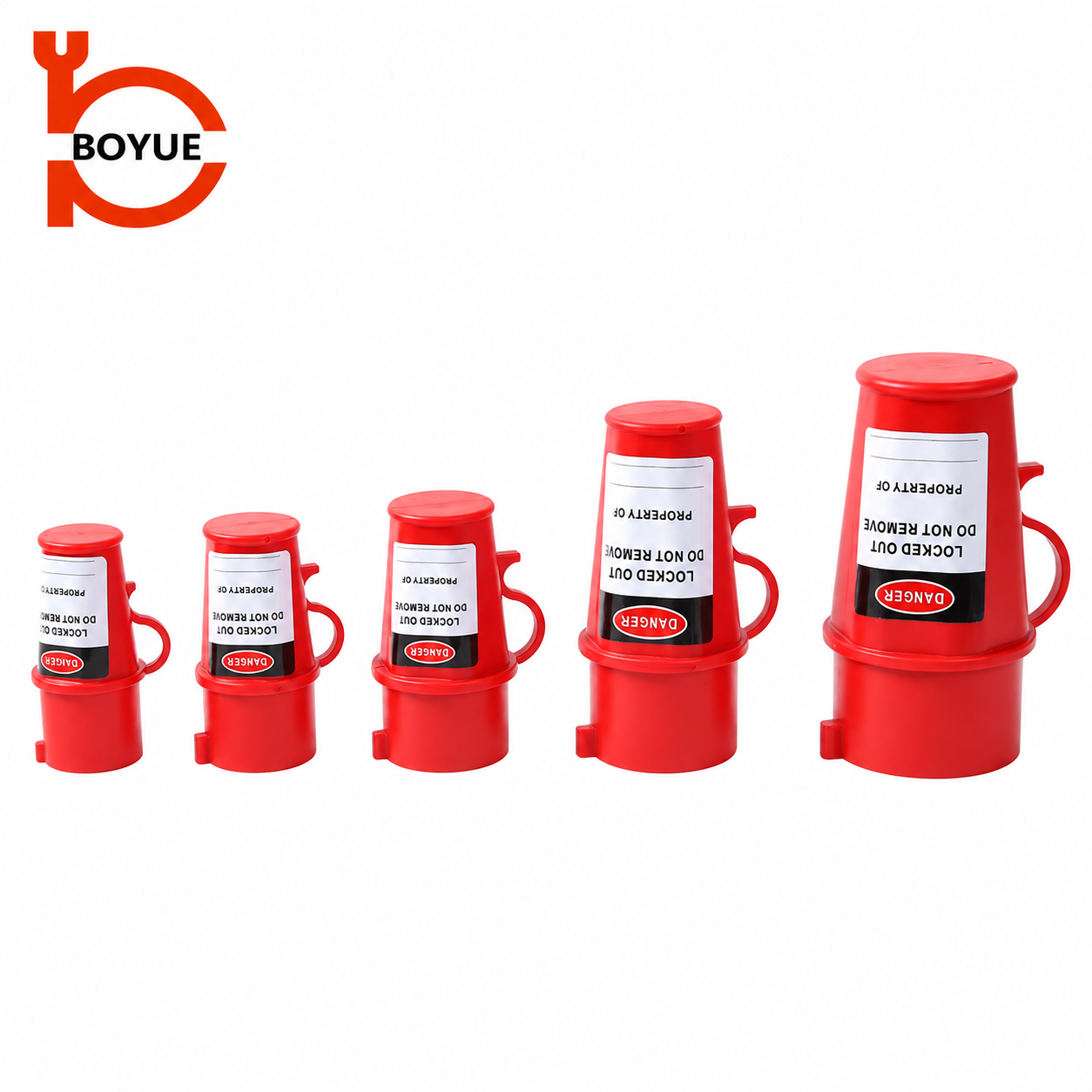
Product names can include terms such as waterproof, industrial, or heavy duty. A buyer should request the actual supporting specification needed for the application rather than infer a particular enclosure rating from that wording.
Boyue’s EP-03-1 plug lockout product family is another design to review. Confirm the exact material, permitted exposure, closure arrangement, and relevant documentation for the supplied item. This guide does not assign an ingress-protection rating or an electrical insulation rating to a photograph.
Also consider how labels will be read, how the box will be stored between uses, and how staff will inspect it for damage. Environmental suitability and plug fit are separate acceptance questions; a satisfactory answer to one does not settle the other.
A practical sample acceptance sequence
Conduct the fit evaluation in a controlled setting using a safe, disconnected representative plug assembly. Do not make live equipment available to others merely to demonstrate whether the box closes. Have the intended personal lock and current fitting instructions available with the sample.
First reconcile the delivered model and variant with the quotation. Inspect the shell, hinges, latch, cord openings, and locking features for damage or an undocumented change. Confirm that the plug enters the intended orientation and that all required parts remain inside the approved enclosure arrangement.
Next check that the cord exits without being pinched, strained, or forced against a sharp feature. Confirm full closure and engagement of the intended locking positions. Evaluate the restraining function using the manufacturer’s specified method; do not equate a loose visual check with proof against every conceivable removal technique.
Finally record the plug reference, box variant, lock used, and any limitations. If a different cable assembly, adapter, or replacement plug is introduced later, review the affected compatibility conditions again.
Specify ownership as well as quantities
Decide how personal locks, keys, identification, and removal are controlled before ordering boxes for a team. The safety padlock keying systems guide addresses the separate access question. A box that accepts several locks does not by itself define a compliant multi-person procedure.
For a coordinated arrangement involving several workers, consult the site’s approved method; the group lockout box guide explains key-control responsibilities where that arrangement is appropriate. A plug enclosure and a group key box serve different functions.
For permanently connected equipment, a plug-box purchase may not address the required interface at all. The miniature circuit breaker lockout overview covers another device category, while the actual isolation method still belongs to qualified personnel and the equipment-specific procedure.
Information to send with the inquiry
Provide the plug manufacturer or reference, complete measurements with units, clear photographs, cord and strain-relief details, intended lock model, user quantities, exposure conditions, and required identification. Ask for a written explanation of any measurement still needed for selection.
Keep the accepted configuration in the purchasing record so replacement orders do not quietly substitute a different case or cable assembly. For general application discussions, see Boyue’s industrial lockout applications.
Educational background
Lock Out Procedures from SAFE Work Manitoba introduces the wider energy-control context. It is not a test of these Boyue enclosures or a determination that a cord-and-plug exception applies. Use it with the site’s training and applicable local requirements.
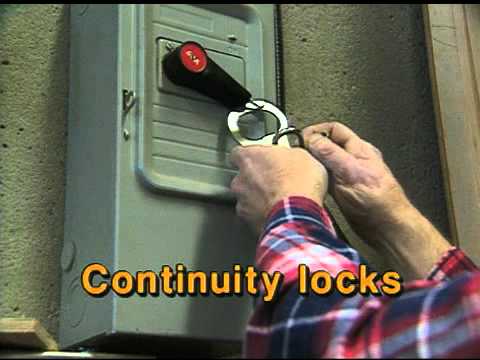
Watch Lock Out Procedures by SAFE Work Manitoba on YouTube.
Frequently asked questions
Can I choose the box by the plug’s voltage rating?
No. Electrical rating does not define the complete plug envelope, cord exit, strain relief, or locking interface. Confirm those features against the exact box’s usable internal geometry.
What if the box closes only when the cord is squeezed?
Do not accept that as a satisfactory fit. Review the cord exit, strain relief, orientation, and selected variant with the supplier. Do not modify the cord or enclosure to force closure.
Does unplugging equipment automatically remove the need for a lockout procedure?
No. Applicable exceptions have specific conditions, and the employer must assess the actual task, exclusive control, other energy sources, and stored-energy hazards under the relevant requirements.
Does the word waterproof establish an IP rating?
No specific ingress-protection rating should be inferred from a product name or photograph. Request the applicable specification and documentation for the exact supplied variant.