
Safety Padlock Inspection: A Practical Keep or Replace Checklist
Safety padlock inspection should confirm that the lock is identifiable, structurally intact, compatible with its intended device and operating as the manufacturer specifies. Check the body, shackle, cylinder, key and identification before issue or use under the site’s procedure. Quarantine a lock with cracks, deformation, unreliable closure, unclear ownership or unexplained operating changes. Cleaning a dirty lock and withdrawing a damaged lock are different decisions. Never use a successful key turn as the sole reason to return a questionable lock to service.
This checklist concerns the condition and handling of individual safety padlocks. For choosing keyed-different or keyed-alike arrangements, see safety padlock keying systems. Inspection must preserve the approved key-control arrangement, rather than quietly changing it to make a replacement convenient.
Separate a padlock check from a programme inspection
A hardware check looks at a particular lock’s condition and operation. A periodic energy-control procedure inspection looks at how the procedure is implemented. These activities support different purposes. A tray of clean locks does not demonstrate that equipment isolation, worker training or shift handover procedures are effective.
The OSHA lockout materials and hardware tutorial explains durability, standardization and identification requirements for devices within the cited US general-industry framework. It does not provide one universal replacement age for every safety padlock. Apply the relevant rules, manufacturer’s instructions and workplace exposure assessment.
A useful site system distinguishes a check before use, an inventory review when locks are issued or returned, and any planned servicing specified by the manufacturer. Record responsibilities for each activity. Avoid presenting an internal monthly checklist as a legal frequency unless a specific applicable requirement actually establishes that interval.
Check identity before checking the mechanism
Confirm the lock’s asset reference and assigned purpose. The identification should connect the device with the person or role defined in the site’s energy-control programme. A colour convention can help recognition, but colour alone may not provide sufficient identity. A red lock in a communal drawer is not necessarily ready for personal assignment.
Look for missing, detached, obscured or unreadable labels and engraving. Determine whether replacement identification is allowed and how it will be controlled. Do not write a new person’s name over an existing assignment without updating the issue record. Conflicting identities can cause uncertainty when the lock is found on equipment.
Keep locks for hazardous energy control separate from general security locks. Using a personal safety lock on a toolbox or bicycle can disrupt availability and key custody. If a lock’s history is unclear, hold it for review. Returning it to service should follow a documented decision, not an assumption based on familiar colour or branding.
Inspect the body and shackle visually
Examine the body for cracks, splits, distortion, signs of severe impact and loose components. Check accessible surfaces without dismantling the lock. A cosmetic scuff and a crack at a structural feature have different implications, but uncertainty about damage is a reason to withdraw the lock for assessment rather than experiment with it during an isolation task.
Inspect the shackle for bending, deep damage, corrosion or an altered shape. Confirm that it aligns naturally with the body and the intended device. Do not straighten, grind, drill or polish away structural damage. A padlock that needs force to align may have been damaged even if it can still be made to close.
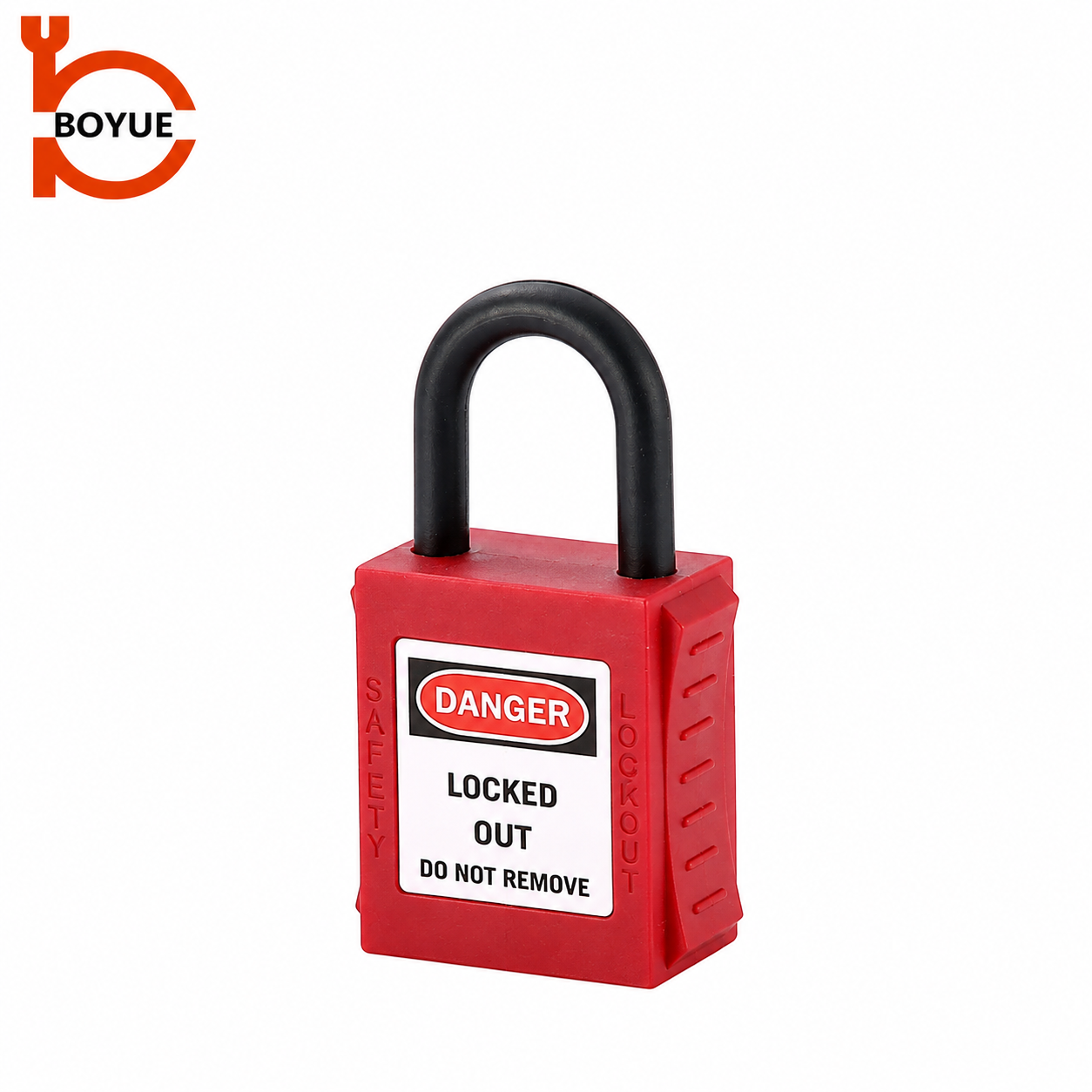
For a nonmetallic shackle or coated part, check the actual material’s condition under the manufacturer’s guidance. Do not infer electrical protection from appearance. A red nylon body with a steel shackle and a model with an insulating shackle are different configurations. Product suitability must be documented for the intended application.
Check operation away from an active isolation
Carry out the permitted opening and closing check in a safe place before the lock is needed. Use its assigned key and the manufacturer’s normal method. The key should operate consistently, and the shackle should engage as specified without unusual force. Inspect the key for bending, cracking or damage that could affect reliable use.
If the product has a key-retaining feature, verify that feature according to its instructions. Do not assume every safety padlock has the same cylinder behavior. Record an unexpected ability to remove the key or an unexplained change in operation for review against the exact model specification.
Do not use an active lockout as a servicing opportunity. If a problem is discovered while a lock is protecting work, follow the site’s controlled response and maintain the required protection. Another person’s lock must not be removed simply to complete a stock-check form. Removal and replacement during active work require the authorized procedure.
| Observation | Immediate stock decision | Follow-up evidence |
|---|---|---|
| Body crack or distorted shackle | Quarantine from available stock | Asset number, photograph and replacement review |
| Key binds or closure is inconsistent | Hold for assessment | Exact model instructions and approved maintenance decision |
| Label unreadable but mechanism normal | Hold until identity is resolved | Assignment record and controlled relabelling approval |
| Dirt without visible damage | Assess permitted cleaning | Manufacturer’s method and successful recheck |
| Unknown key or previous owner | Prevent issue | Key custody and reassignment record |
| Lock does not fit the approved device | Do not improvise a fit | Verified replacement configuration |
This is a practical withdrawal checklist, not a laboratory strength test or a guarantee of electrical insulation. The programme requirements summarized by OSHA above remain distinct from the site’s chosen record format.
Use maintenance instructions for the exact lock
Cleaning agents and lubricants are not interchangeable across products. Ask the supplier for instructions covering the supplied cylinder, shackle and body materials. An instruction published for another brand should not become a BOYUE servicing instruction. Avoid adding oil or solvent because it worked on a gate lock at home.
If the manufacturer allows cleaning, first remove the item from available stock and preserve its identification. Record the approved method used and perform the required check afterward. A lock that remains unreliable should stay withdrawn. Repeatedly adding lubricant to conceal a damaged mechanism does not establish fitness for use.
A maintenance log can be simple: asset reference, observed problem, action, reviewer and final disposition. Keep a rejected lock physically separate from serviceable replacements. A note in a spreadsheet is insufficient if the defective item remains in the same drawer and can be issued accidentally.
Check compatibility as well as condition
A padlock may be undamaged yet unsuitable for the lockout device being used. Check shackle diameter, usable height and internal width, together with body clearance. A long shackle can alter the way a cover is restrained; a large body can prevent an assembly from closing completely. Use the approved device-and-lock combination.
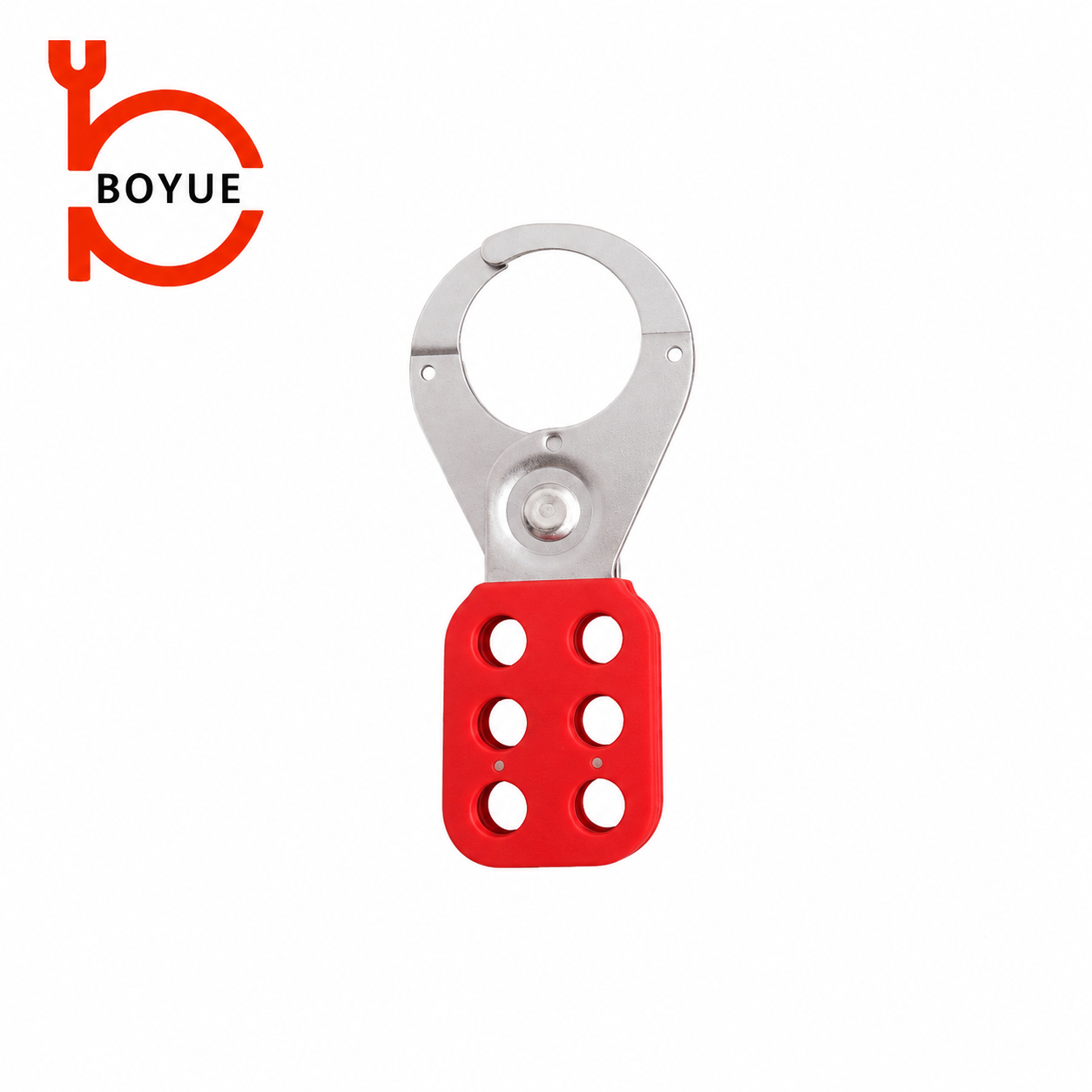
The BOYUE 38 mm steel-shackle safety padlock page provides a product reference for an individual padlock family. Confirm the ordered variant and current documents rather than inferring every dimension or material from a catalogue title. The illustrations here support visual identification and are not evidence of a completed test.
Where a lock connects to a hasp, inspect the hasp separately and confirm the assembled fit. See lockout hasp selection for those interface questions. A serviceable padlock does not make a cracked hasp acceptable, and replacing the lock does not resolve an unsuitable locking point.
Manage replacements without losing key control
A replacement should preserve the site’s intended assignment, identification and keying boundaries. Before issue, check its reference against the approved order and update the asset record. Confirm what happens to the withdrawn lock and its keys. Leaving obsolete keys in circulation can create confusion even after the damaged body is discarded.
For a lost key, use the established reporting and removal procedure. Do not try unrelated keys or borrow a colleague’s lock without recording the change. A bulk replacement order should identify the required key system explicitly, rather than describing all items as identical red locks.
The CCOHS lockout guidance places hardware within a coordinated programme of responsibilities and procedures. That is why a replacement decision needs an owner and a record, even when the physical transaction is only one padlock.
Plan storage and review after unusual exposure
Store available locks so damage, contamination and unauthorized reassignment are less likely. Keep them identifiable and readily distinguishable from withdrawn stock. A bag, rack or station can organize serviceable equipment, but it should not hide uncertain status or replace inspection. Include returned devices in the issue-and-return routine.
After a severe impact, chemical spill, unusual heat exposure or unexplained operating change, obtain a suitability review before reissue. A lock can appear normal while its documented operating conditions have been exceeded. Avoid claiming that a home-made visual check restores a manufacturer’s rating or certifies future performance.
The SAFE Work Manitoba video below gives general lockout education. It explains why personal locks are used within a procedure, rather than providing model-specific maintenance instructions. Playback availability and local requirements can vary; the written procedure remains the operational reference.
Watch Lock Out Procedures by SAFE Work Manitoba.
Use the BOYUE safety padlock range to identify the exact replacement family, then confirm its supplied configuration and approved application.
Frequently asked questions
Is there a universal expiry date for safety padlocks?
No universal age is established by this checklist. Follow the exact manufacturer’s guidance, applicable requirements, exposure assessment and site withdrawal criteria.
Can a bent shackle be straightened and reused?
Do not improvise structural repairs. Quarantine the item and seek the manufacturer’s disposition or a verified replacement under the site’s procedure.
Does a smooth key turn prove the lock is safe?
No. Identity, body and shackle condition, correct closure and compatibility with the intended device must also be assessed.
What should the inspection record contain?
Record the asset and owner reference, model, observation, date, action, responsible reviewer and final status. Keep withdrawn items physically separate until their disposition is complete.