
Gas Cylinder Lockout Inspection: Cover, Hinge and Closure
Gas cylinder lockout inspection checks whether a valve-access cover is intact, closes correctly and can retain the specified personal lock on the exact approved application. Inspect the shell, hinge, mating edges and locking points before use; quarantine a damaged or uncertain cover. A sound cover does not prove that a cylinder is safe, that its valve seals, or that connected equipment has no stored pressure. Those questions belong to the cylinder supplier and the site’s equipment-specific energy-control procedure. This guide separates cover condition from pressure-system safety so purchasing, maintenance and safety teams can make clear acceptance decisions.
Define the inspection boundary first
A plastic cover restricts access to a valve control. It is not a regulator, pressure gauge, cylinder test certificate or valve repair. The inspection should therefore have two separate outcomes: a decision about the removable lockout device and a decision about whether the application can proceed under the approved procedure. Passing the first decision cannot override an unresolved second decision.
Use the BOYUE AS-03 gas cylinder lockout product page to identify the pictured product family. Confirm the exact supplied version and its instructions before assessing fit. Do not transfer dimensions, chemical resistance claims or service limits from another manufacturer’s visually similar cover. Product photographs identify visible construction; they do not establish every clearance or operating condition.
The University of Guelph lockout guidelines distinguish identification, isolation, stored-energy control and verification. That separation is useful when designing an inspection form: include a specific place for unresolved system hazards rather than treating the accessory checklist as the whole isolation procedure.
Prepare a safe place to assess the loose device
Inspect an unused or safely removed cover where it can be handled without approaching hazardous gas equipment. Do not remove an active personal lock, disturb an isolation boundary or manipulate a suspect cylinder to obtain a better view. If damage is noticed during an active job, stop and refer the situation to the person responsible for the isolation. Replacement must preserve protection throughout the change.
Have the manufacturer’s instructions, the device identifier and the approved padlock available. Good lighting helps reveal cracked hinge areas and deformed edges. Cleaning must follow the manufacturer’s instructions; an unidentified solvent or abrasive can hide damage or affect plastic. If contamination prevents inspection, keep the device unavailable until an approved cleaning or replacement decision is made.
Check the shell and the mating edges
Examine both halves for cracks, missing material, unusual whitening, distortion and heat damage. Pay particular attention to places where the shell meets the hinge and the locking feature. A small crack at a load-bearing location deserves a different decision from a superficial mark away from the closure. Without documented acceptance limits, inspectors should not invent a permissible crack length.
Look along the mating edges for a normal, consistent meeting of the parts. An edge that has curled or broken may allow unintended access even if a padlock still fits. A cover that only closes when forced is not a successful fit. Do not trim, drill, heat or bend the shell to create clearance. Such changes make the device different from the supplied product and undermine any previous application approval.
Compare questionable items with a documented acceptable sample of the same version. A comparison sample can make missing features easier to recognize, but it does not replace manufacturer criteria. Record the exact location of a defect so the next reviewer can understand the concern without repeating an unsafe field investigation.
Inspect the hinge and closure as a system
Open and close the loose device only in the manner permitted by its instructions. Check that the hinge remains connected and that its movement does not separate, bind or pull the shell out of alignment. Where a hinge pin is visible, do not assume that it is removable or adjustable. A missing component should lead to quarantine rather than an improvised repair.
Assess the lock holes or locking features with the specified padlock. The shackle must engage the intended parts of the closure, not merely pass through a convenient opening. Confirm that the lock can close without forcing the cover and without leaving one half unsecured. A large shackle clearance is not automatically beneficial if it leaves the closure loose or accessible.
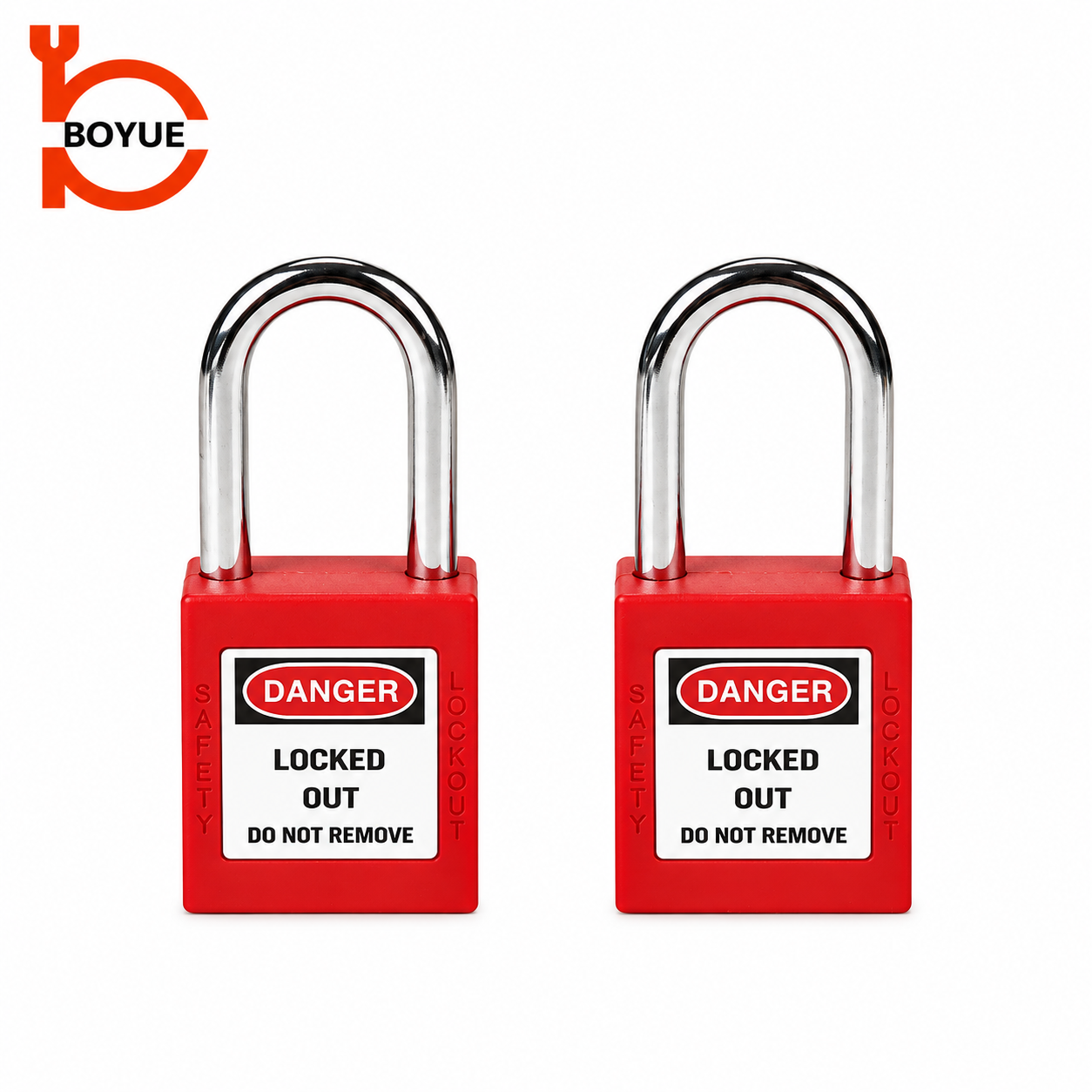
The separate personal padlocks shown above illustrate a component requiring its own inspection and key-control arrangements. They do not establish an approved combination with every cylinder cover. Confirm both components together on a safe sample or other manufacturer-approved assessment arrangement before adding the combination to the site inventory.
Use a decision checklist with clear stop conditions
The following is a suggested inspection record, not a dimensional specification or a cylinder-maintenance procedure. Adapt the acceptance criteria to the supplied product instructions. Broader responsibilities for hazardous energy remain with the employer’s program; see OSHA 1910.147 for the applicable US general-industry framework and confirm local requirements separately.
| Inspection point | What to record | Decision if uncertain |
|---|---|---|
| Product identity | Model, version and instructions used | Keep unavailable until identity is confirmed |
| Shell condition | Crack, missing material or distortion location | Quarantine; seek a documented disposition |
| Hinge connection | Separation, binding or missing parts | Do not repair with improvised fasteners |
| Mating edges | Whether the intended closure meets normally | Reject forced closure and altered edges |
| Lock engagement | Actual padlock and intended locking features | Validate the combination before issue |
| Application boundary | Valve configuration and approved isolation reference | Escalate fit or energy-control uncertainty |
| Final disposition | Reviewer, reason and replacement reference | Prevent rejected stock from returning to use |
A useful form separates “not inspected” from “acceptable.” An empty box should never become a pass simply because the rest of the form is complete. If an inspector cannot see a feature safely, record that limitation and arrange an approved assessment rather than guessing.
Keep pressure-system concerns outside the cover verdict
Leakage, damaged cylinder valves, unidentified contents, suspect regulators and unusual system conditions are not faults that a new cover can resolve. Follow the site’s gas-specific response and supplier instructions. This article does not describe venting, disconnecting or repairing gas equipment because those actions depend on the substance, installation and worker competence.
A valve cover also cannot show whether gas remains trapped in connected piping or whether another source can feed the same equipment. For a separate discussion of residual-energy questions, use the pneumatic lockout and stored-energy guide. That guide supports planning; it does not convert a cylinder accessory into proof of zero pressure.
Avoid creating a false “safe cylinder” label after checking only the plastic cover. A clearer record might say that the identified loose accessory passed its condition inspection, while the application remains subject to the approved isolation procedure. This wording helps prevent a warehouse acceptance note from being mistaken for permission to start maintenance.
Quarantine, replacement and traceability
Place rejected devices in a controlled location distinct from usable stock. Attach a clear defect description and reference number without concealing the damaged area. A photograph taken in a safe inspection area is often more informative than a generic “broken” description. Record whether the concern affects one item or a potentially common batch feature.
Replacement should address the reason for rejection. If the shell repeatedly distorts on one application, simply issuing another identical item may repeat a fit or exposure problem. Ask the responsible technical person to review the interface and the environment. Conversely, an isolated dropped device should not automatically be treated as proof that every device in the family is unsuitable.
For procurement, request confirmation of the supplied model, component completeness, approved padlock interface, inspection instructions and replacement policy. Do not ask only for an appearance match. A photograph with the same colour is insufficient if the hinge or closure construction differs. Preserve supplier responses with the purchase record so future inspectors can identify the correct criteria.
Coordinate with group work without bypassing personal protection
A cylinder isolation may be one boundary within a wider job involving several energy sources and workers. The condition inspection should identify where the accessory belongs in that procedure. It should not decide, by itself, how a crew shares control or transfers responsibility between shifts.
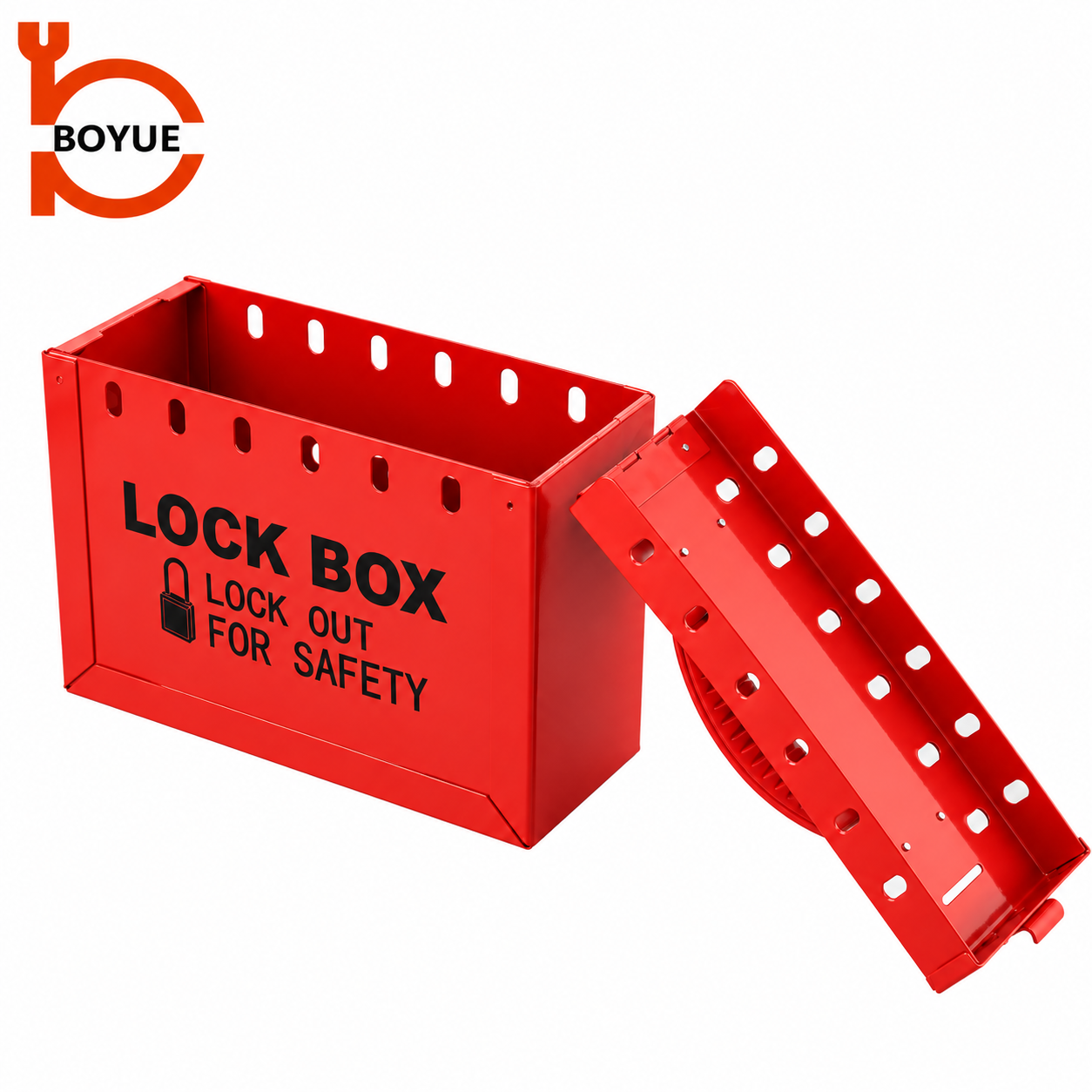
A group lock box, shown as a separate product, can belong to an approved group-isolation system. It is not an attachment for the cylinder cover. The group lockout box procedure guide explains the separate organizational questions to resolve. Keep the accessory identity, isolation reference and group-work record connected, while preserving the distinct purpose of each.
Before a replacement enters service, communicate the change to the people managing the isolation. Returning a cover to the tool store and recording a purchase does not demonstrate that the active job has been assessed. The responsible team must decide whether the revised combination requires application revalidation and who will document that decision.
Training example: separate three different findings
Consider an unused cover with a visible hinge crack, a padlock that closes normally and an application sheet naming a similar model. The closing padlock does not cancel the hinge defect, and a similar model name does not settle the identity question. The appropriate inspection outcome is to withhold the accessory and resolve both concerns before issue.
In a second example, an intact cover matches its documentation but the valve arrangement has changed since the application was approved. The accessory may be in good condition while its proposed use remains unverified. Recording those outcomes separately gives purchasing a clear replacement question and gives engineering a clear application question, without implying that either team can authorize the other’s decision.
Further learning
The following neutral training video introduces the overall lockout process. Use it to explain why inspecting a device is only one part of controlling hazardous energy; it is not a cylinder-specific installation or gas-handling demonstration.
Watch Lock Out Procedures by SAFE Work Manitoba.
Frequently asked questions
Does a padlock that closes prove the cylinder lockout is acceptable?
No. The cover must also be correctly identified, intact and engaged as intended on an approved application. Closing a padlock does not prove that a damaged shell retains its function or that connected equipment is pressure-free.
Can a cracked hinge be repaired with a bolt or adhesive?
Do not improvise repairs. Quarantine the cover and obtain the manufacturer’s documented disposition or a correct replacement. An added fastener or adhesive changes the supplied construction and may conceal continuing damage.
Is inspection the same as choosing the correct cover size?
No. Selection establishes suitability for the interface; inspection evaluates the identified device’s current condition and intended closure. Revisit the cylinder lockout selection guide when the application or supplied variant changes.
How often should the inspection be performed?
Use the manufacturer’s instructions and the employer’s program to define pre-use and periodic checks. Exposure, handling and defect history can justify additional review. Do not invent a universal replacement interval from a product photograph or an unrelated device’s instructions.