
Absent Employee Lockout Removal: Authorization and Safe Return
Absent employee lockout removal is an employer-directed exception requiring a documented procedure and trained personnel, not a routine response to a lost key or a delayed production restart. Under the US general-industry rule discussed here, the employer must verify that the person who applied the device is not at the facility, make all reasonable efforts to contact that person about removal, and ensure the person knows before resuming work. Equivalent safety must be demonstrated. Keep the equipment protected while the responsible team resolves identity, work status and authorization. This guide focuses on management records and communication, not physical methods of defeating a lock.
Keep the normal removal rule visible
The normal expectation is that a personal lockout device is removed by the employee who applied it. That principle gives the personal lock its meaning. An exception should therefore be recognizable as an exception in the employer’s program, with a defined decision owner and a clear record of why the normal route could not be followed.
OSHA 1910.147(e)(3) provides the US general-industry basis for this discussion. Its exception depends on specific procedures and training incorporated into the energy-control program. A supervisor’s presence, a spare key or a production deadline does not independently establish that the exception is satisfied.
Other sectors, jurisdictions and electrical exposures can have different applicable requirements. The employer must determine the correct rule and procedure for the work. This article is a planning aid for the stated framework and does not authorize removal at a particular facility or replace the employer’s assessment.
Separate absence, unknown ownership and missing keys
These are different problems with different starting questions. A known employee who has left the facility is an identity-and-availability case. An unidentified lock is an ownership problem that may conceal active work. A missing key while the employee is present is not proof that the employee is absent. Avoid using the same generic form to skip these distinctions.
First connect the lock identifier to the person, equipment and isolation record. The personal safety padlock identification guide explains why readable ownership information supports that connection. If records conflict, preserve the protection and resolve the conflict rather than selecting the most convenient name from a tool-issue register.
The product family shown in the BOYUE steel-shackle safety padlock page is relevant as personal lockout hardware. Its appearance does not identify the owner at your site or establish any special permission to remove it. Ownership and authority come from the site’s controlled records and procedure.
Establish who owns the exception decision
The written procedure should name the role directing the exception and the trained roles carrying out its requirements. Purchasing staff, tool-store staff and maintenance planners should know where to refer a request, but they should not create authorization by issuing a replacement key or arranging access to removal tools.
As an institutional example, UC Riverside’s hazardous energy program routes abandoned-lock requests through its own approval process. That illustrates a documented responsibility structure, not a universal requirement to copy the same department names. Each employer needs responsibilities that match its organization and applicable rules.
A practical contact list should remain usable outside normal office hours. Identify an approved escalation route if the decision owner is unavailable. The absence of an approver should not quietly become permission for another person to improvise an exception. Preserve the locked condition until the required authority and evidence are available.
Confirm the person is not at the facility
Do not substitute “not answering the phone” for confirmation of absence. The person could be in another work area, attending training, working with another crew or temporarily away from the isolation point. The procedure must provide a reliable way to establish the required fact in the facility’s operating context.
Record the basis for the conclusion and who established it. Depending on the site, relevant information may come from the employee’s supervisor, the work assignment system and direct checks through approved channels. A time clock or access log may be useful evidence but should not be treated as infallible when people can enter through other authorized routes.
If new information suggests that the person is still on site, return the decision to the responsible authority. Do not continue under an assumption that has been contradicted. The exception record should preserve that change so the next shift can understand why the process stopped or changed direction.
Make and record reasonable contact efforts
The program should define how the employer attempts contact and how those attempts are recorded. Capture the time, approved channel, person making the attempt and outcome. Distinguish a message sent from a conversation held; distinguish a delivery receipt from evidence that the employee understood the equipment status.
A conversation can reveal incomplete work, concealed components, temporary supports or other circumstances missing from the job record. Pass relevant information to the person directing the isolation review. Contact is therefore more than an administrative box: it can change the understanding of whether the equipment is ready for release.
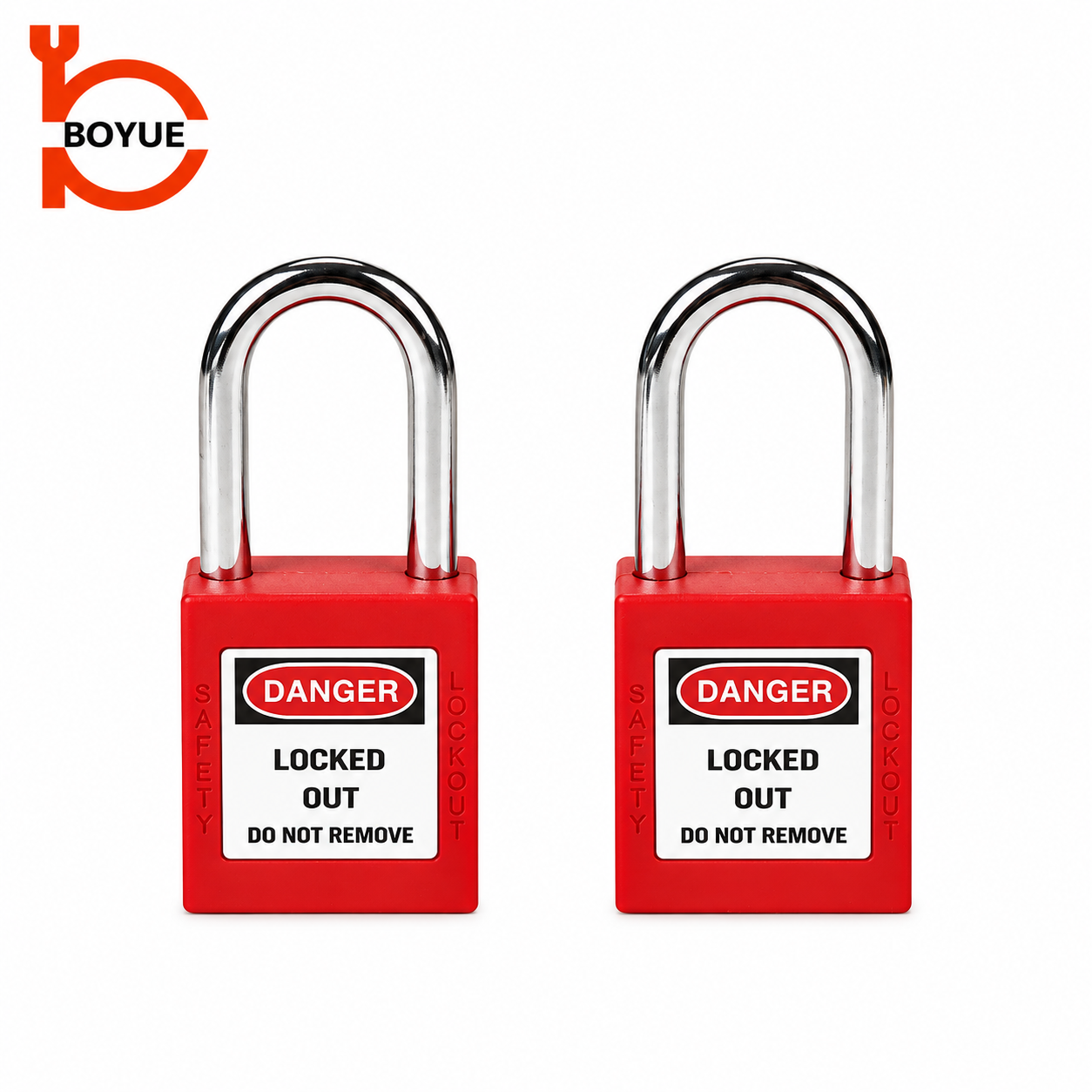
Personal padlocks are separate, assigned components. A spare lock, matching colour or apparently duplicate key must not be used to collapse two people’s identities into one record. If a lock has to be retired following an authorized exception, preserve the connection between the original identifier, the event and the replacement assignment.
Review work status and the complete isolation boundary
The person directing the exception needs an accurate picture of the job and the people relying on the isolation. Check the equipment identity, current work status, outstanding permits and linked crews through the employer’s procedure. An absent employee’s personal lock may be only one part of a larger group arrangement.
Do not infer job completion from a clean work area or a closed work order alone. A task can be administratively closed while another crew still has an open scope on related equipment. Conversely, removal of one personal device need not mean the overall system is ready to restart. The responsible process must keep these decisions distinct.
The group lock box procedure guide addresses the separate question of how personal protection relates to controlled isolation keys. Use it to identify the right questions for the site’s group system, without treating a generic diagram as evidence that every worker has been accounted for.
Use an exception record with explicit hold points
The table below is a suggested planning structure. It helps keep evidence and decisions visible but is not a complete removal procedure. The employer must define the approved sequence, equivalent protection, personnel competence and equipment-specific release requirements.
| Record section | Information to preserve | Hold point |
|---|---|---|
| Identity | Device identifier, employee and equipment reference | Ownership or equipment is uncertain |
| Availability | Evidence the applying employee is not at the facility | Absence has only been assumed |
| Contact efforts | Time, channel and actual outcome of each effort | The required effort has not been completed |
| Work and crew status | Open tasks, related permits and people relying on isolation | Any reliance or incomplete work is unresolved |
| Direction and authorization | Responsible role and procedure used | An informal request is the only authority |
| Equipment disposition | Whether protection continues or release is separately approved | Removal is being treated as automatic restart permission |
| Employee return | Confirmed communication before resuming work | Returning employee could rely on obsolete protection |
A completed form should tell another trained reviewer what happened without requiring them to reconstruct the event from scattered messages. Avoid prefilled signatures, default “all clear” entries and timestamps copied from unrelated work orders. A record is useful only when it reflects the actual event.
Keep removal and restart as separate decisions
Even after the exception conditions are met, the equipment’s release must follow the applicable procedure. The responsible team still needs to address equipment integrity, people in the area and required notifications. Removing a personal lock is not a statement that tools have been cleared, guards restored or every other energy source resolved.

The group lock box shown here is a separate product used within a defined system. A remaining personal lock may still prevent access to isolation keys. Never interpret removal of one person’s device as permission to bypass the others. Refer group and shift responsibilities to the site’s approved arrangements and the group lockout shift-change guide.
If the system remains isolated after the exception, communicate that condition accurately. If it is released later, preserve the separate release record. This avoids a misleading timeline in which an exception form appears to prove that a restart was assessed when it actually recorded only one personal-device decision.
Close the return-to-work communication loop
The absent employee must know that the device was removed before resuming work at the facility under the discussed rule. Design the handover so that this requirement cannot depend on the employee noticing a missing lock, reading an optional email or hearing a secondhand comment after entering the work area.
Record who communicated the change, when it occurred and what equipment status was explained. Include any limits relevant to returning work: for example, whether the equipment remains under a different isolation or has been returned to operation. The employee must not resume a previous task assuming the original personal protection still exists.
A pending return notification should remain visible across shift changes. Assign responsibility for closing it and a method for preventing an uninformed return to work. A process that works only while the original supervisor is present needs improvement before the next out-of-hours exception occurs.
Review the event without normalizing the exception
Afterward, review why the personal device remained in place. Possible contributing issues include unclear handover, poor ownership marking, incomplete work records or a failed key-control arrangement. Use the findings to improve the relevant process rather than treating every event as the same individual error.
Track repeated patterns at a useful level, such as the equipment, team or handover stage involved. A rising number of exceptions may show that the normal work system is difficult to follow. Buying more spare keys or replacement locks would not address a communication problem and could make personal control less clear.
Further learning
This neutral training video explains the overall lockout sequence and personal protection principles. It provides context for why exception management needs care; it does not authorize a removal or show a method of defeating a lock.
Watch Lock Out Procedures by SAFE Work Manitoba.
Frequently asked questions
Can a supervisor remove a personal lock whenever production needs it?
No. Production pressure is not a substitute for the employer’s documented exception procedure, required training and equivalent safety. The responsible authority must establish the applicable conditions and preserve protection while unresolved matters are addressed.
Is a missed phone call enough to prove the employee is absent?
No. Availability at the facility and contact efforts are separate questions. Record reliable evidence of absence and the actual contact efforts required by the employer’s procedure; do not merge them into one assumption.
Does an exception automatically authorize restarting the machine?
No. Device removal and equipment release are separate decisions. The applicable release checks, remaining personal protection, linked work and notifications must still be addressed under the site’s procedure before restart.
When must the returning employee be informed?
Under the discussed US general-industry rule, the employee must have knowledge of the removal before resuming work at the facility. The employer should assign and document that communication so an unfinished handover cannot leave the employee relying on obsolete protection.