
Circuit Breaker Lockout After Breaker Replacement: Review the Combination
Circuit breaker lockout after breaker replacement needs a new review of the actual breaker, accessory and personal-lock combination before the old arrangement is reused. A replacement with the same current rating may have a different handle, recess or surrounding clearance. Keep the affected work under the approved energy-control procedure while responsible personnel confirm compatibility and update the equipment record. This review concerns the lockout arrangement after a change; it is not an instruction for replacing electrical equipment or working inside an energized panel.
The practical question is whether the combination previously approved still describes what is installed. Buying another lockout because it looks similar, or reusing one because it closes, does not answer that question. A useful release record connects the installed breaker identity to the approved accessory, its instructions, the personal lock and the job-specific verification method.
Separate the replacement job from future lockout approval
Two decisions often become mixed together. The electrical maintenance team first determines how the breaker replacement itself will be performed safely. That work can require isolation upstream of the component being replaced. The second decision concerns how the replacement breaker will be secured during later maintenance on downstream equipment. Approval of the first job does not automatically approve the second arrangement.
Write the work boundary clearly. A panel schedule, a circuit label and a maintenance order may use different names for the same load. Reconcile those names before transferring the old device assignment. If the circuit has been moved, split or combined, review the procedure as well as the physical accessory. A retained equipment number cannot prove that all relevant energy paths stayed unchanged.
For the US work covered by its scope, OSHA 1910.333 separates disconnecting and securing equipment from verification of its deenergized condition. A qualified person must perform the required electrical verification. A photograph of a locked handle cannot replace that step, and this accessory review does not establish electrical safety by itself.
Record what actually changed
Start with the complete manufacturer and catalog identification of the installed breaker. Keep the pole arrangement and relevant operating-mechanism information with that identity. Current and voltage ratings belong in the equipment record, but they are not a shortcut for mechanical accessory compatibility. Where a manufacturer specifies a dedicated attachment or restriction, carry that information into the review.
Record the existing lockout model separately. A stock-bin description such as “red breaker lock” is insufficient when several variants share a color. Include any supplied insert or accessory required by its instructions. Do not turn a family photograph into proof that every model in the family has identical geometry or identical permitted applications.
Compare the old and new installed arrangements without assuming that a similar catalog description means an identical interface. Handle taper, travel, depth below the panel opening and nearby components may affect how the restraint engages. If drawings or instructions do not resolve a difference, obtain clarification rather than treating an uncertain combination as approved stock.
Use a change-review checklist
The following is a documentation checklist, not a live-panel test procedure. It helps the reviewer identify evidence to obtain under the site’s safe work arrangements. Acceptance methods and any physical evaluation must follow the applicable manufacturers’ instructions and employer procedure.
| Review item | Evidence to retain | Reason to keep approval open |
|---|---|---|
| Installed breaker identity | Manufacturer, exact catalog reference and circuit assignment | Label, order and installed component disagree |
| Lockout identity | Exact model, variant and required accessories | Only a generic family or color is recorded |
| Handle engagement | Documented compatibility with the installed mechanism | Contact relies on an unexplained edge or tapered surface |
| Available clearance | Review of adjacent devices, cover and locking access | Accessory or lock conflicts with the complete assembly |
| Personal-lock combination | Assigned lock model and permitted locking position | Shackle enters but the complete combination is unresolved |
| Procedure and circuit record | Current isolation-point reference and release decision | Old photographs or instructions describe another arrangement |
Jefferson Lab’s published compatibility lesson describes a lockout attachment that slipped from a particular tapered breaker handle. The lesson supports checking the specific component combination and manufacturer information. It does not show that all clamp-on devices fail, or that a model from another supplier has been tested on BOYUE products.
Evaluate the BOYUE family without assuming interchangeability
The BOYUE CB-07, CB-08 and CB-09 product page identifies a clamp-on family and describes its adjustment and locking-cover arrangement. Use the page to identify the range being discussed, then confirm the exact supplied variant and current instructions for the actual breaker. A family name is not a universal compatibility certificate.
Ask the supplier to connect its recommendation to the installed mechanism information. Useful inputs include the breaker reference, clear photographs taken under an approved safe access arrangement, the relevant handle geometry and any panel-clearance limitation. Photographs should supplement the specification; they should not be the sole basis for accepting an inaccessible or poorly identified assembly.
Avoid substituting a voltage label for a fit decision. A rating shown alongside a lockout model does not mean the accessory provides electrical insulation, permits contact with energized parts or approves every breaker at that voltage. Keep the electrical work controls and the mechanical restraint decision in their respective procedures.
Check the whole locking chain
A lockout arrangement includes more than the adjustable accessory. The personal lock, any approved hasp, identification tag and surrounding equipment all affect practical use. A lock shackle that fits an opening can still leave a body obstructing access, crowd a nearby device or prevent the locking cover from reaching its instructed position. Assess the exact combination instead of evaluating each part in isolation.
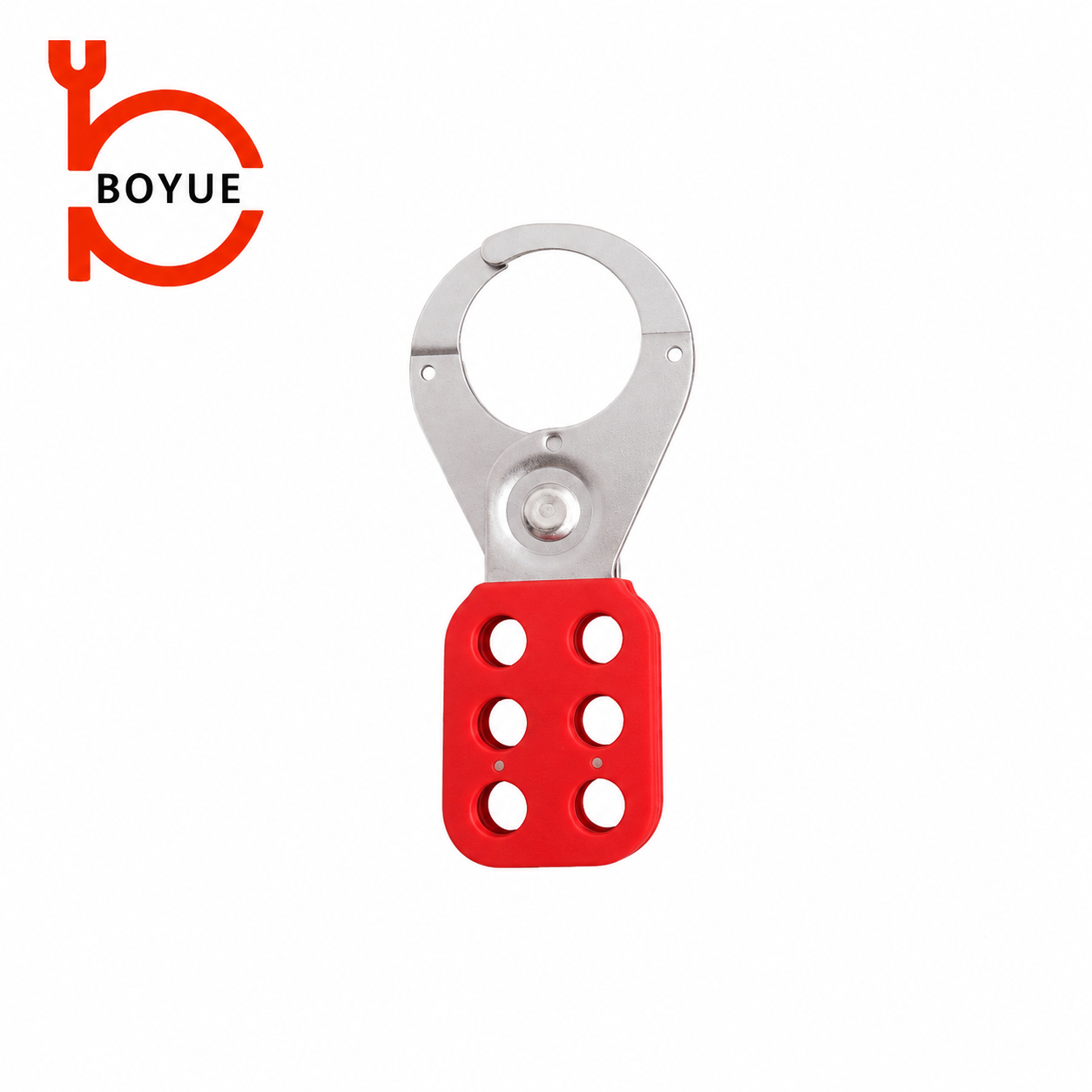
A hasp is relevant only where the approved method permits it. Do not add one to overcome an accessory problem without reviewing the resulting load, closure and clearance. The separate lockout hasp jaw-clearance guide explains the interface questions that arise when several components share one point. It does not authorize using a hasp on every breaker attachment.
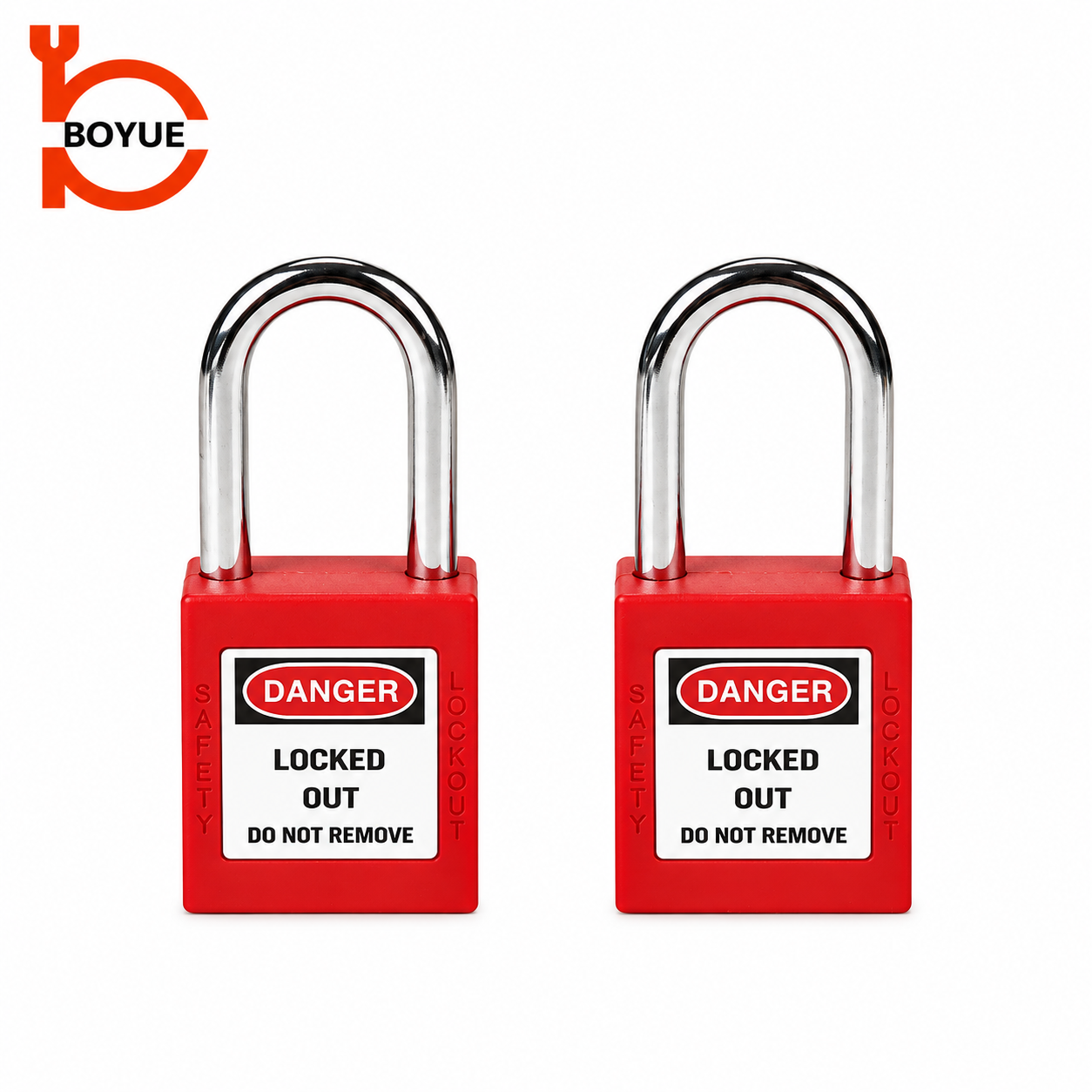
Keep personal-lock identity and key control intact when equipment records change. An accessory reassignment must not quietly become a reassignment of someone else’s personal lock. Where the selected lock changes, record the new combination and confirm the applicable training and issue arrangements before returning the device to the ready-to-use location.
Define a useful acceptance record
A concise acceptance record should let another authorized reviewer reconstruct the decision without relying on memory. Connect the equipment identifier, installed breaker, lockout variant, supporting instructions, selected lock and responsible reviewer. State the scope of approval: one identified arrangement is clearer than a broad note saying a whole panel has been checked.
Include limitations that affect future use. If an accessory requires a particular supplied insert, that item should appear in the issue list and inspection reference. If a later panel modification changes access, the record should make it apparent that the original review may no longer describe the installation. Approval should be traceable to the configuration that was actually examined.
Document unresolved items as unresolved. “Supplier contacted” is a progress note, not acceptance evidence. “Fits in photo” is an observation, not a complete release. A practical hold entry names the missing evidence, the person responsible for obtaining it and the affected task or circuit. This helps purchasing and operations resolve the problem without inventing a temporary substitute.
Keep routine checks distinct from the change review
Once an arrangement is approved, its devices still need the normal condition and use checks required by the site. The circuit breaker lockout inspection guide addresses wear, damage and completeness. Those checks answer whether an assigned device remains serviceable; the replacement review answers whether that assignment remains valid for the changed equipment.
For broader product context, the miniature circuit breaker lockout guide introduces the product category. Do not apply a miniature-breaker method to a molded-case or other mechanism simply because both are circuit breakers. The correct instructions follow the identified equipment and accessory.
As a practical handover recommendation, tell the store custodian which old assignment has been superseded. Remove obsolete reference photographs from the active instruction set while retaining the controlled maintenance history. Otherwise a worker can unknowingly collect the correct-looking device against yesterday’s record even after engineering has approved today’s combination.
Training context and procurement questions
SAFE Work Manitoba’s educational video gives general lockout procedure context. It is not a product installation demonstration or approval for a specific breaker. Use it alongside equipment-specific training, not as a substitute for the qualified electrical review.
Watch Lock Out Procedures by SAFE Work Manitoba.
Before ordering replacements in quantity, ask for the exact model recommendation, included accessories, applicable instructions and a sample-review arrangement where appropriate. Agree how the accepted combination will be recorded. Avoid writing an order that merely duplicates the old quantity and color: the purchase should resolve the changed interface, not recreate an uncertain stock description.
Frequently asked questions
Does the same current rating mean the old lockout will fit?
No. Electrical rating does not establish handle geometry, accessory engagement or available clearance. Identify the exact replacement breaker and review the specific lockout combination before retaining the previous assignment.
Must every breaker replacement require a new lockout device?
No. The existing accessory may remain suitable if its instructions and the review support the replacement configuration. The necessary action is reassessment; automatic reuse and automatic replacement both miss the need for a documented decision.
Can a closed padlock prove that the circuit is safe?
No. Securing an approved isolation point and verifying the relevant deenergized condition are separate responsibilities. Follow the applicable electrical work procedure and qualified-person verification requirements before exposure to electrical parts.
What if supplier compatibility information is incomplete?
Keep the affected arrangement unapproved for the proposed use, identify the missing information and escalate it to the responsible reviewer. Do not solve the uncertainty by forcing the device, modifying it or substituting an unreviewed combination.