
Gate Valve Lockout Inspection: Covers, Hinges and Withdrawal Checks
A gate valve lockout inspection checks whether the cover, hinge, locking ears and identification remain usable for the approved application. Remove a damaged or uncertain device from available stock, record the defect and obtain a documented replacement or disposition. A cover that closes around a wheel still needs a fit check with the actual padlock. Its condition does not prove the valve seals internally, the correct line has been isolated or downstream pressure has disappeared. Keep the device inspection separate from the equipment-specific isolation and verification procedure performed by authorized employees.
Start with identity and the previous approved application
Place the device in a well-lit inspection area when it is safely out of service. Record its model, size designation, storage location and any local asset number. Compare it with the manufacturer information for that exact variant. A familiar red shell is not enough to identify a replacement, particularly where several similarly shaped sizes are stored together.
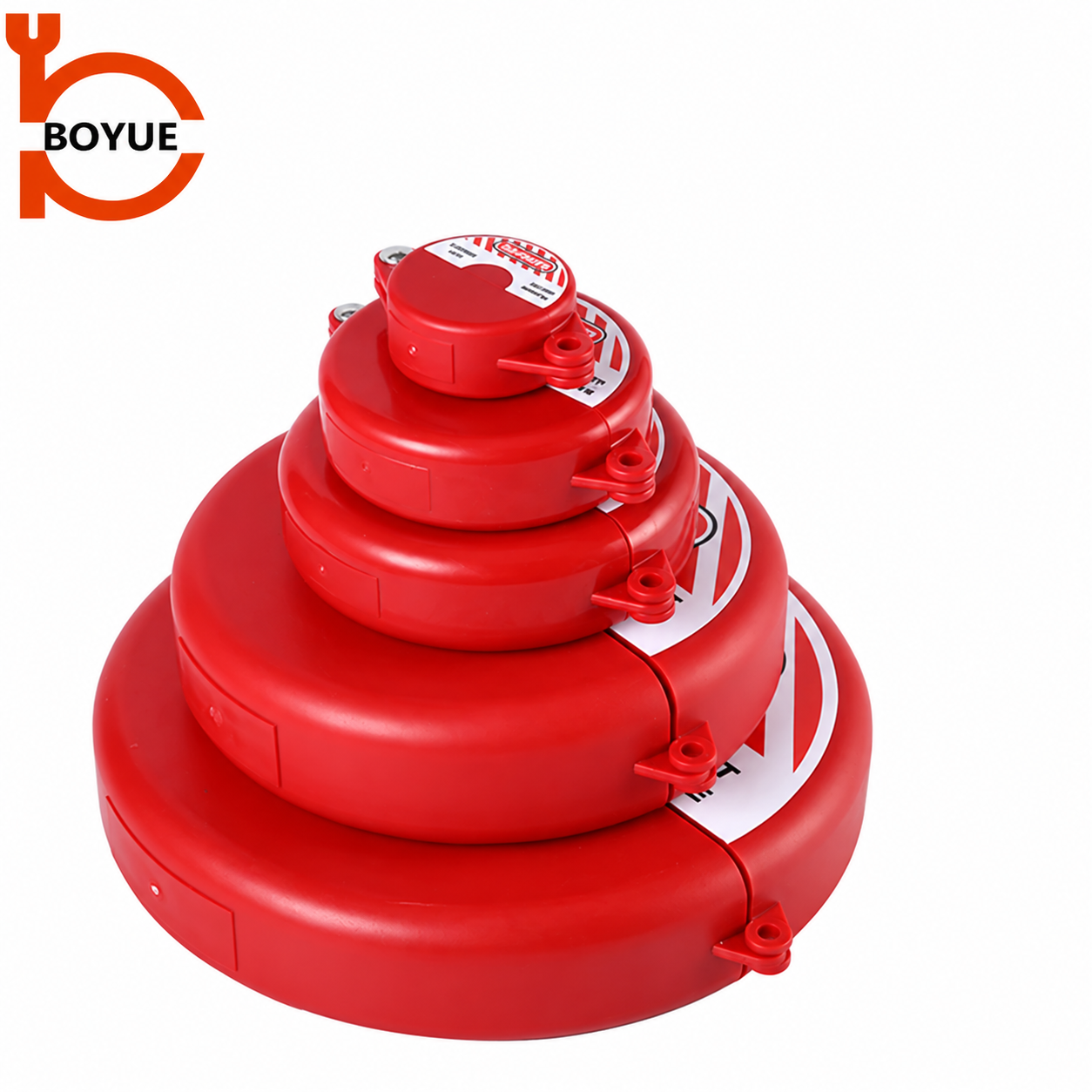
For BOYUE’s GV-01–GV-06 gate valve lockout family, the existing product page separates the size variants. Use that information to identify candidates, then confirm the actual supplied unit and application. This inspection guide does not establish a new temperature rating, chemical resistance limit, service life or permissible damage threshold.
Ask where the item was last used and whether anything unusual happened. A fall, an unexpected impact, chemical contact or difficult removal may matter even if the device looks clean after return. If the history cannot be resolved, keep the item unavailable while the responsible person evaluates it. Do not allow an unexplained return to disappear among accepted spare covers.
Examine the entire cover rather than only its outside face
Inspect both shell sections, accessible inner surfaces, edges and the area around the wheel opening. Look for cracks, missing pieces, distortion, unusually rough damage or signs that the shell has been modified. Pay particular attention to changes that could affect enclosure, closure or retention. Dirt can conceal a split near a hinge or locking ear; follow the manufacturer’s cleaning instructions before assessing an obscured area.
Do not scrape away markings, use an unapproved solvent or apply heat to make the cover look new. Cleaning should reveal condition without creating another uncertainty. If the material or cleaner compatibility is unknown, ask for guidance rather than experimenting on an item intended for hazardous-energy control.
A surface mark and structural damage require different decisions, but there is no universal scratch-depth allowance in this article. Record what is actually visible and its location. If you cannot establish that the observed condition is acceptable under the relevant instructions, quarantine the item. Photographs should include the whole device and a close view with enough context to show where the defect sits.
Check the hinge and locking ears as one closure system
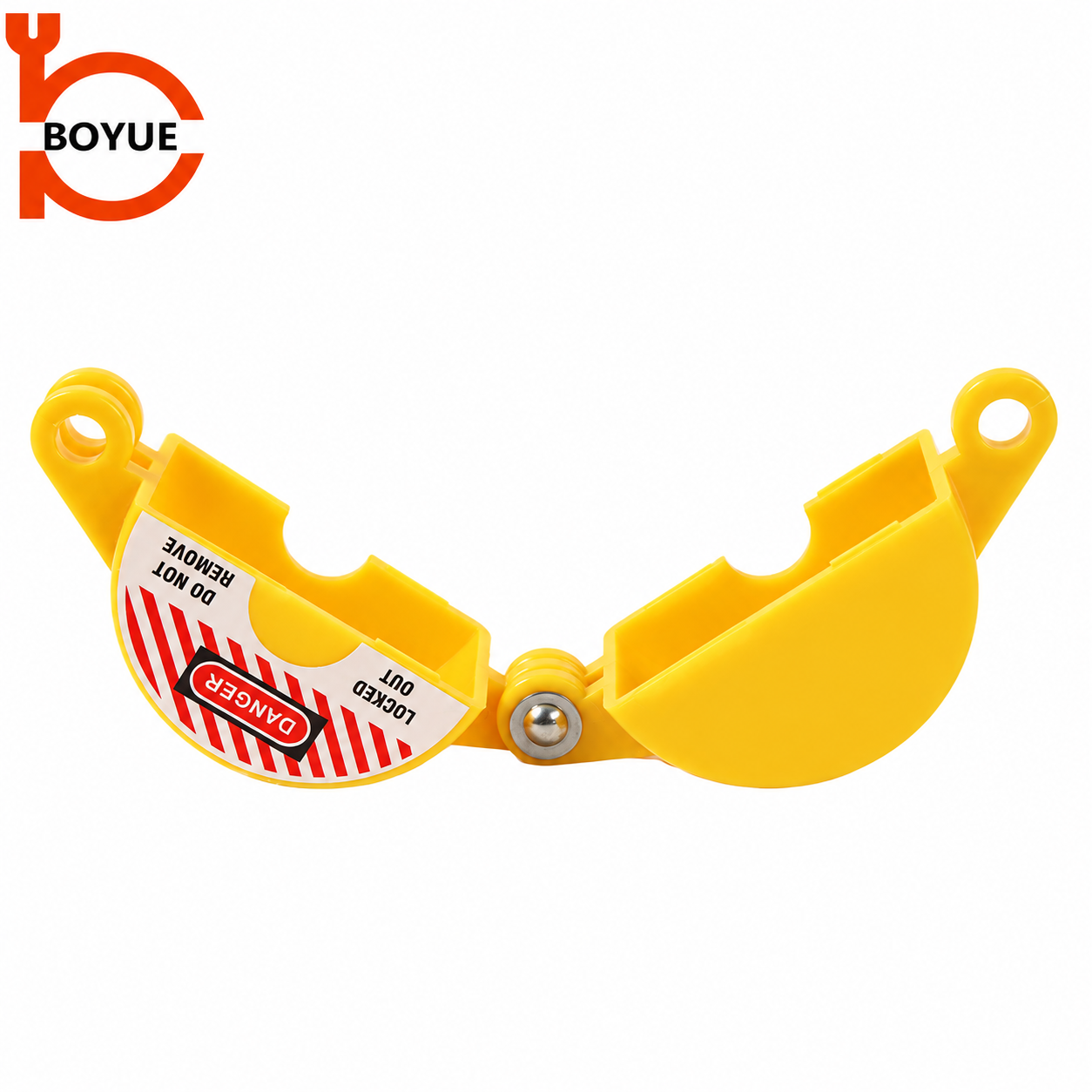
Move the cover only through its normal, manufacturer-permitted opening and closing motion. Check that the hinge remains attached, the halves meet as intended and the locking ears align without bending, forcing or improvised assistance. Stop if a part binds, separates or appears damaged. Repeatedly forcing a doubtful hinge is not a valid acceptance test.
Examine the visible hinge connection and surrounding shell. Look for missing components, unusual looseness, displacement or cracking. Then inspect each locking ear and hole for splitting, elongation, broken edges or modifications. The concern is the complete closure path: an intact shell cannot compensate for a damaged ear, and a sound ear cannot make a broken hinge reliable.
Use the assigned compatible padlock during an approved unloaded sample check. Confirm that the shackle can be applied in the intended position and that the lock body does not prevent proper closure. Do not drill a larger hole, grind an ear or substitute an unverified locking arrangement to pass the check. Acceptance of the device and acceptance of the device-plus-padlock combination are related, separate records.
Use a practical hold and withdrawal checklist
The following table is an inspection aid, not a manufacturer’s dimensional tolerance or a replacement for the site’s isolation procedure. Its control principles align with OSHA’s materials and hardware guidance. The exact product instructions determine permitted cleaning, functional checks and repair decisions.
| Inspection area | What to record | Decision before issue |
|---|---|---|
| Identity | Model, size, asset reference and intended application | Hold unidentified or mismatched items until resolved |
| Shells and edges | Cracks, missing portions, distortion or alteration | Quarantine structural damage or uncertain integrity |
| Hinge connection | Attachment, normal travel and surrounding condition | Hold binding, separation or unexplained movement |
| Locking ears | Hole condition, alignment and complete engagement | Reject forced closure or altered locking holes |
| Padlock combination | Actual shackle, locking position and body clearance | Issue only the approved compatible combination |
| Return history | Impact, contamination, abnormal removal and user report | Resolve unusual history before restocking |
| Identification | Legibility of the required model and warning information | Restore only through an approved identification process |
Give every held item an owner and a next action. A red sticker without a disposition process can leave defective devices circulating indefinitely. Keep the quarantine location physically distinct from ready stock and make the item’s unavailable status clear to whoever replenishes the station.
Repeat fit verification when the application changes
A device can remain undamaged yet become unsuitable after a handwheel, valve operator, nearby pipe or access arrangement changes. Treat an equipment modification as a reason to review the approved application. Reusing the previous cover because it was stored next to that valve does not establish continued fit.
For measurements and initial selection, use the separate gate valve lockout sizing guide. Keep this condition inspection focused on the item already in use. Record the approved wheel configuration, required enclosure and personal-lock combination so future inspectors can distinguish device wear from a changed installation.
Any installed verification must be planned under the site’s energy-control process. Do not remove a protective device from an active isolation simply to complete a stock inspection, and do not manipulate a live valve as a casual fit experiment. Arrange an appropriate safe opportunity with the responsible authorized personnel. An unloaded sample can demonstrate closure behavior, but it cannot establish the safety of a pressurized process.
Separate a sound lockout cover from a safe process boundary
A gate valve lockout restricts access or operation in its approved arrangement. It is not a pressure gauge, a drain, a blind or proof of internal valve tightness. A visual check of a closed cover cannot reveal whether a valve seat leaks or pressure remains in another part of a system.
OSHA 1910.147 requires control of hazardous stored energy and verification before covered servicing begins. Apply those duties through the equipment-specific procedure and applicable requirements. Do not translate a stockroom inspection result into permission to open pipework or enter a danger zone.
Where the task involves several workers, the arrangement for personal protection also needs separate assessment. The site’s group lockout box procedure guide explains that workflow at a broader level. Adding a hasp or group box is not an automatic correction for a cover that does not fit or a process boundary that has not been verified.
Document a useful defect report and replacement request
A useful report identifies the device, describes the observed condition and states what action was taken. Include the date, inspector, defect location, related application and quarantine location. Write “split beside locking ear” rather than simply “bad.” Record any known exposure or incident without guessing the cause.
For replacement enquiries, send the exact model marking, safe overall photographs, the relevant wheel and clearance information, and details of the compatible padlock. Specify whether you need an individual cover, a size-family replenishment or review of a changed application. Ask BOYUE to confirm the supplied variant and instructions rather than ordering from color or a cropped photograph alone.
When a replacement arrives, reconcile it against the request and approved application before release. A new item should enter the same identification and inspection process as existing stock. Close the old defect record only after disposition and replacement are traceable; do not quietly return the damaged item to a drawer as an emergency spare.
Set review triggers that match actual use
Build pre-issue checks, returned-device checks and additional reviews after unusual events into the site’s equipment-management routine. The frequency and responsibility should reflect use, environment, manufacturer instructions and the employer’s program. This guide does not prescribe a universal weekly replacement cycle or annual retirement date for polymer covers.
Device condition checks also differ from formal inspection of an energy-control procedure. A well-kept stockroom does not demonstrate that authorized employees identified every isolation point or verified the machine correctly. Record the two activities separately so a completed cover checklist is not mistaken for a completed program obligation.
The neutral training video below provides general lockout context. It does not certify the GV family or prescribe a pressure-isolation method for your plant. Use it alongside product instructions and the site’s training, not as a substitute for either.
Watch Lock Out Procedures by SAFE Work Manitoba.
For a different valve mechanism, the butterfly valve lockout guide explains why a lever-operated valve needs its own assessment. Do not carry the gate-cover approval across to that application.
Frequently asked questions
Can a cracked cover be repaired with glue or tape?
Do not use an improvised repair to return it to available stock. Quarantine it and obtain the exact manufacturer’s disposition. Replace the item when acceptance cannot be documented.
Does a padlock through the hole prove the cover is suitable?
No. Check the complete closure, hinge, shell, approved fit and actual padlock combination. The presence of a lock does not establish process isolation or pressure removal.
Should different colors be inspected differently?
Use the instructions for the exact product and variant. Color alone does not establish material, resistance, electrical properties or a different permissible damage limit.
What if the cover passes but the wheel has changed?
Hold the previous application approval and repeat selection and fit verification for the changed equipment. Good condition does not establish suitability for a different wheel or access arrangement.