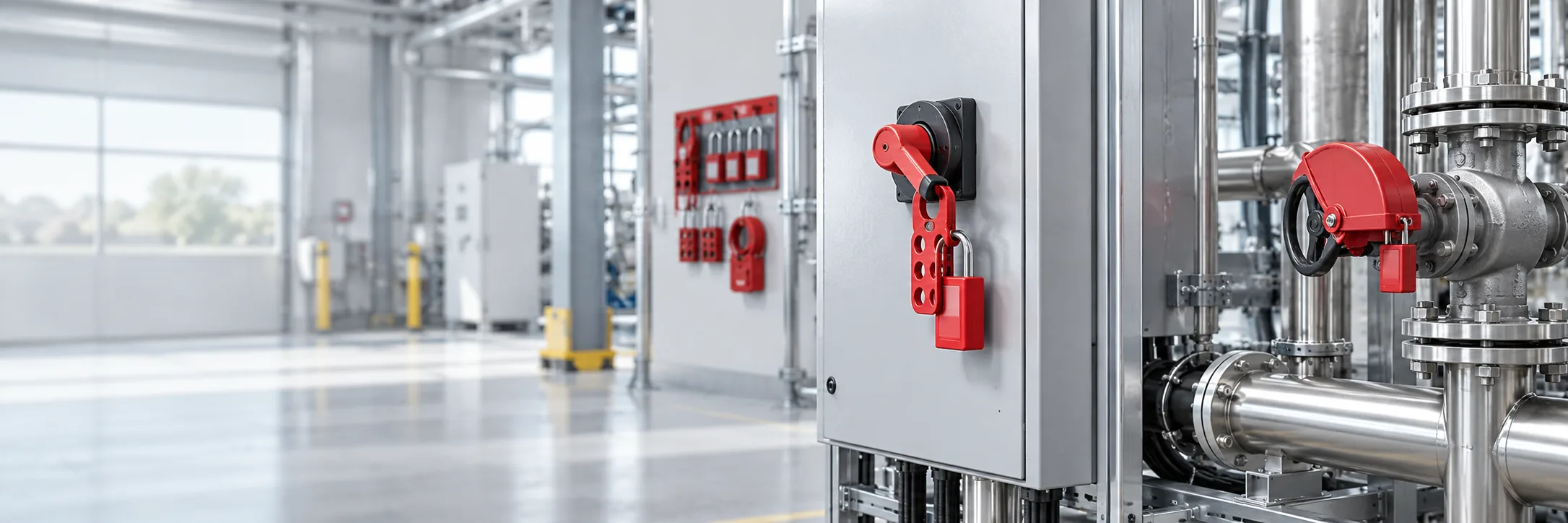
Butterfly Valve Lockout Inspection: Sliding Parts, Damage and Retention
Butterfly valve lockout inspection checks the condition of the device that restrains the valve’s operating mechanism. Examine the body, sliding parts, locking openings and contact areas, then confirm the documented installed retention check can be completed safely. Remove damaged, incomplete or uncertain devices from available stock. A lockout device that holds a handle does not prove the valve seals internally or that downstream pressure is controlled. Those are separate isolation decisions under the equipment-specific procedure. This guide focuses on inspection and withdrawal of the lockout hardware after selection, rather than choosing a device by handle dimensions.
Begin with the correct valve and lockout model
Identify the valve, its operating mechanism and the approved lockout model before comparing condition. Lever-operated butterfly valves can have different release triggers, detents and surrounding clearances. A device can look familiar while engaging the wrong feature. A photograph of an undamaged unit cannot resolve that mismatch.
Use the butterfly valve lockout selection guide when the intended device or handle arrangement is uncertain. Inspection should not silently approve a new application. If the valve handle has been replaced or altered since the original approval, return the combination to application review.
The BOYUE BUV-01 butterfly valve lockout is the product reference for the sliding device discussed here. Check the exact supplied version and current manufacturer instructions. The illustration does not claim compatibility with every lever, gearbox or actuator, and this article does not prescribe a universal installation direction.
Separate device condition from process isolation
There are three different questions: is the lockout hardware serviceable, does it restrain the intended mechanism, and has hazardous energy been controlled for the work? Answer each explicitly. A good answer to the first question is not evidence for the remaining two.
The CCOHS hazardous energy guidance describes energy hazards beyond simple movement of a control. In a process system, the responsible personnel must address the actual hazards, including pressure, temperature, gravity and possible energy reaccumulation. The required isolation arrangement comes from the site assessment and procedure.
Do not open a drain, loosen a fitting or move a live valve to check a lockout accessory. Such actions can release hazardous material or alter an active isolation. This checklist is not a pressure-release method, a leakage test or a permit to disturb equipment under protection.
Inspect the body and sliding engagement features
Start with the uninstalled device in a safe inspection location when possible. Look at the main body, the sliding member and the areas where these parts engage. Check for cracks, missing sections, distorted shapes and damage that prevents complete engagement. Inspect both accessible faces rather than viewing only the side that normally remains visible.
Move the parts only through the travel permitted by the manufacturer. Note binding, unintended separation, an irregular fit or looseness that differs from the expected action of the same model. Avoid extending a component beyond its intended range to discover its limits. Inspection should not become an improvised strength test.
Pay particular attention to thin bridges between openings and to the surfaces that carry the restraint. Damage there can matter more than a superficial mark on an unloaded face. Do not assign a crack-length tolerance from a different product. If acceptance cannot be established from the manufacturer’s criteria, quarantine the device for a competent decision.
Check locking openings and the complete lock arrangement
A locking opening should remain intact and retain its intended shape. Look for cracking, elongation, missing material or signs that someone has drilled or cut it. An enlarged opening may allow a lock to pass through while weakening the feature or permitting unintended movement. Do not restore it with adhesive, a washer or a workshop modification.
Check the specified personal padlock or approved group arrangement as a complete combination. The lock must prevent the release action intended by the device design. Counting visible holes does not determine how many employees a particular installation can protect, and a shackle that fits through a hole does not prove the combination works.
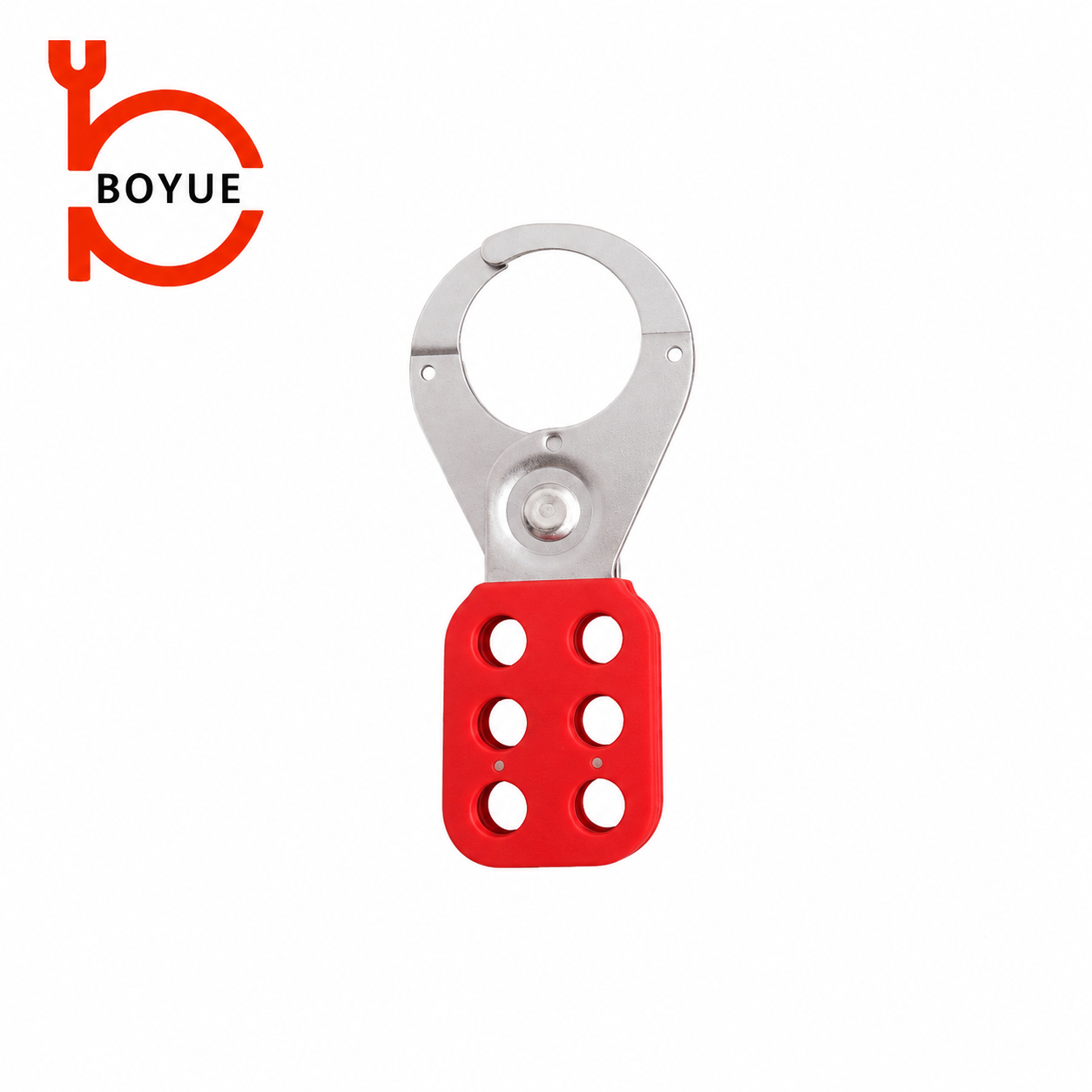
A separate hasp may be part of an approved arrangement, but its illustration is not a recommendation to attach it to BUV-01. Confirm every interface and the procedure before adding components. The hasp also needs its own condition and closure assessment; it cannot compensate for damage to the valve lockout.
Review contamination and environmental exposure
Inspect the device after permitted cleaning if dirt conceals surfaces or interferes with sliding movement. Ask what contaminated it and whether the cleaning method is approved. Solvent exposure, heat damage, discoloration or material softening should trigger review rather than an assumption that all red plastic behaves the same way.
Do not infer chemical or temperature resistance from the product category. Obtain the actual material and application information for the supplied model. Where exposure history is unknown, document that uncertainty and hold the device until someone can make an informed decision.
Storage can also affect condition. Prevent heavy equipment from crushing loose devices and keep withdrawn items separate from serviceable stock. If several items show the same damage at the same point, investigate handling and application instead of treating every failure as an isolated purchasing problem.
Apply a practical inspection decision table
This original table organizes observations into follow-up actions; it supplies no numerical strength or wear limit. The CCOHS lockout procedure guidance provides the broader context for identifying, securing and verifying energy isolation. Manufacturer instructions govern the model-specific acceptance checks.
| Finding | Why it needs attention | Action before use |
|---|---|---|
| Cracked bridge between locking openings | A restraint feature may be weakened | Withdraw and replace or obtain a documented manufacturer decision |
| Sliding part binds or separates unexpectedly | Complete intended engagement is uncertain | Hold; confirm condition and correct operation |
| Lock closes but release movement remains possible | The assembly may only appear secure | Reject the arrangement and review the approved interface |
| Residue obscures contact surfaces | Condition cannot be assessed reliably | Clean by a permitted method and reinspect |
| Sound device on a replaced handle | Previous compatibility evidence may no longer apply | Return to application selection review |
| No defect and approved retention check succeeds | Hardware condition and restraint are supported | Proceed only after the separate energy-control requirements are satisfied |
Check retention without disturbing active isolation
The installed check belongs to authorized personnel operating within a safe procedure. Confirm that the device captures the intended feature and that its locked configuration prevents the prohibited operation as described by the manufacturer. Do not rely solely on a familiar appearance or on the fact that the padlock has clicked shut.
Use the specified checking method, not an invented force challenge. Lever extensions, impact tools or forceful attempts to operate the valve can damage the handle or defeat an active isolation. If the required check cannot be completed safely, suspend the task and obtain a revised safe arrangement.
Observe whether adjacent equipment obstructs the device, lock or tag. Changed insulation, nearby pipework or a replacement handle can create interference that was absent during initial approval. Record what changed. Do not trim the device or route a lock through an unintended opening to regain clearance.
Understand what a cable alternative can and cannot resolve
Sometimes an unsuitable or damaged device prompts a request to use a cable instead. That is a new application decision, not an inspection repair. A cable needs its own approved route, restraint points, compatibility check and instructions. It cannot be assumed suitable merely because it can be wrapped around the handle.
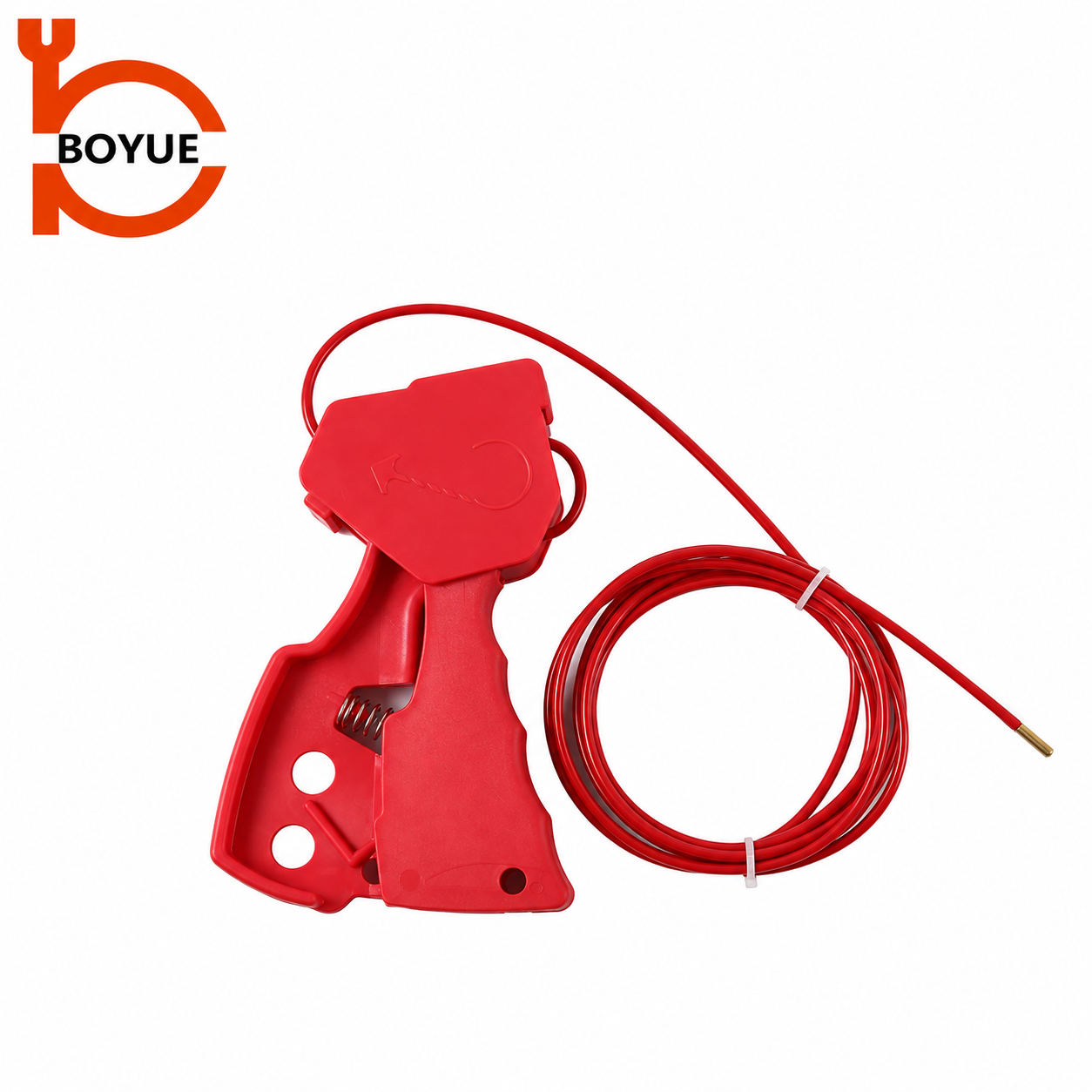
Use the complementary cable lockout inspection guide for cable condition questions after an approved cable arrangement has been selected. The separate product shown here illustrates that an alternative device has different condition checks; it does not depict a validated installation on the butterfly valve.
The same distinction applies to replacing BUV-01 with another red sliding device. Similar color, overall length or catalogue wording cannot substitute for confirmation of the exact mechanism and application. Record the replacement decision so the next inspection uses the correct reference.
Quarantine defects and plan controlled replacement
Identify a failed device by model and stock identifier, describe the observed defect and place it outside ready stock. Include clear photographs of the affected feature. “Crack beside second locking opening” is more useful than “old valve lock,” because it identifies the condition that must not recur in the replacement.
If the concern arises during active maintenance, stop exposed work and involve the designated person responsible for the isolation. Do not remove a questionable lockout simply to photograph it or exchange it. The replacement procedure must maintain protection while the condition is resolved.
For purchasing, provide the valve and handle identity, current photographs, intended operating position and manufacturer instructions. Ask the supplier to confirm the exact variant and any approved replacement parts. Do not ask purchasing to copy an unsupported chemical rating or capacity from another manufacturer’s catalogue.
Where several people depend on the isolation, review the wider group lockout procedure. A valve accessory condition check does not establish how individual protection will be coordinated.
Further learning: hardware within the whole procedure
The SAFE Work Manitoba educational video introduces the overall lockout process. It helps explain why restraint, communication and verification belong together. It is not a BUV-01 installation demonstration or a procedure for pressure isolation, line opening or hazardous-fluid work.
Watch Lock Out Procedures by SAFE Work Manitoba.
Frequently asked questions
Does a locked handle prove the valve is leak-tight?
No. The lockout restrains the operating mechanism. Valve sealing, trapped energy and the adequacy of the isolation arrangement require separate assessment and verification under the equipment-specific procedure.
Can a damaged locking opening be enlarged for another padlock?
No improvised modification should be used to return the device to service. Enlarging an opening changes a restraint feature. Quarantine the item and obtain a confirmed replacement or documented manufacturer decision.
Should sliding resistance be solved with any available lubricant?
Use only the manufacturer’s permitted maintenance method. Binding may result from damage, contamination or incorrect assembly. An unapproved lubricant can conceal the cause or affect the material, so hold the device until the issue is resolved.
Can a cable replace a failed butterfly valve lockout immediately?
Only after an approved application and procedure confirm that the alternative provides the required restraint. Wrapping a cable around the handle is not by itself a validated replacement method or evidence of safe isolation.